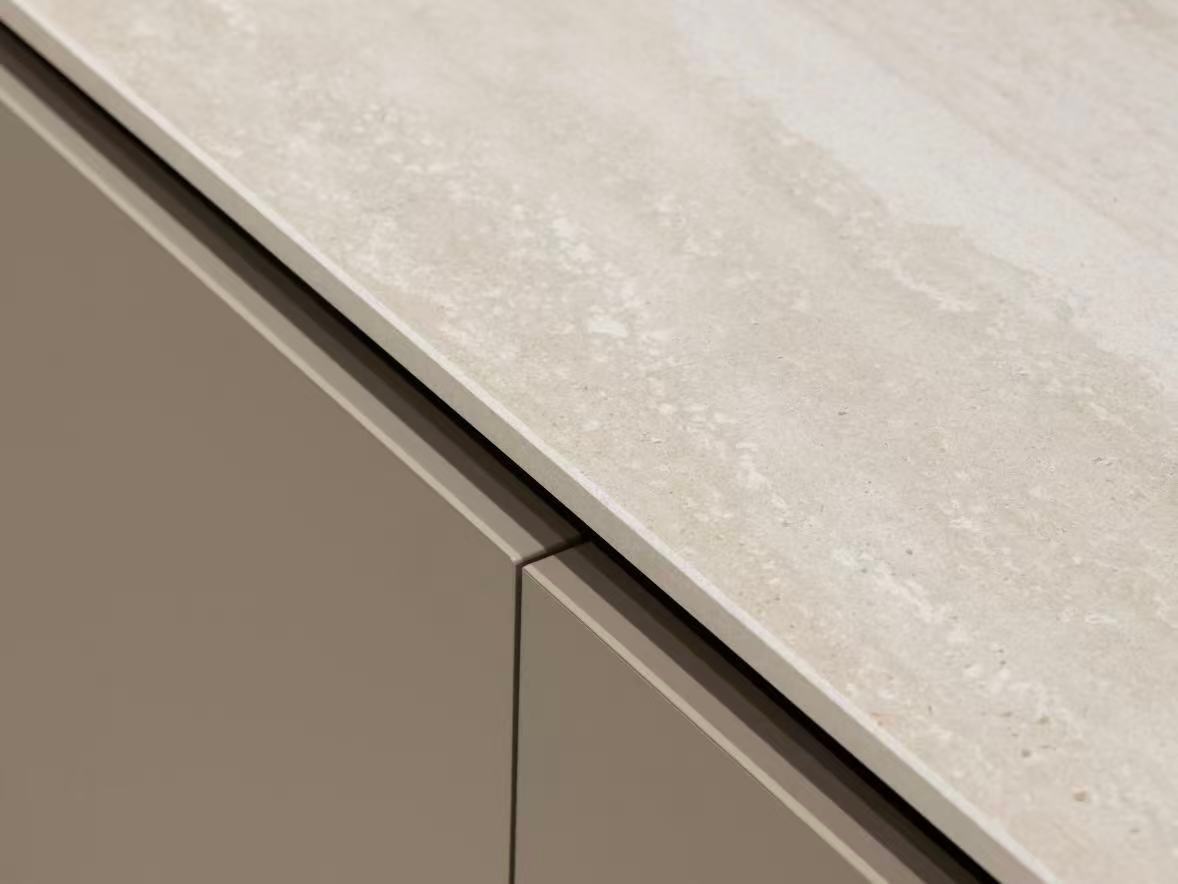
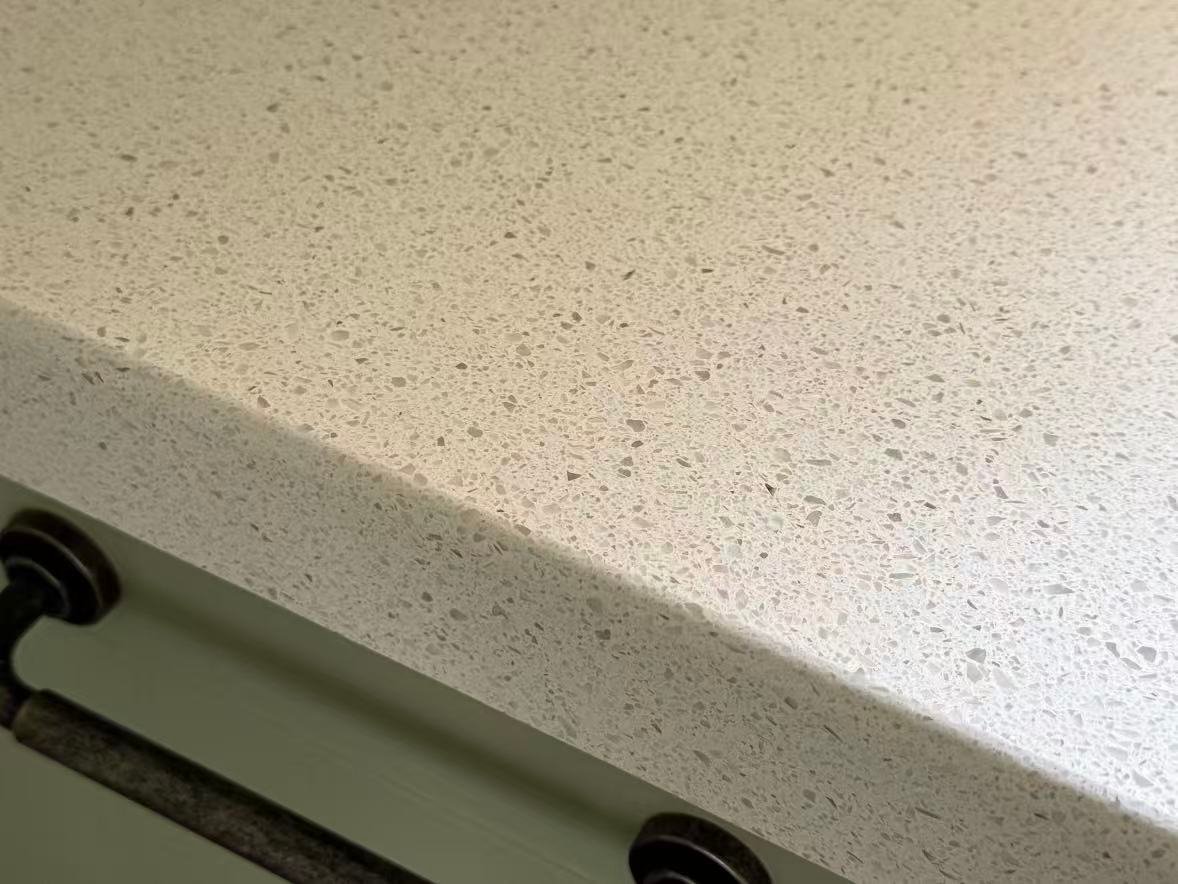
Kitchen Countertop Materials at a Glance

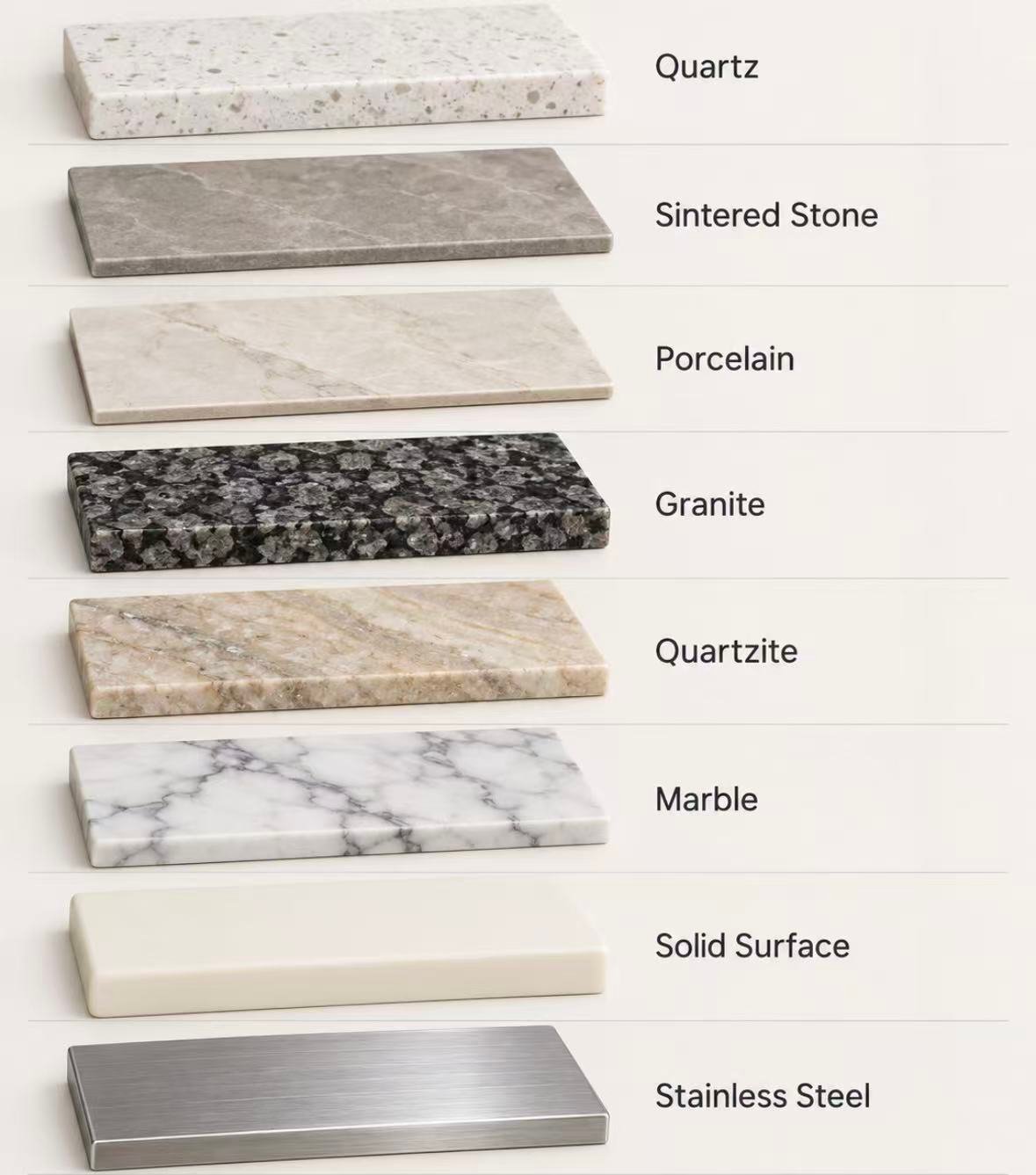
Types of kitchen countertop materials
Material Heat Stain Scratch Maintenance Best For
Quartz
Medium
High
High
Low
Everyday residential
Sintered Stone
High
High
High
Low
Islands / high-use
Porcelain
High
High
High
Low
Thin / modern surfaces
Granite
High
Medium–High
High
Medium
Natural stone
Quartzite
High
Medium
High
Medium
Premium natural stone
Marble
Medium
Medium–Low
Medium
Higher
Luxury / feature
Solid Surface
Medium
High
Medium
Low
Seamless / curved
Stainless Steel
High
High
Medium
Low
Commercial / heavy use
Laminate
Low–Medium
Medium
Medium
Low
Cost-controlled projects

Types of Kitchen Countertops

Quartz kitchen countertop material and surface
01

Quartz

Engineered stone with consistent patterns, low maintenance and strong stain resistance.
Sintered stone kitchen countertop surface detail
02

Sintered Stone

Dense large-format surface with strong heat, scratch and stain resistance.
Porcelain kitchen countertop thin surface design
03

Porcelain

Thin-profile surface with high heat resistance, low absorption and good UV stability.
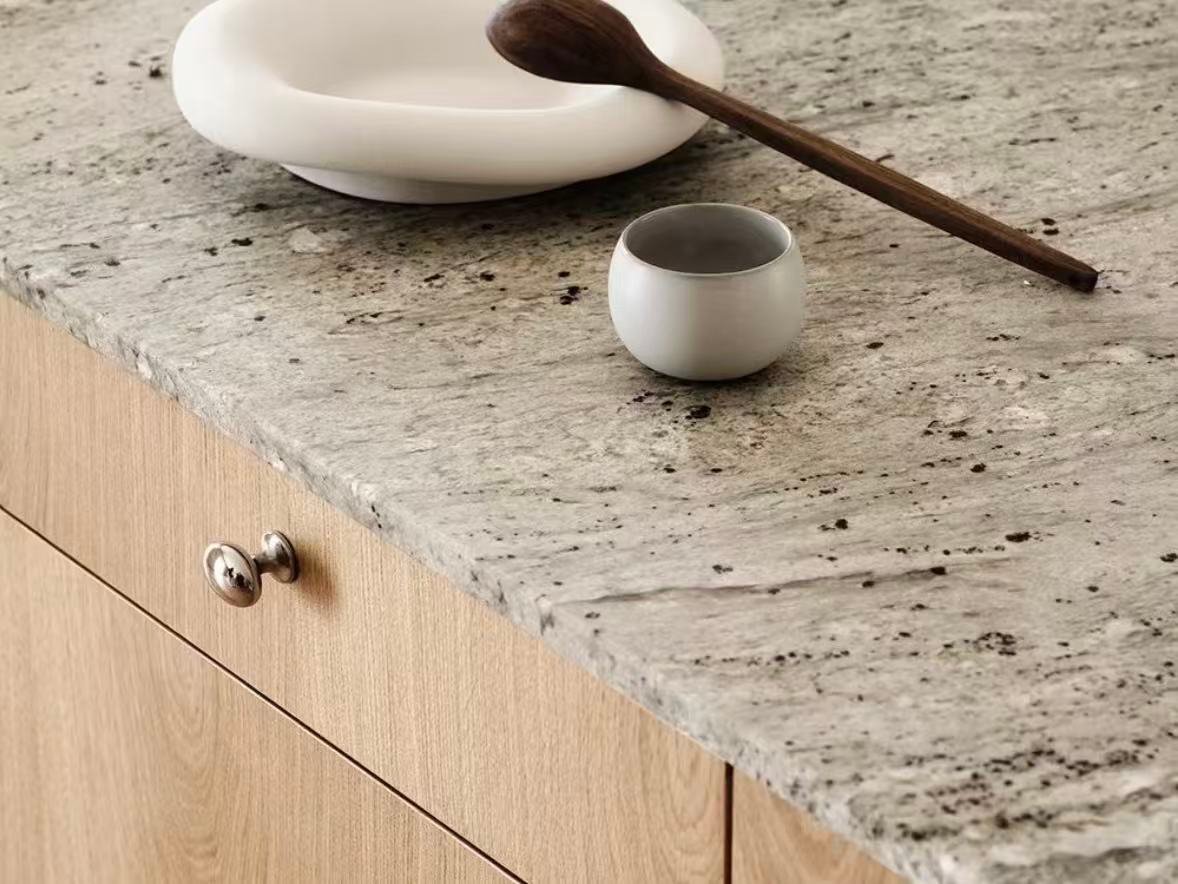
Natural granite kitchen countertop stone surface
04

Granite

Natural stone valued for durability, heat resistance and unique mineral patterns.
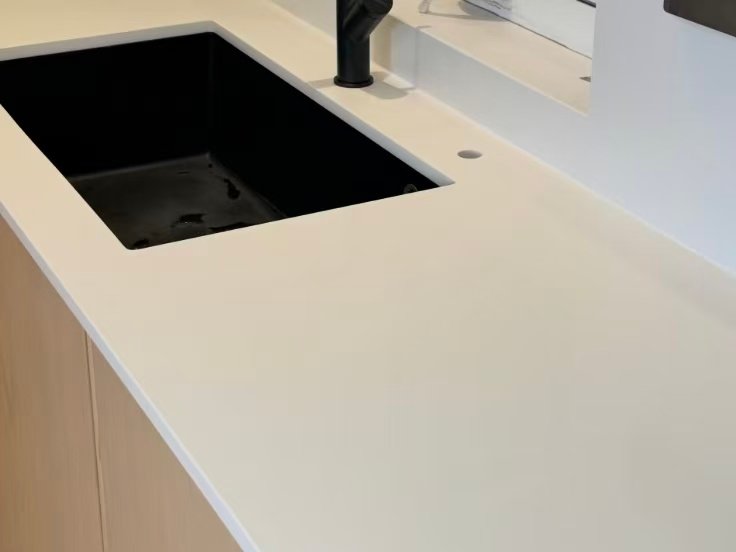
Natural quartzite kitchen countertop stone pattern
05

Quartzite

Hard natural stone with distinctive veining, premium appearance and strong durability.
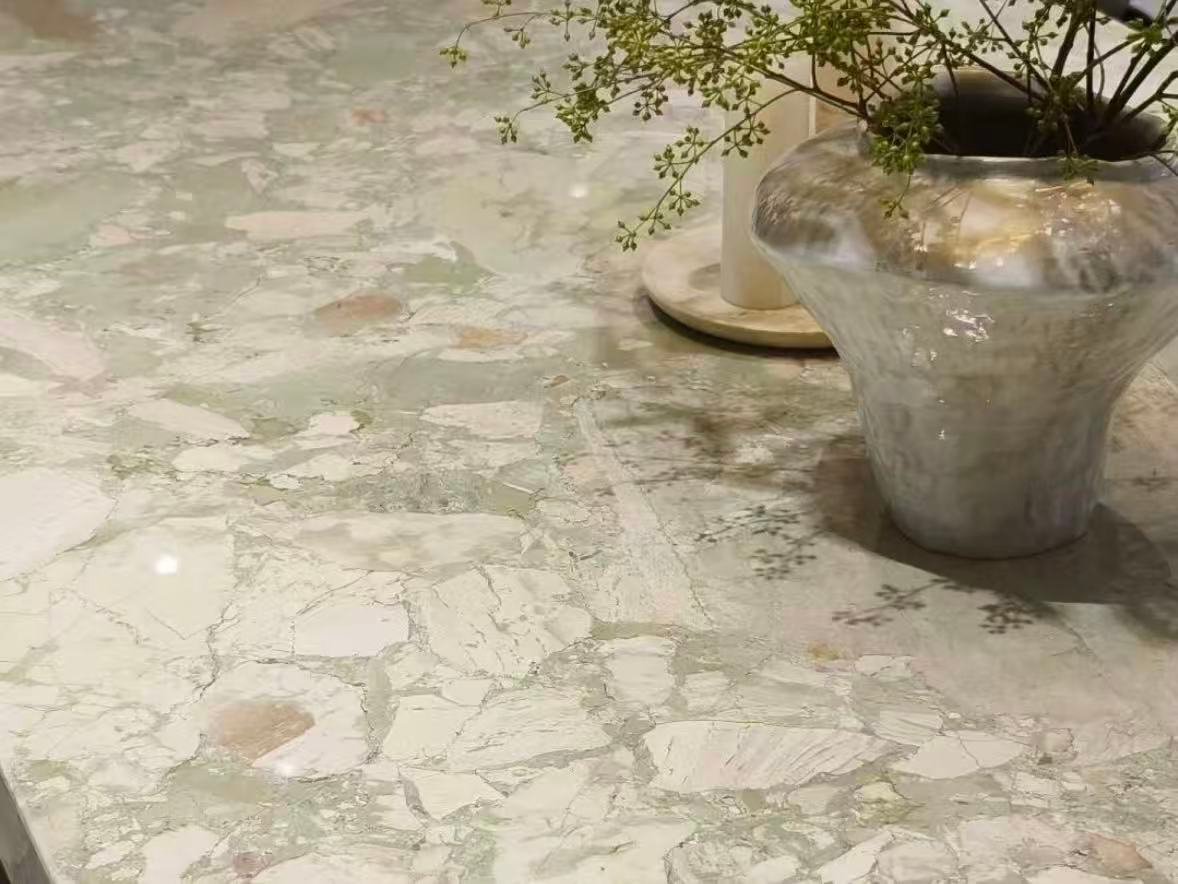
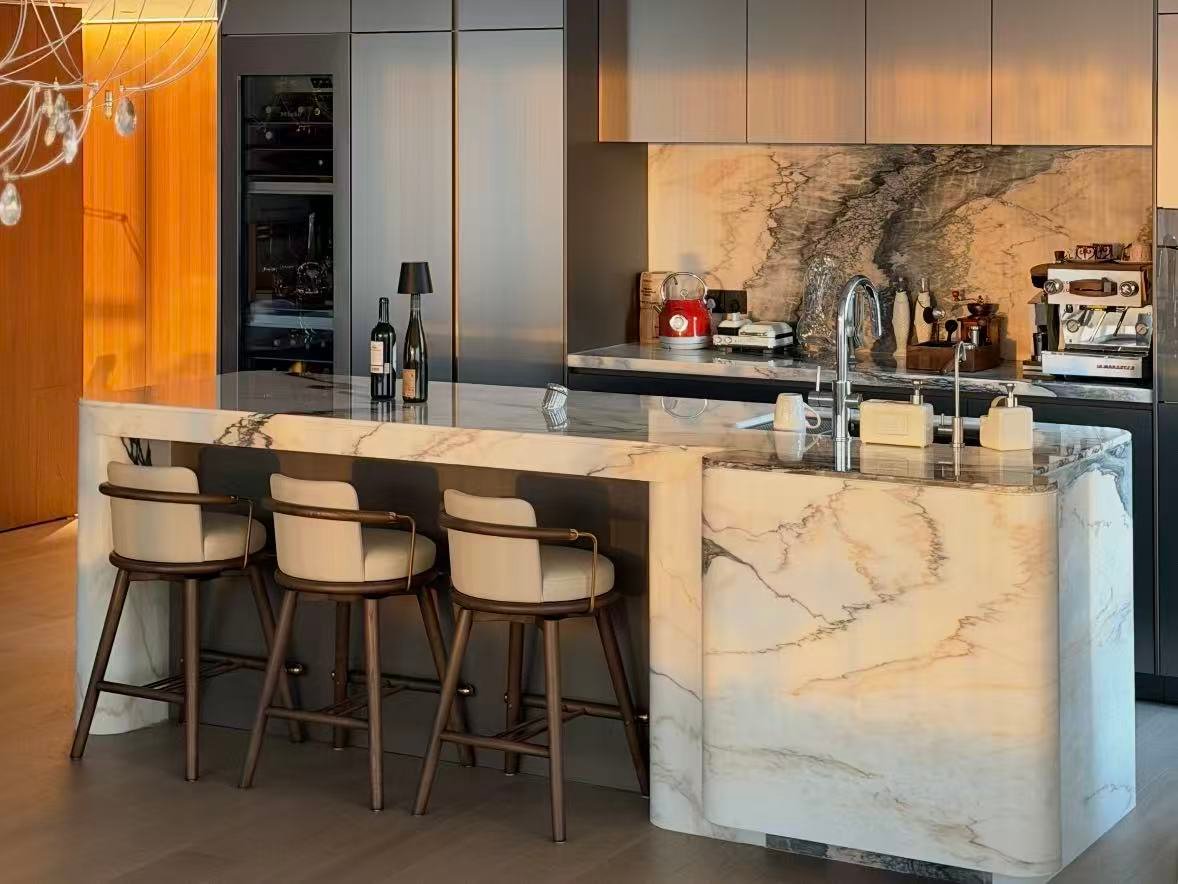
Luxury marble kitchen countertop natural veining
06

Marble

Premium natural stone known for unique veining and luxury appearance, but requiring more care.
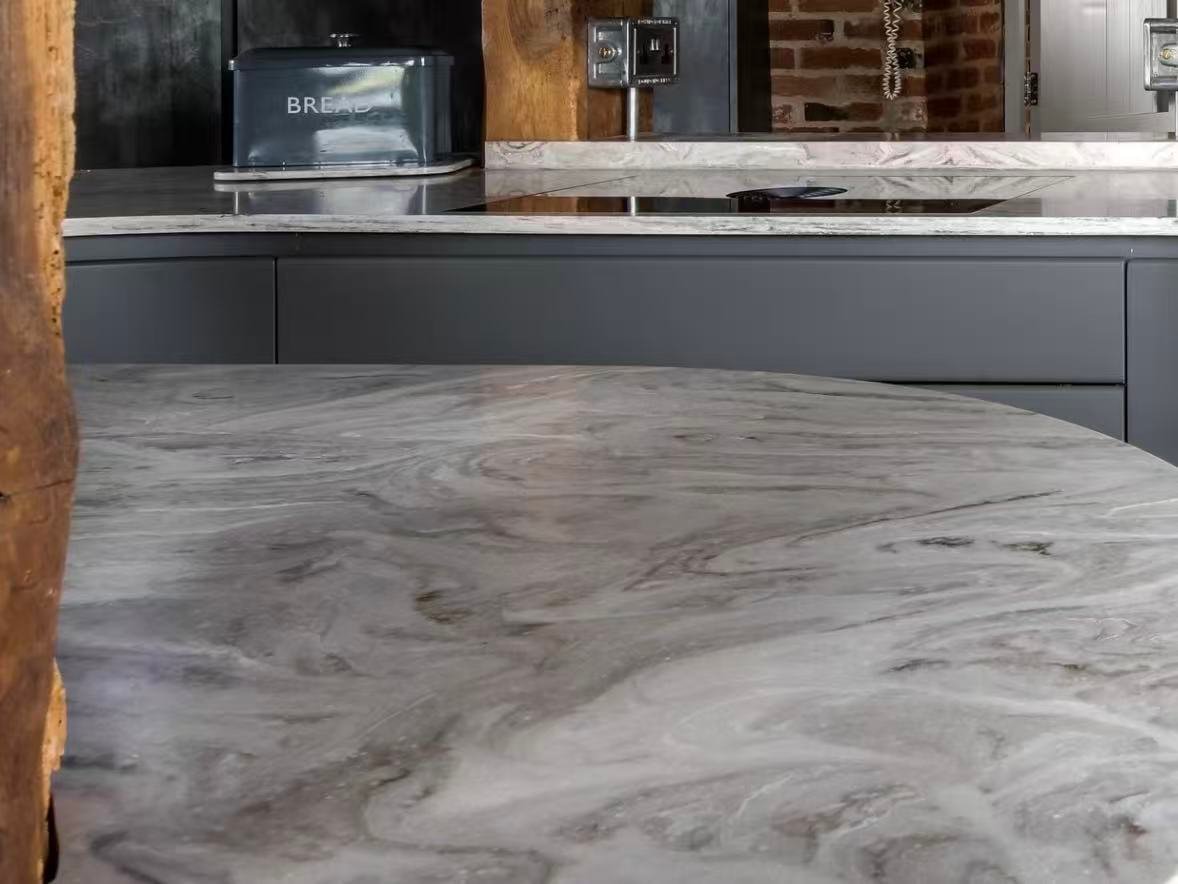
Solid surface kitchen countertop seamless design
07

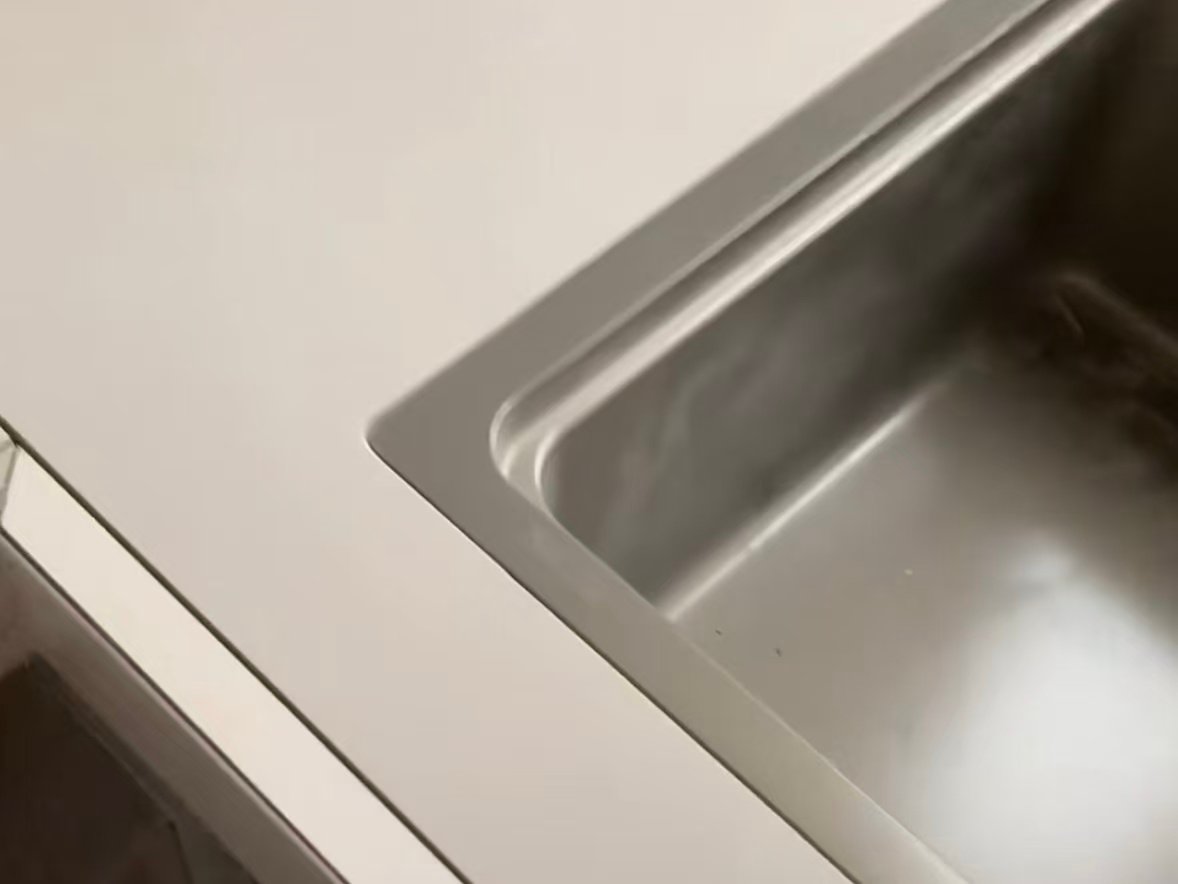
Solid Surface / Corian

Repairable surface suited to seamless joints, curved forms and integrated sinks.
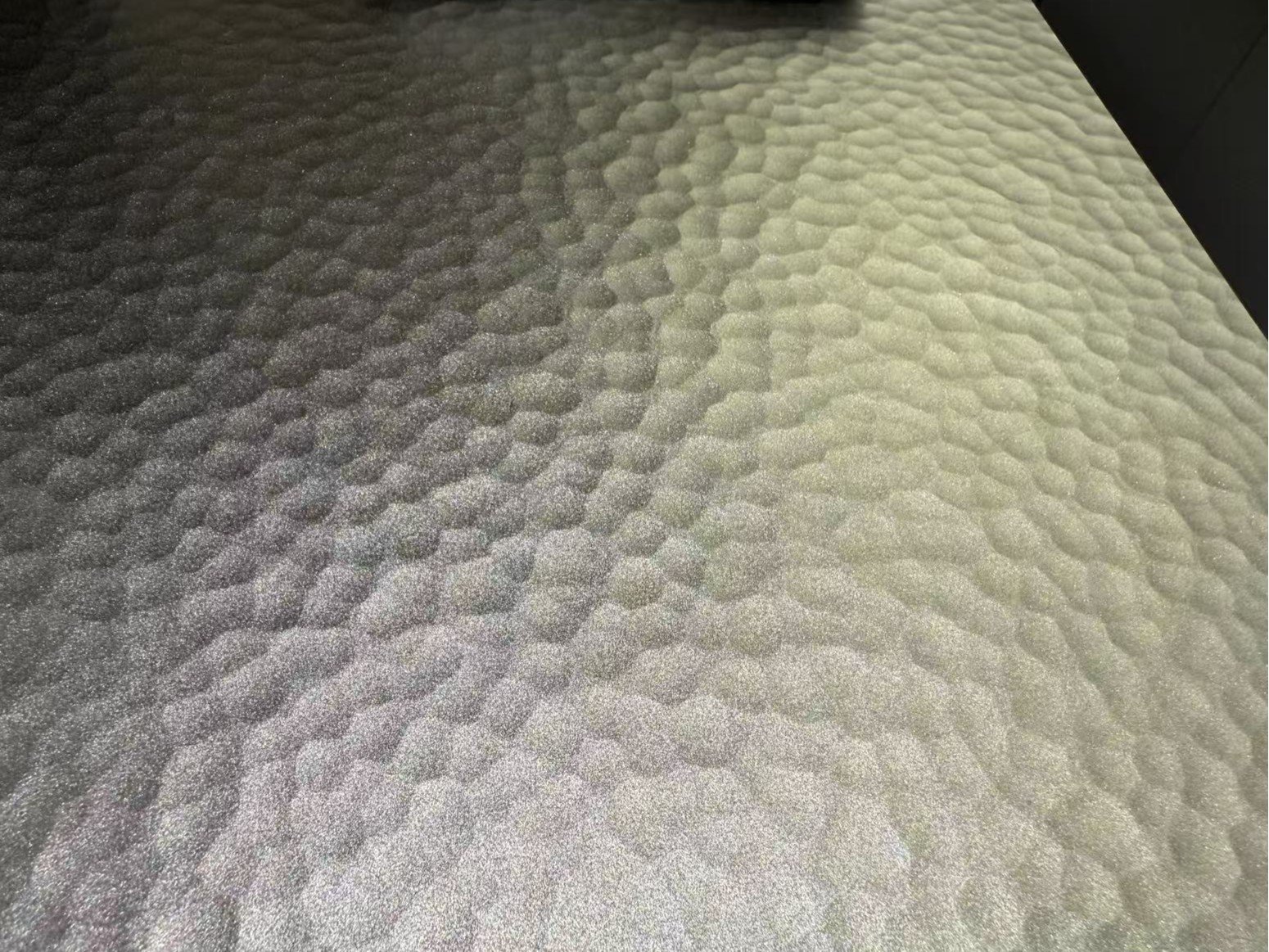
Stainless steel kitchen countertop commercial surface
08

Stainless Steel

Hygienic, heat-resistant surface suited to commercial and heavy-use kitchens.
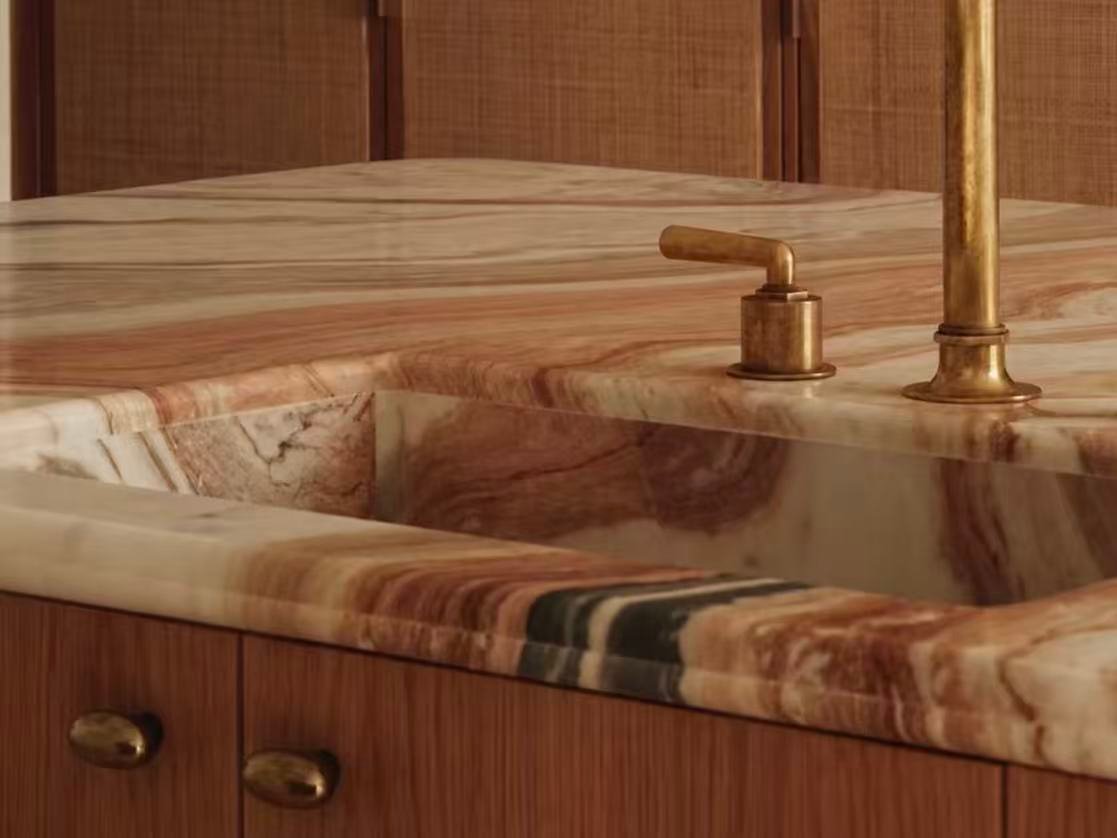
Marble look laminate kitchen countertop
09

Laminate

Cost-controlled option with broad decorative colors, patterns and finishes.
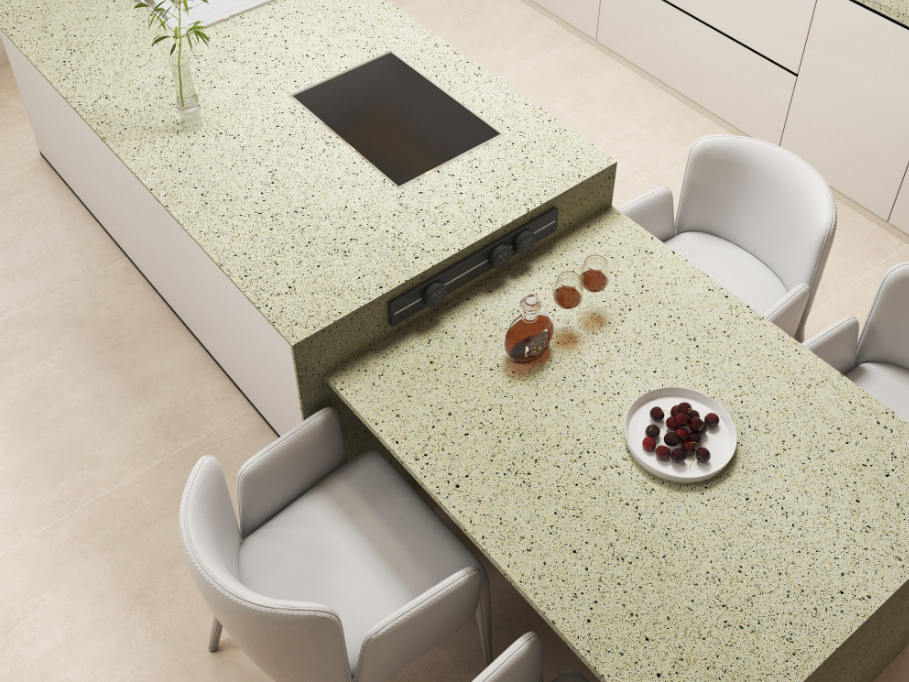
Alternative kitchen countertop material options
Other Countertop Options

Specialty Materials

Soapstone Concrete Butcher Block Terrazzo

Useful for projects where natural texture, warmth, handcrafted character or a distinctive architectural surface is part of the design concept.
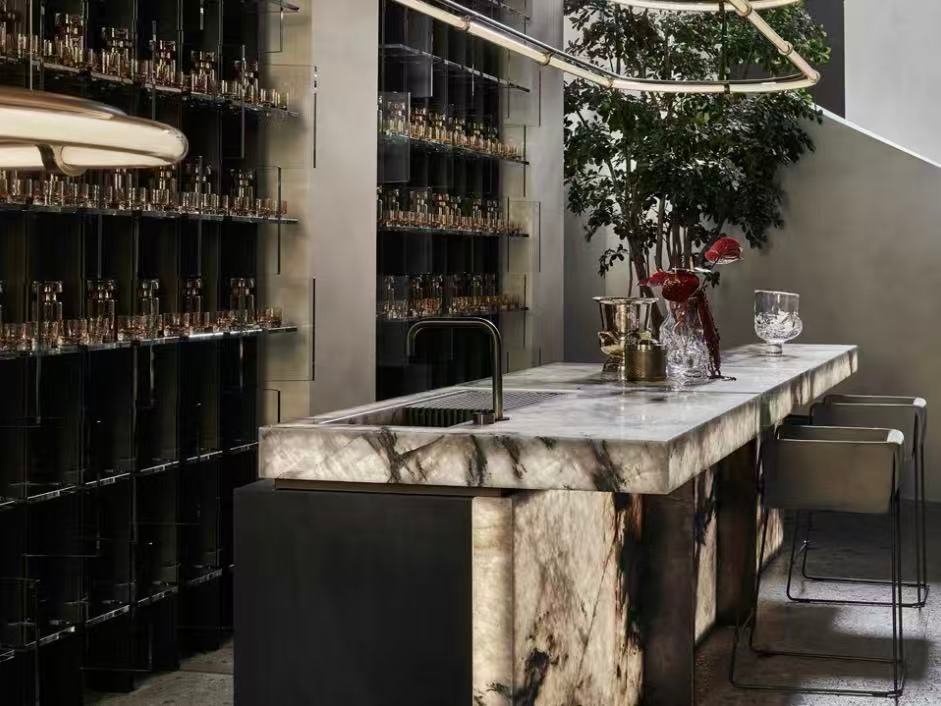
Which Kitchen Countertop Material Is Best?

01
Lowest Maintenance
Quartz · Sintered Stone
02
High Heat Exposure
Sintered Stone · Porcelain · Granite
03
Natural Stone Look
Granite · Quartzite · Marble
04
Luxury Statement
Marble · Quartzite
05
Commercial / Heavy Use
Stainless Steel · Sintered Stone
06
Seamless / Integrated Sink
Solid Surface
07
Cost-Controlled Projects
Laminate · Selected Quartz
08
Apartment / Hotel Units
Quartz · Sintered Stone · Solid Surface
Project Consideration Tropical / Coastal Projects

In humid and tropical projects, countertop material itself is usually less vulnerable than the interfaces around sinks, joints, backsplashes and cabinet support. Sealing, cut-out detailing and installation conditions should therefore be reviewed together with material selection.

Learn About Cabinet Carcass Construction →

Countertop Thickness, Edges, Cut-Outs & Support

Kitchen countertop slab thickness fabrication detail
Thickness

Countertop Thickness

Thickness should be selected according to material, span, visual proportion and fabrication method rather than applying one standard to every countertop.
Slab Thickness · Visual Thickness · Laminated / Mitered Buildup · Material Limits
Kitchen countertop edge profile fabrication details
Edge Detail

Edge Profiles

Edge design affects appearance, perceived thickness and fabrication complexity, especially on islands and exposed countertop ends.
Eased · Beveled · Mitered · Bullnose · Waterfall
Kitchen countertop sink and cooktop cutout
Openings

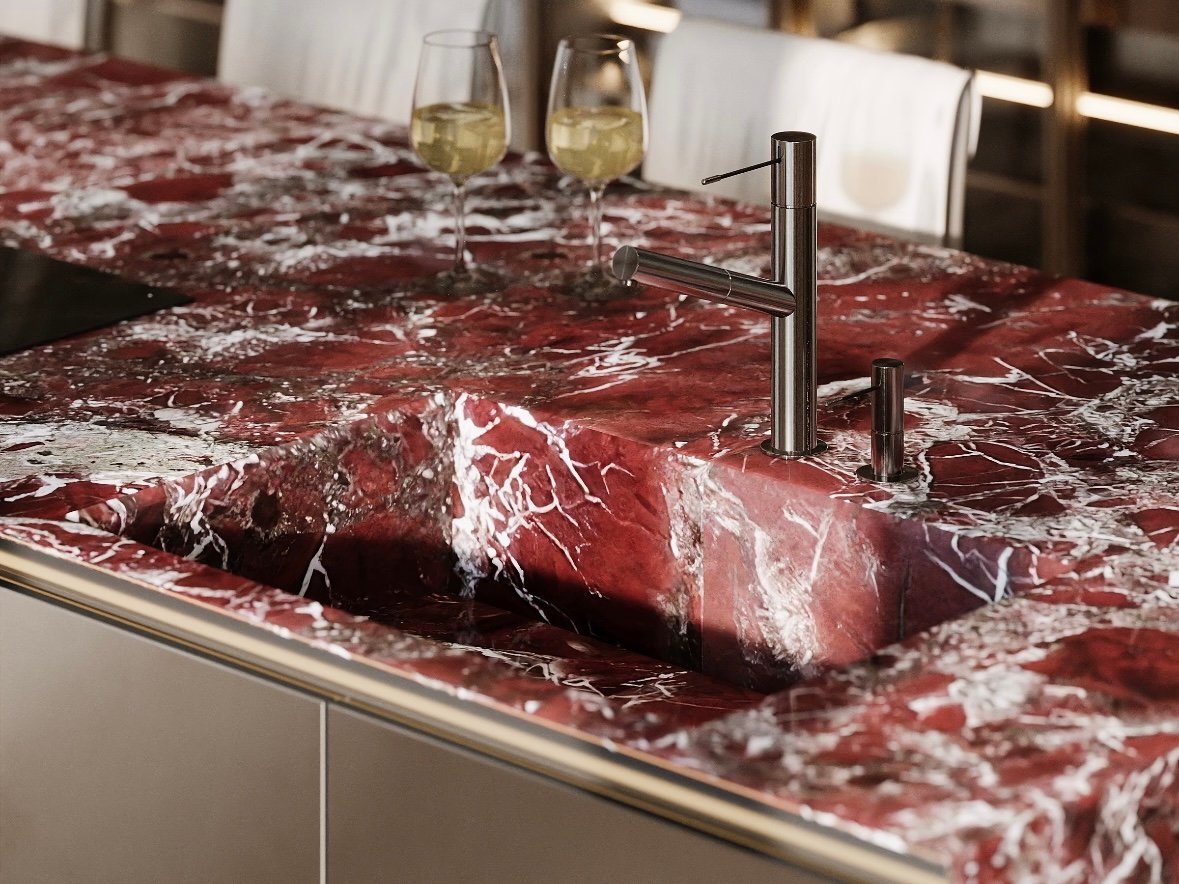
Sink & Cooktop Cut-Outs

Sink, cooktop and tap positions should be confirmed before fabrication so openings match the selected appliances and site conditions.
Undermount Sink · Top-Mount Sink · Cooktop Opening · Tap Holes
Kitchen countertop overhang and cabinet support
Structural Interface

Overhang & Support

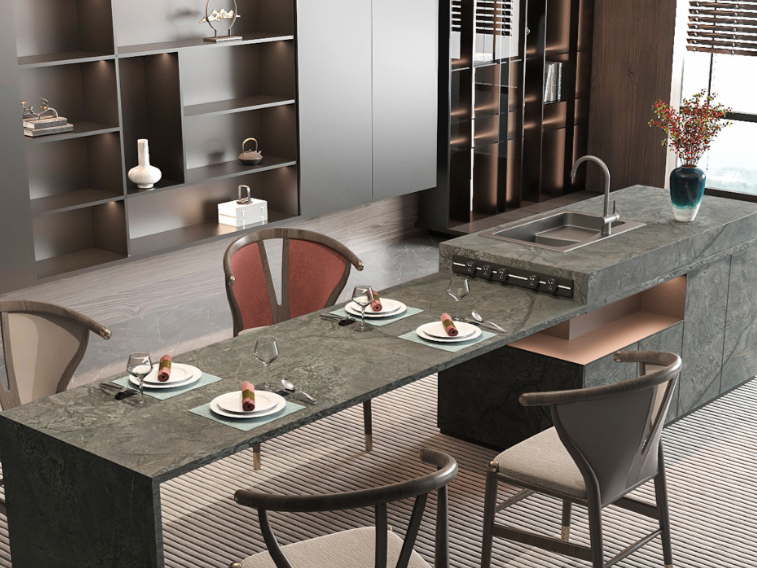
Islands, breakfast bars and cantilevered sections require support to be coordinated with countertop material, thickness and cabinet layout.

Island Overhang · Breakfast Bar · Cantilever · Bracket / Cabinet Support
Before Fabrication

Appliance and sink models should be confirmed before countertop fabrication. Cut-outs, joints, edge details and support conditions should be coordinated with the cabinet drawings before production begins.

Learn About Cabinet Carcass Construction →

How Countertops Connect With Cabinet Construction

01

Base Cabinet Leveling

Base cabinets should be level before countertop installation so the finished surface sits evenly across the cabinet run.

02

Support & Span

Material, thickness and unsupported span should be reviewed together when planning islands, corners and overhangs.

03

Sink Base Area

Sink cut-outs, plumbing positions and cabinet support should be coordinated before countertop fabrication begins.

04

Appliances

Cooktops, sinks, dishwashers and service spaces should be confirmed together with the cabinet and countertop drawings.

Cabinet Interface
Countertop performance depends partly on what supports it.

Countertop specifications should be coordinated with cabinet leveling, structural support, openings and appliance positions.

Learn About Cabinet Carcass Construction →

From Material Selection to Project-Ready Countertop

01 Material Confirmation
02 Shop Drawing
03 Slab Layout
04 Cut-Outs
05 Edge Treatment
06 Joint Planning
07 Quality Control
08 Coding & Packing
Natural Marble Detailed Fabrication Guide

For natural marble slab selection, vein planning, joint layout, edge fabrication and project-ready processing, see our dedicated marble fabrication resource.

Explore Custom Marble Fabrication →

How to Check Countertop Quality

No. Quality Check What to Look For Check
01
Material
Approved material type, slab and production batch.
02
Thickness
Finished thickness matches the confirmed project specification.
03
Surface
Check for scratches, pits, chips or visible surface defects.
04
Color / Vein
Appearance, color and vein direction match the approved selection.
05
Edge
Check for chips, polishing quality and consistent edge treatment.
06
Cut-Outs
Sink, cooktop and tap openings match confirmed positions and dimensions.
07
Joints
Joint location, gap and alignment follow the approved shop drawing.
08
Flatness
Check for bowing, unevenness or distortion before installation.
09
Support
Confirm full contact and required reinforcement at supported areas.
10
Coding
Each piece is identified by project, unit or room for installation.

Kitchen Countertops FAQ

What are the main types of kitchen countertops?
Common kitchen countertop materials include quartz, sintered stone, porcelain, granite, quartzite, marble, solid surface, stainless steel and laminate. Each differs in appearance, maintenance, fabrication requirements and project application.
What is the best kitchen countertop material?
There is no single best material for every kitchen. Quartz and sintered stone are often considered for low-maintenance use, while granite and quartzite suit natural-stone projects and marble is commonly selected where distinctive veining and a luxury appearance are priorities.
Quartz vs granite: which is better?
Quartz offers more consistent patterns and generally lower routine maintenance, while granite provides natural variation and strong heat resistance. The better choice depends on appearance, maintenance expectations, fabrication details and project requirements.
Is sintered stone good for kitchen countertops?
Sintered stone is widely used for modern countertops because it can provide strong heat, stain and scratch resistance with large-format slab options. Edge detailing, transport and fabrication quality remain important, particularly for thin or complex pieces.
How thick should a kitchen countertop be?
Countertop thickness should be selected according to the material, span, edge design, visual requirement and support condition. One thickness should not be applied to every material or project. Final dimensions should be confirmed during shop drawing and fabrication planning.
Which countertop is most heat resistant?
Sintered stone, porcelain, granite and stainless steel are commonly considered where higher heat resistance is important. Actual performance depends on the specific product, fabrication method and manufacturer requirements, so direct hot-pan exposure should still follow the material supplier's guidance.
Which countertop requires the least maintenance?
Quartz and sintered stone are commonly selected for projects where relatively low routine maintenance is a priority. Natural stones such as marble, granite and quartzite may require additional care depending on porosity, finish and sealing requirements.
How should sink cut-outs and countertop edges be specified?
Sink, cooktop and tap models should be confirmed before fabrication. Cut-out dimensions, edge profiles, joint locations and support conditions should then be coordinated with the approved shop drawings and cabinet layout before production begins.
Scroll to Top