
In the pursuit of personalized spaces and premium living, mass-produced furniture often falls short of capturing the true essence of a home.
As modern minimalism and light luxury styles continue to dominate global design trends, high-end custom furniture has become the absolute core of creating an ideal living space.However, the custom furniture market can be highly complex.
Bridging the gap between a stunning design blueprint and the final product involves navigating materials, hardware, and craftsmanship. Here is how to choose bespoke luxury furniture like a professional designer.
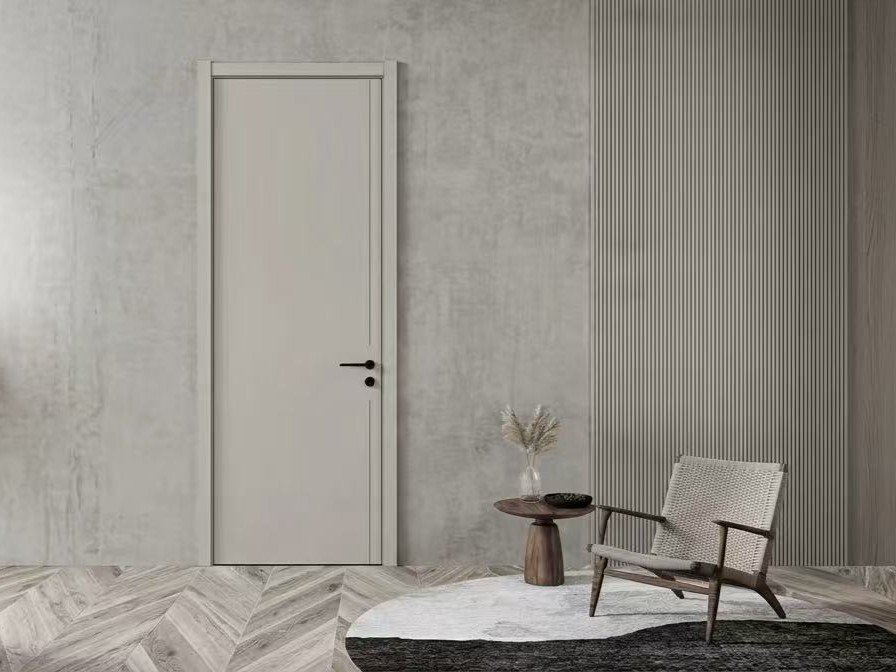
If you have been sourcing interior doors for a villa fit-out, a hotel project, or a residential development, there is a good chance you have come across the term "WPC door" on a supplier's quote or product sheet. And if your first reaction was to wonder exactly what WPC doors means — what the material actually is, how it performs, and whether it is the right choice for your project — you are not alone.
WPC has become one of the most widely specified interior door materials in the global market over the past decade. It is used in hotel rooms across Southeast Asia, in luxury villas in the Middle East, and in large-scale apartment developments throughout the Asia-Pacific region. Yet despite how common the term has become, many buyers still make purchasing decisions without a clear understanding of what WPC doors means at a material level.
This guide changes that. From the chemistry of the composite material to the practical performance differences that matter in real projects, we cover everything a property owner, developer, or procurement manager needs to know before specifying or purchasing WPC interior doors.
What WPC Doors Means: The Core Definition
The Complete Definition
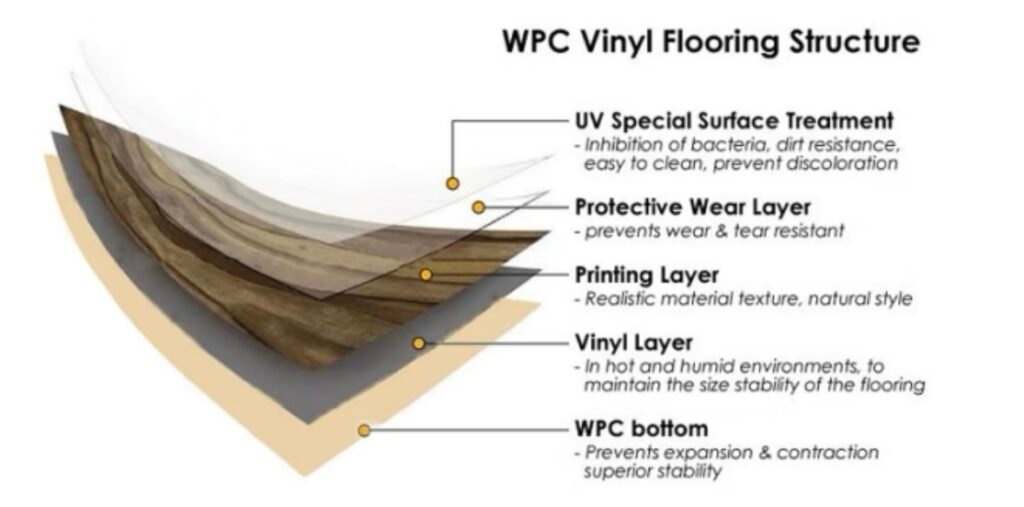
WPC doors are interior doors manufactured from Wood Plastic Composite — an engineered material that combines wood fiber and thermoplastic polymers to deliver the natural appearance of wood alongside the moisture resistance, dimensional stability, and long-term durability of plastic.
Breaking Down the Three Letters
W — Wood
WPC doors contain wood fiber or wood powder, typically sourced from sawmill waste or recycled timber. This component provides structural strength and a natural tactile feel closer to timber.
P — Plastic
The thermoplastic polymer component—most commonly PVC or PE—provides essential moisture and pest resistance. It binds wood fibers, ensuring the material remains dimensionally stable in diverse climates.
C — Composite
Components are fused through high-temperature extrusion into a single, uniform material. This advanced composite structure allows WPC to achieve performance characteristics superior to wood or plastic independently.
| Material | Core Composition | Primary Advantage | Primary Limitation |
|---|---|---|---|
| WPC Door | Wood fiber + thermoplastic polymer | Moisture resistance + dimensional stability | Slightly lower prestige feel vs solid wood |
| Solid Wood Door | Natural timber | Highest visual quality and prestige | Warps/swells with moisture; high maintenance |
| MDF Door | Medium-density fiberboard + veneer | Low cost; smooth surface | Poor moisture resistance; formaldehyde risk |
| PVC Door | Pure thermoplastic | Excellent waterproofing; low cost | Poor structural strength; low-end appearance |
| Aluminum Door | Aluminum profile | Maximum durability/weather resistance | Commercial appearance; poor thermal insulation |
For most interior door applications in hotel, villa, and residential development projects, WPC sits in the optimal performance range — better durability and moisture resistance than MDF or solid wood, better structural strength and appearance than PVC, and significantly lower maintenance requirements than any timber-based alternative.
WPC Door Material: Composition and Manufacturing
Raw Material Composition
Wood Fiber (50-70%)
Structural FoundationSourced from recycled timber, providing essential rigidity and a natural tactile feel.
Thermoplastic Resin (25-45%)
Moisture ShieldPVC or PE polymers that bind fibers, ensuring stability and water resistance.
Functional Additives (5-10%)
Performance BoostersUV inhibitors, stabilizers, and colorants for durability and visual appeal.
Manufacturing & Structure
Extrusion Molding
Used for continuous profiles like door frames, ensuring highly consistent cross-sections for high-volume production.
Compression Molding
Applied to door skins to replicate complex textures, raised panels, and intricate grain patterns of solid wood.
Surface Treatment Options
- Thermal TransferMost versatile option; high-end processes mimic timber grain depth.
- Matte PaintSolid color finish, ideal for modern minimalist interior projects.
- UV High-GlossHardened, scratch-resistant surface with easy-clean properties.
- Piano LacquerPremium multi-layer finish for luxury villas and boutique hotels.
Key Advantages of WPC Doors
Moisture and Water Resistance
WPC lacks the capillary structures of natural wood, preventing water absorption from steam or humidity. This eliminates the swelling, warping, and delamination typically seen in solid wood doors.
In tropical markets like Southeast Asia and the Middle East, this is the primary reason WPC has replaced solid wood for bathroom applications.
Termite and Pest Resistance
Thermoplastic polymers provide no food source for insects, making WPC naturally resistant to termites without requiring toxic chemical treatments.
Essential for villas and hotels in Southeast Asia, where untreated timber can fail within just two to three years.
Dimensional Stability
WPC maintains its size despite extreme temperature or humidity shifts, ensuring hinges and frames remain stress-free.
Vital for Middle Eastern hotel projects, where indoor AC-controlled humidity clashes with outdoor temperatures exceeding 45°C.
Low Maintenance Requirements
WPC eliminates the need for periodic painting, varnishing, or waxing; routine care requires only a damp cloth.
Hotel operators can expect a 60% to 80% reduction in maintenance labor and material costs over a ten-year period.
Environmental Credentials
By utilizing recycled wood fiber and thermoplastic polymers, WPC reduces the demand for virgin timber and repurposes waste. Furthermore, E0/E1 compliant WPC emits significantly lower VOCs than MDF-based doors.
WPC’s environmental profile positively contributes to green building certifications like LEED and BREEAM.
Design Flexibility
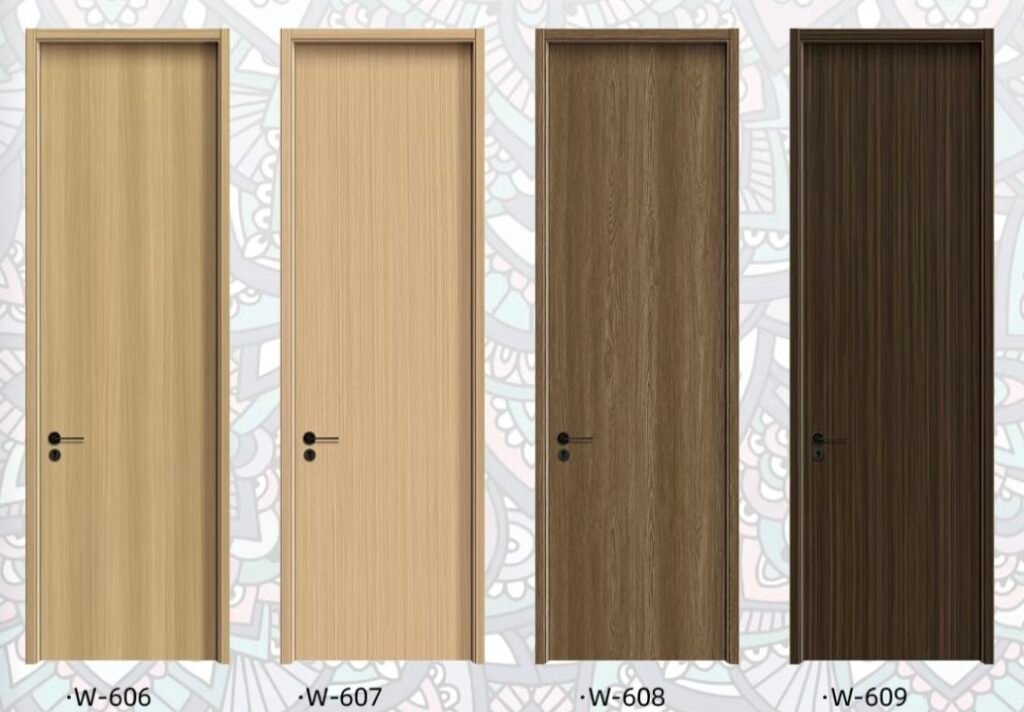
Manufacturing can replicate everything from traditional raised panels to minimalist contemporary designs, with superior UV-resistant color stability.
Allows for visual consistency throughout entire hotel or villa projects without the fading common in natural wood stains.
WPC Door vs Solid Wood Door: The Project Buyer's Comparison
- Hotels: WPC is the dominant global choice for guest rooms due to durability and cost-controlled batch consistency.
- Villas (Interior): High-quality wood-grain WPC is the practical standard for living spaces and bedrooms.
- Villas (Entry): Consider solid wood or WPC-solid wood hybrids for premium statement entry doors.
- Apartments: WPC provides the long-term maintenance profile essential for efficient property management.
WPC Door Applications: Room by Room
Bathroom & Kitchen Doors
Bathrooms require high moisture resistance. For these, specify sealed bottom edges, 304 stainless steel hardware, and WPC frames for total waterproofing. Kitchens benefit from high-gloss or matte finishes which are easier to clean than wood-effect surfaces, while glass-insets provide a functional visual connection.
Bedrooms & Hotel Guest Rooms
For bedrooms and hotels, acoustic performance is critical. Solid WPC doors with a density exceeding 650 kg/m³ are standard for sound attenuation. Hotel procurement should verify fire ratings, STC acoustic ratings (30+), and hardware specifications.
Villas & Residential Developments
Whole-house WPC packages provide design consistency across all rooms. Factory-direct procurement allows for cost-effective custom heights (up to 2700mm+) to suit high ceilings. For residential developments (50+ units), factory-direct sourcing ensures batch consistency and simplifies maintenance for property managers.
WPC Door Frames: Why Frame Material Matters as Much as the Door
The Case for WPC Door Frames
Pairing a WPC door slab with a timber or MDF frame is a common procurement error. WPC door frames ensure the entire system maintains consistent dimensional stability and moisture resistance, preventing the common "binding and swelling" failures associated with hybrid installations.
Frame Material Comparison
| Material | Moisture Res. | Dim. Stability | Best Application |
|---|---|---|---|
| WPC | Excellent | Very good | All interior (wet & dry) |
| Solid Wood | Poor | Poor | Dry premium rooms |
| Aluminum | Excellent | Excellent | Commercial spaces |
| MDF | Poor | Moderate | Budget dry areas |
Installation Specification
1. Opening Allowance
Ensure the rough opening is 20–30mm larger than the external frame dimensions for leveling and expansion tolerance.
2. Waterproof Sealing
Use neutral silicone sealant at the frame-to-floor junction; avoid acid-cure silicone to prevent substrate reactions.
3. Perimeter Filling
Utilize expanding foam for frame-to-wall voids, finished with silicone rather than cement-based fillers to accommodate building settlement.
What to Verify Before Buying WPC Doors from an Overseas Supplier
WPC Door Procurement Verification Checklist
- Formaldehyde Emission: Accredited test report confirming E0 or E1 classification.
- Density Report: Solid slabs should measure 600–900 kg/m³ (avoid hollow construction).
- Moisture Absorption: 24-hour absorption rate must be verified below 1%.
- Fire Rating: Certificate of compliance meeting local building codes (essential for hotels).
- Standard Heights: Verify local market norms (e.g., 2100mm ME, 2040mm AU, 2032mm US).
- Slab Thickness: Confirm 35mm (residential) or 45mm (hotel) minimum.
- Frame Profile: Specify single or double-rebate and confirm exact wall thickness.
- Hardware: Validate weight rating against door slab requirements.
FAQS
What does WPC doors means exactly — is it the same as a PVC door?
No. WPC and PVC are different materials. WPC contains a significant proportion of wood fiber combined with thermoplastic resin, which gives it better structural strength, a more natural appearance, and a surface that accepts decorative finishes more effectively than pure PVC. PVC doors are made entirely from thermoplastic polymer with no wood content.
Are WPC doors genuinely waterproof?
The WPC material itself has very low water absorption — typically less than 1% over 24 hours for quality products. However, a door's real-world waterproofing performance also depends on installation details: the bottom gap between the door and floor, the sealing of frame-to-wall junctions, and the water resistance of the hardware. Material performance alone is not sufficient without correct installation.
Can WPC doors be used on exterior applications?
Standard WPC interior doors are not designed for exterior installation where they would be directly exposed to sunlight, rain, and wide temperature variation. Exterior-grade WPC products with UV-stable surface coatings are available but are a different specification from standard interior doors. Always confirm the intended application with the supplier before purchasing.
Can WPC doors be manufactured in custom sizes?
Yes. Factory-direct WPC suppliers can produce doors to custom width, height, and thickness specifications. This is particularly relevant for villa projects with high ceiling heights requiring 2400mm or taller doors, and for renovation projects where the existing rough opening does not conform to standard dimensions.
Do WPC doors contain formaldehyde?
WPC doors produced to E0 or E1 emission standards release formaldehyde at levels well below international safety thresholds — significantly lower than standard MDF-based doors. However, not all WPC products are produced to these standards, which is why requesting a third-party test certificate before purchase is important.
What is a realistic service life for WPC interior doors?
Under normal indoor conditions, quality WPC doors have an expected service life of 15 to 25 years with minimal maintenance. This exceeds the typical service life of MDF or laminated wood doors in the same conditions, and is comparable to solid wood doors that are maintained correctly — but without the maintenance cost.
For a hotel project with 200 rooms, what is the minimum order quantity?
This varies by supplier, but most factory-direct WPC manufacturers can accommodate hotel-scale projects of 100 rooms or more with dedicated production runs. Projects below 50 door sets typically draw from standard stock or catalog specifications rather than custom production.
Conclusion: The Case for Turnkey Interior Solutions in International
- WPC doors means Wood Plastic Composite doors — an engineered interior door solution that combines the natural appearance of wood with the moisture resistance, dimensional stability, and low maintenance requirements of thermoplastic materials.
- For property developers, hotel operators, villa owners, and interior designers working on projects in tropical climates, high-humidity environments, or simply looking for interior doors that perform consistently over years of use without ongoing maintenance investment, WPC is the material specification that delivers the best balance of performance, cost, and design flexibility available in the current market.
- The key decisions in specifying WPC doors correctly are understanding which structural type fits your acoustic and weight requirements, confirming the surface treatment that matches your design intent, verifying the material certification documentation that your market requires, and selecting a supplier with demonstrated manufacturing capability and cross-border project delivery experience.
- The difference between a WPC door that performs well for fifteen years and one that causes problems within three years is not primarily in the category of material — it is in the specific material quality, the manufacturing consistency, and the installation standards applied to the project.
Related reading:
—What Is a Flush Door
—Interior Doors
— Hotel Fit-out Projects: Case Studies and Delivery
— Villa Fit-out Projects: Full-House Interior Solutions
— Turnkey Interior Solutions: The Complete Guide for Property Projects