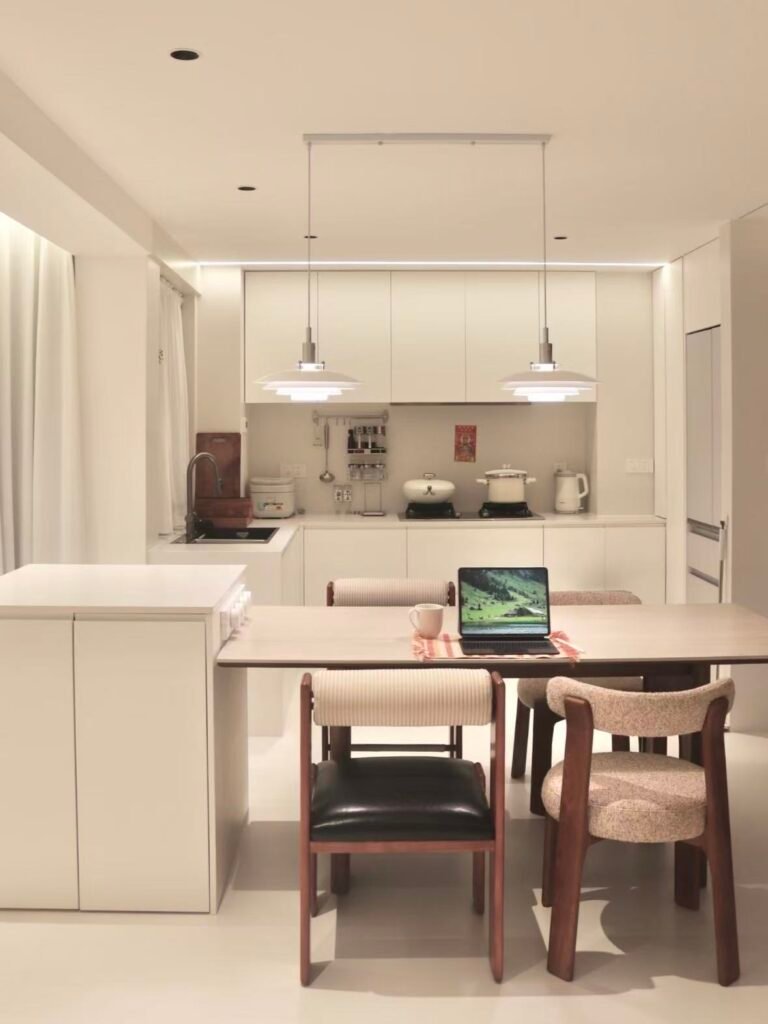
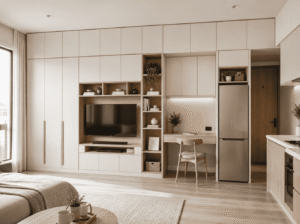
1. What Are White Lacquer Kitchen Cabinets?
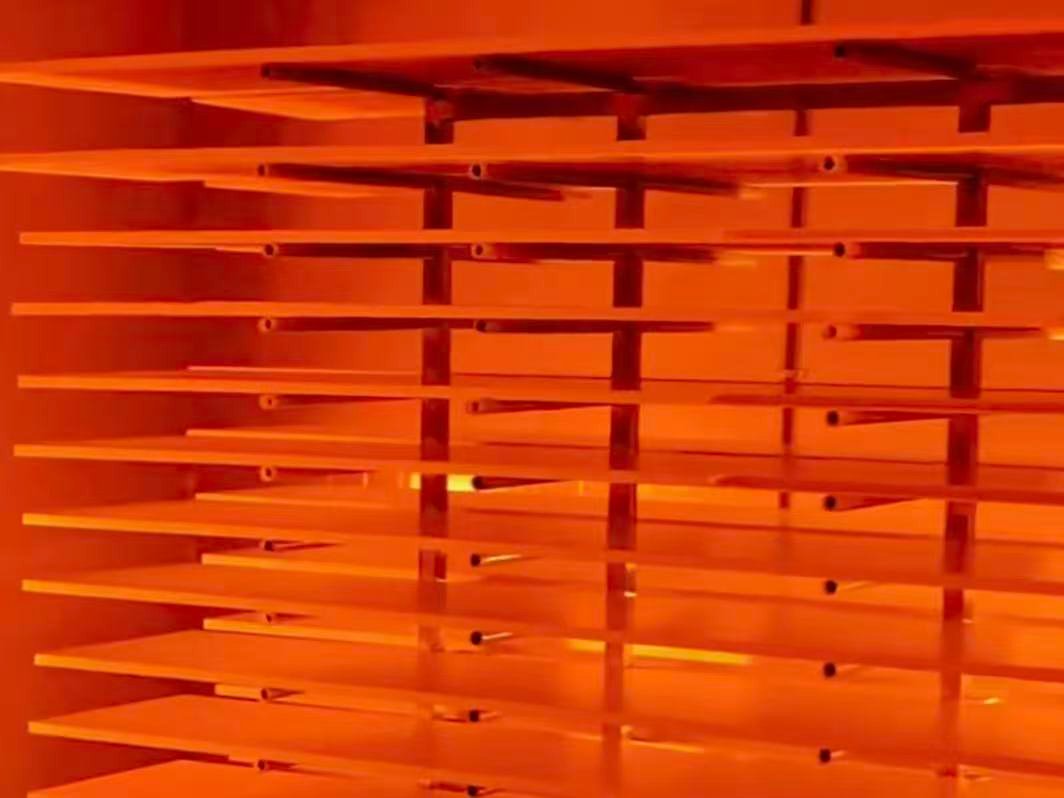
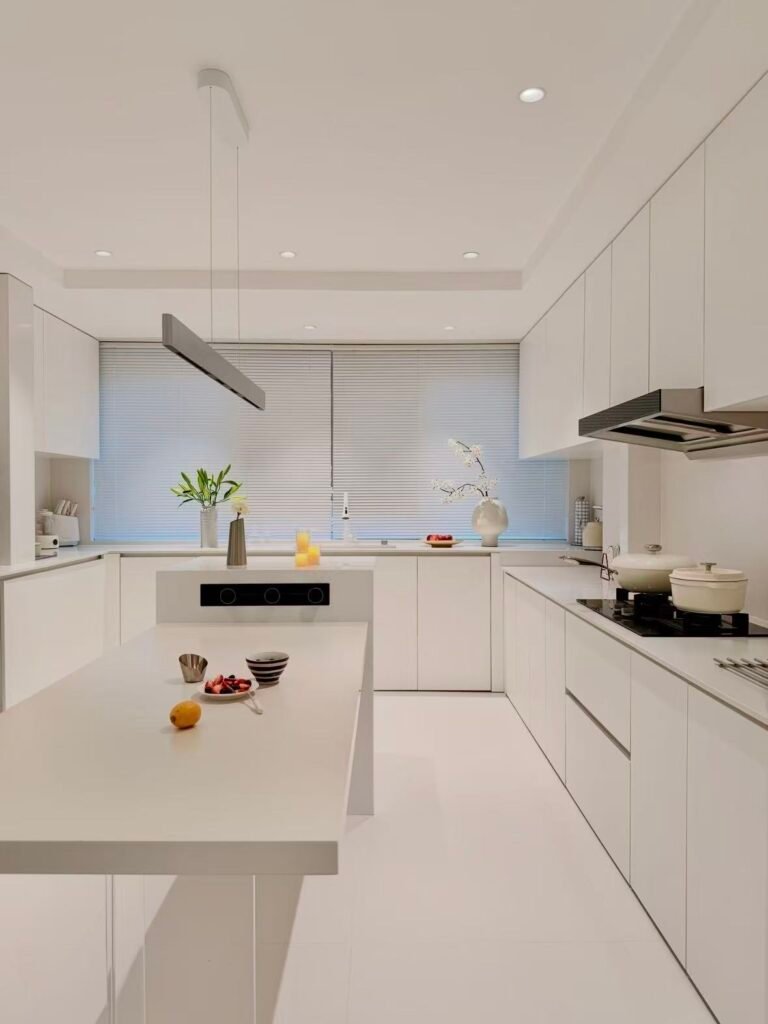
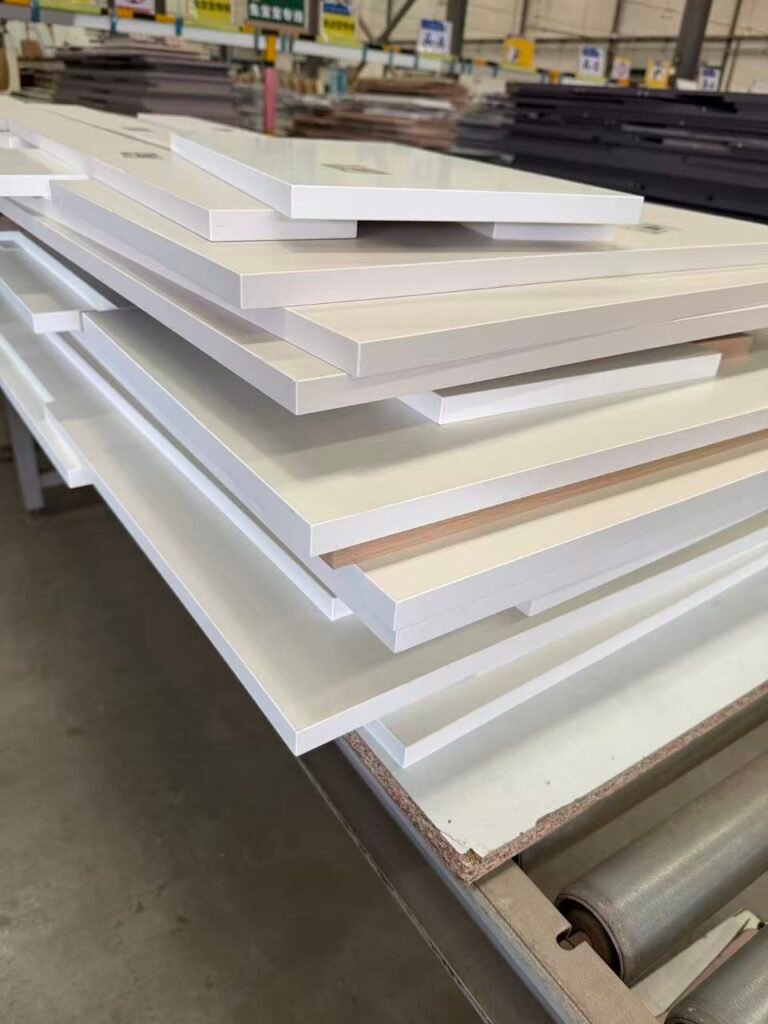
White lacquer kitchen cabinets are cabinet systems with doors, drawer fronts, or selected decorative panels finished with an opaque white lacquer coating. The lacquer is applied to a compatible, prepared substrate, often MDF, to produce a painted surface that may be matte, satin, semi-gloss, or high-gloss.
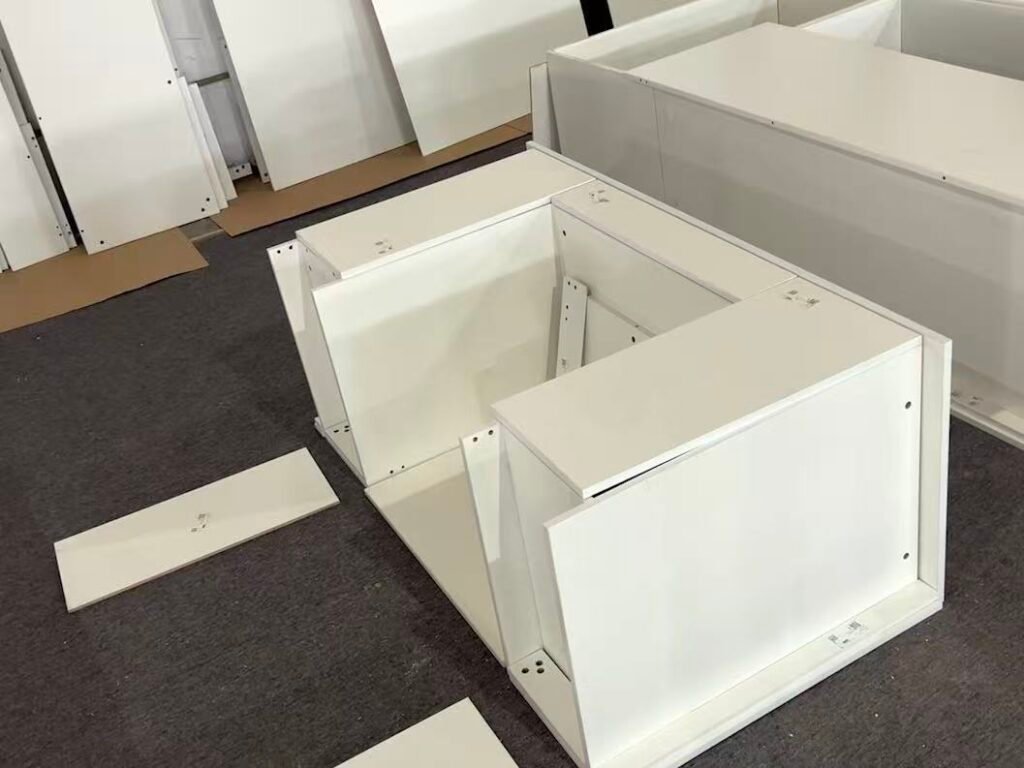
Lacquer is a finish—not the cabinet core material. A lacquer-coated door, plywood carcass, hinge, and stone countertop perform different functions and should be specified separately.
Common Components of a White Lacquer Kitchen
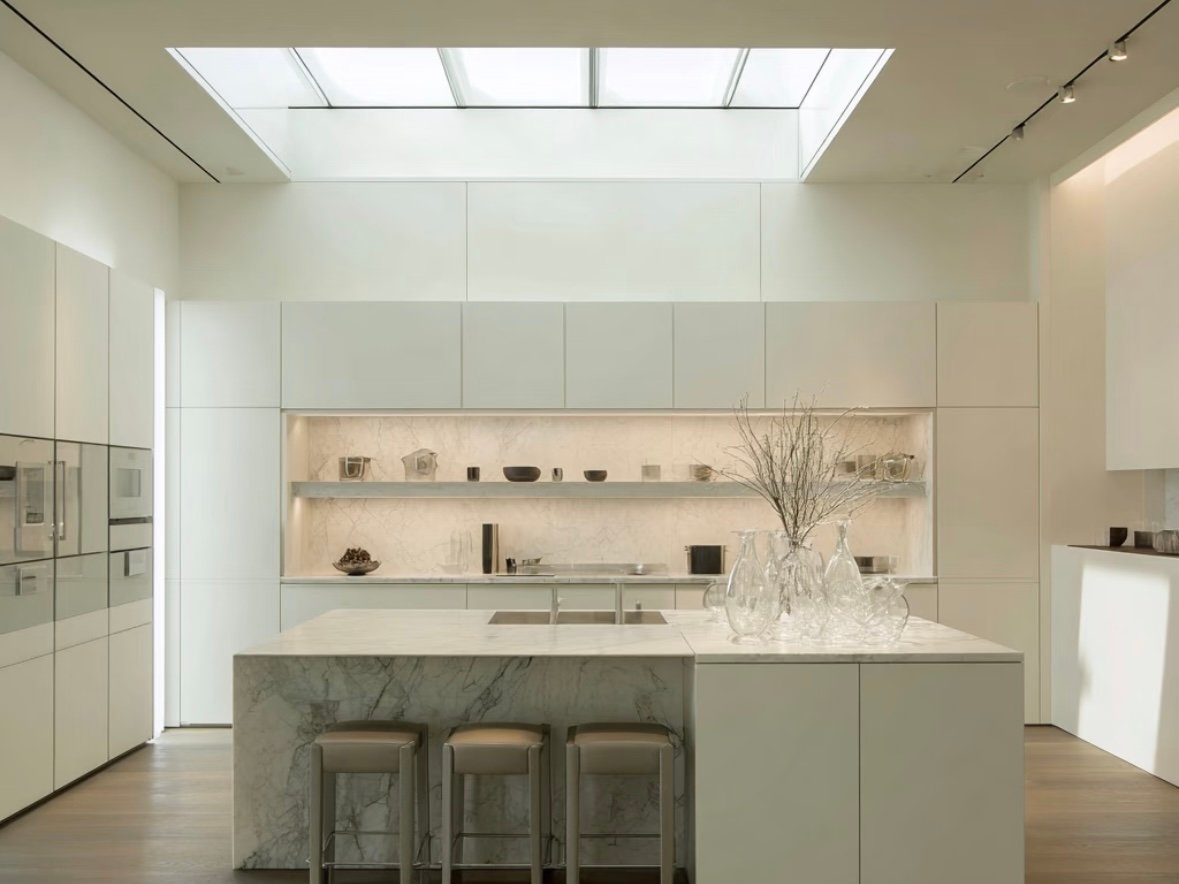
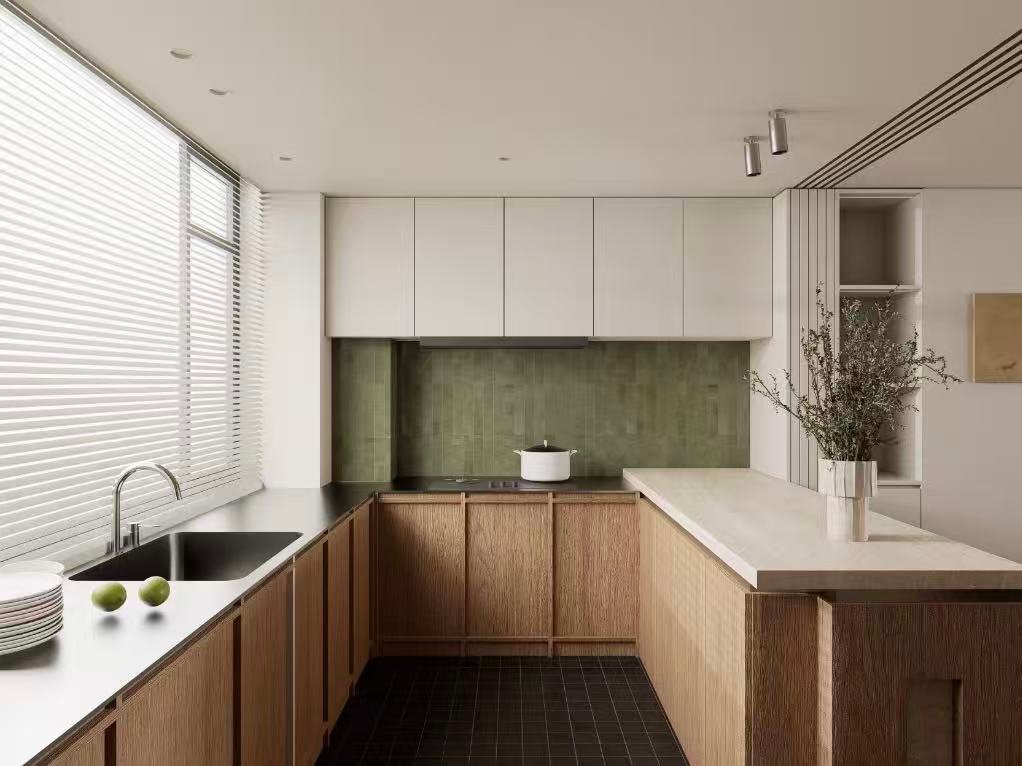
A contemporary villa kitchen might use matte white lacquer MDF doors, plywood carcasses, smoked-glass display units, and a sintered stone island. Calling this simply a “white lacquer kitchen” would leave important procurement details unspecified.
For more on door construction and finishing options, see BoyceCasa’s Kitchen Cabinet Doors Guide.
2. High-Gloss vs Matte White Lacquer Kitchen Cabinets
High-gloss white lacquer cabinets create strong reflections and a polished look. Matte white lacquer cabinets produce a softer, low-reflection appearance. Neither finish is universally more durable or easier to maintain.
High-Gloss White Lacquer
High-gloss lacquer reflects light and creates sharp highlights. It is often selected for contemporary kitchens and design-led spaces where a bright, polished appearance is important.
A reflective finish can visually brighten a kitchen, but it can also reveal fingerprints, fine scratches, dust, or subtle waviness. Surface preparation, coating uniformity, and finishing quality are especially visible in reflected light.
Matte White Lacquer
Matte lacquer reduces pronounced reflections and gives cabinetry a more restrained appearance. It is frequently paired with natural stone, wood veneer, and architectural wall finishes in minimalist kitchens.
Certain matte finishes show fewer fingerprints, but some can display rubbing marks or retain oily residue. Cleaning and scratch behavior depend on the specific formulation and surface texture.
High-Gloss vs Matte: Practical Comparison
How Should Buyers Specify Gloss Levels?
Terms such as premium matte and super glossy are not enough for repeated production. Request physical samples and examine them in daylight and under the project’s planned artificial lighting.
Where numerical control is appropriate, gloss can be measured using a defined method; ISO 2813 describes measurement procedures for suitable coatings. The measurement angle and acceptable tolerance still need to be agreed for the actual finish.
For multi-unit developments, an approved and retained master sample provides a practical reference for subsequent batches. Designers can explore related configurations in BoyceCasa’s Custom Kitchen Cabinets range.
3. White Lacquer Kitchen Cabinets: Pros and Cons
White lacquer offers design flexibility, but it is not maintenance-free. The advantages and limitations should be weighed against how the kitchen will be used and maintained.
Advantages
Smooth, coordinated appearance. A well-executed lacquer finish can create a continuous painted appearance across flat fronts and compatible decorative profiles.
Flexible color and sheen. White lacquer can be specified in warm, neutral, or cool white tones, with different gloss levels. Physical samples remain essential because digital images cannot reliably communicate color and sheen.
Custom design possibilities. Compatible lacquer systems can be applied to suitable routed MDF doors or selected non-standard profiles, allowing greater design flexibility than some flat decorative sheet finishes.
Material combinations. White lacquer works with glass, aluminum frames, wood tones, and stone surfaces—particularly useful in custom villas and coordinated whole-house projects.
Potential for professional refinishing. Some coating systems can be repaired or refinished. Results depend on the original finish, extent of damage, and ability to match color and gloss.
Disadvantages
Scratches and edge impacts. Smooth painted surfaces can show dents, scratches, or chips around frequently handled edges.
Possible yellowing. Some white coatings can discolor with age, light, heat, or contamination; product-level evidence is needed to evaluate resistance.
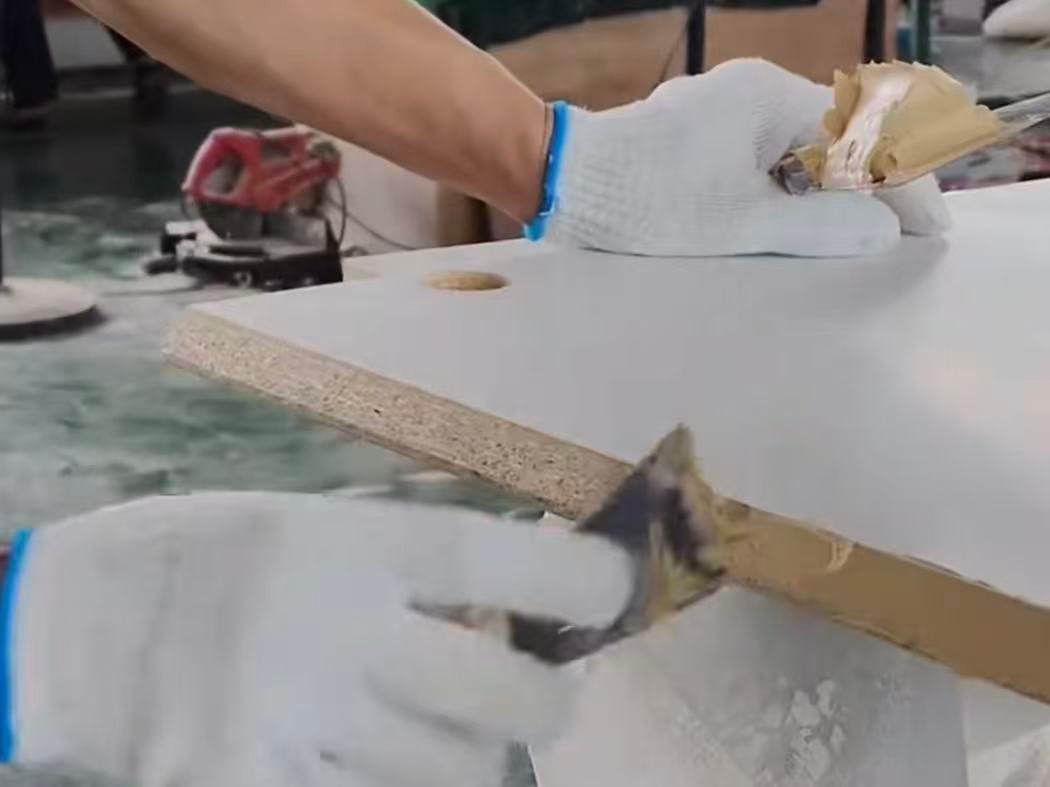
Manufacturing sensitivity. Dust, inadequate substrate preparation, uneven application, or incorrect curing can create visible defects.
Potentially higher cost. Multiple finishing operations and inspection requirements may make lacquer more expensive than some decorative board alternatives.
Repair matching. Local repairs may be visible when the existing finish has aged or its original gloss is difficult to reproduce.
Common Problems, Causes, and Prevention
How Long Do White Lacquer Cabinets Last?
There is no credible single lifespan that applies to every lacquer kitchen. Performance depends on the full cabinet system, usage intensity, installation, cleaning practices, and environmental conditions. A lightly used villa kitchen and a frequently cleaned hospitality kitchenette may behave quite differently.
The best buying decision is based on a defined finish, sensible construction details, and realistic maintenance—not an unsupported promise of a fixed number of years.
4. Do White Lacquer Kitchen Cabinets Turn Yellow?
Yes, some white lacquer cabinets can develop a yellowish appearance over time, but yellowing is not inevitable. It is important to distinguish a change within the coating from surface contamination that may be removable.
Why Yellowing May Occur
Coating chemistry. Resin chemistry, additives, cure conditions, and coating formulation influence color stability. Water-based versus solvent-based alone is not a reliable prediction of yellowing resistance.
Light and heat. Sunlight, UV exposure, and localized heat can affect some coatings, especially when exposure is uneven across the kitchen.
Cooking residue. Grease, smoke, and airborne contaminants may accumulate on white surfaces and cause an apparent color change.
Inappropriate cleaning. Harsh solvents or abrasive cleaning products can alter some finishes and should be avoided unless expressly approved by the coating supplier.
Surface Staining or Coating Discoloration?
If yellowing appears mainly around cooking zones or frequently touched areas, surface contamination may contribute. If similarly exposed surfaces have changed consistently and approved cleaning does not improve their appearance, the coating itself may have changed.
A reasonable initial check is to compare the affected area with a protected section or retained sample and test a mild, finish-compatible cleaner in a small inconspicuous area. Persistent discoloration should be assessed by the manufacturer or qualified finishing professional.
How Can Project Buyers Reduce the Risk?
Review the actual coating specification and request relevant performance or aging-test data where available. Methods such as ISO 16474-2 and ISO 16474-3 describe controlled light-exposure procedures, but they do not independently guarantee a fixed number of years without yellowing.
For multi-unit projects, retain a physical master sample and agree in advance how color differences will be evaluated. No responsible supplier should promise that every white lacquer coating will remain unchanged indefinitely under every condition.
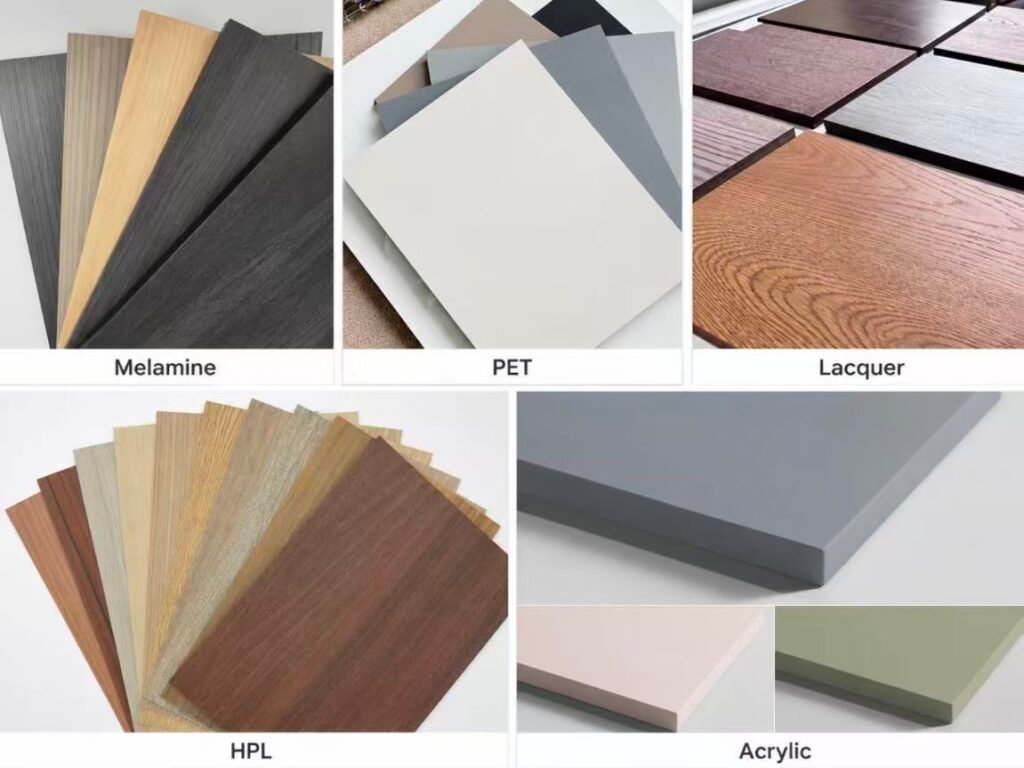
5. Lacquer vs Acrylic, PET, Laminate and Melamine Kitchen Cabinets
A fair comparison starts with the manufacturing system. Lacquer is a liquid-applied coating; acrylic and PET often involve decorative sheet or film systems; HPL and melamine-faced boards use other surface constructions.
There is no universal performance ranking that applies to all grades of lacquer, acrylic, PET, HPL, and melamine. Product quality, substrate, adhesives, edge treatment, and intended use all matter.
Finish Comparison Matrix
Lacquer vs Acrylic
Both can produce smooth contemporary cabinet fronts. Lacquer may be attractive for bespoke painted colors and compatible routed designs; acrylic sheet systems are often considered for flat panels requiring a consistent decorative surface.
Scratch resistance, color stability, and repairability should be compared between specific products rather than inferred from the material names.
Lacquer vs PET
PET decorative films are widely used for flat-panel cabinetry and may offer efficient, repeatable surface options. Lacquer may be preferred for a particular painted appearance, custom colors, or compatible decorative profiles.
PET is not automatically cheaper or longer-lasting. Film quality, adhesive system, panel construction, and order volume affect performance and cost.
Lacquer vs HPL or Melamine
HPL and melamine-faced boards are often evaluated for standardized apartment kitchens because of their manufacturing repeatability and availability across different grades. Lacquer may offer different design flexibility but comes with different finishing and inspection requirements.
The choice should follow a project-specific performance specification, not a simplistic “premium versus budget” label.
Material Selection by Project Type
6. Are White Lacquer Kitchen Cabinets Suitable for Humid Climates?
White lacquer cabinets can be used in humid climates when the complete construction is appropriate. A lacquered surface does not make the entire cabinet waterproof. This distinction matters for projects in Indonesia, Malaysia, and other tropical markets.
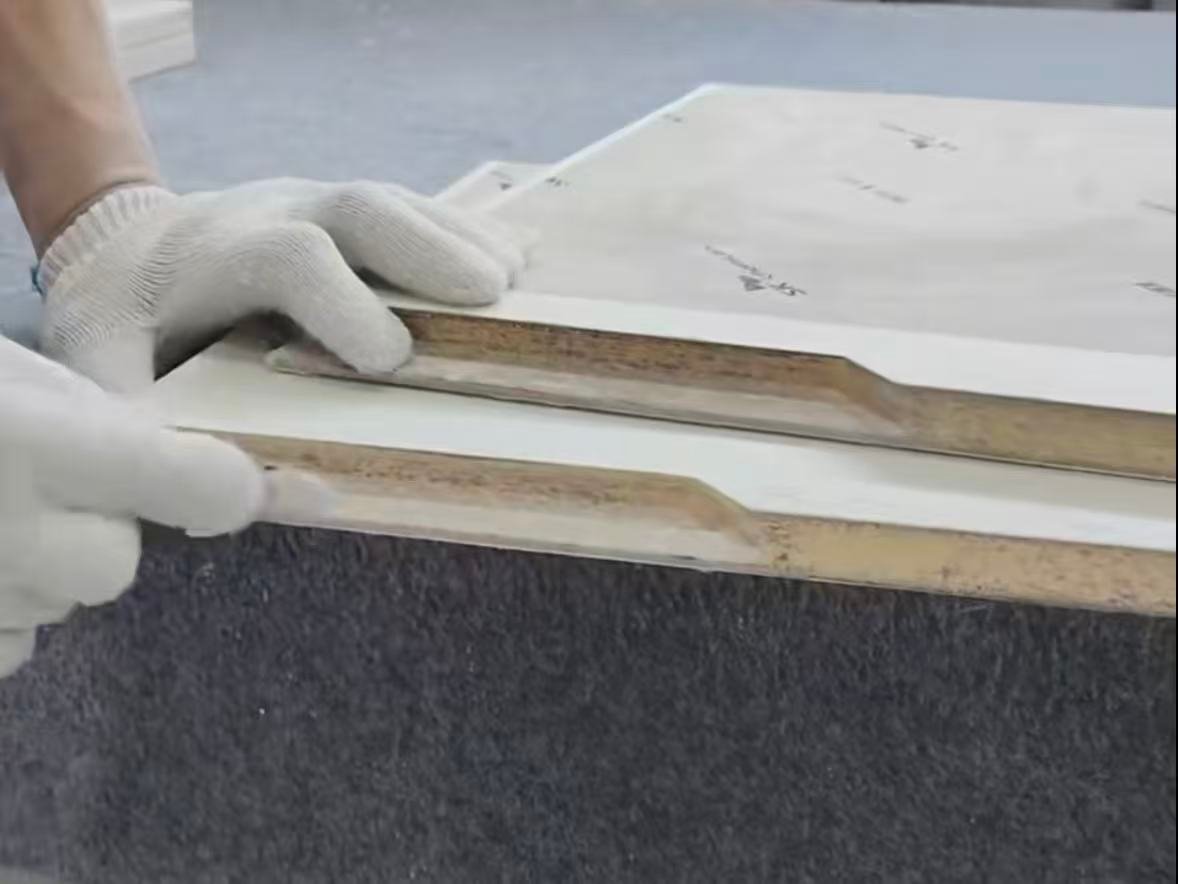
Moisture can reach the core through damaged edges, unsealed joints, service penetrations, or leaks. A door may appear well coated while a susceptible substrate swells or deforms after water ingress.
Key Details for Humid Kitchen Environments
Should Buyers Consider PVC, WPC or Aluminum?
PVC, WPC, aluminum, and other non-traditional materials may be considered for certain moisture-sensitive cabinet applications. They also differ in strength, appearance, thermal behavior, and finishing compatibility.
They should not be described as direct substitutes for lacquer-coated MDF without evaluating the actual design. A sensible tropical kitchen specification addresses the doors, carcass, edges, hardware, ventilation, and installation environment as a complete system.
For broader substrate choices, read the Kitchen Cabinet Materials Guide.
7. White Lacquer Kitchen Cabinets with Glass Doors
Combining solid white lacquer doors with glass display elements can add depth and material contrast without abandoning a clean modern aesthetic. Glass is especially useful for feature upper cabinets and decorative storage.
Real glass, acrylic, and glass-effect decorative coatings are different materials and must be described accurately.
Common Glass Door Options
What Should Be Specified?
The glass type, thickness, framing, retention method, hinge capacity, door weight, and local safety requirements should be coordinated. Toughened and laminated safety glass have different breakage characteristics; neither should be treated as the universal answer for every door.
A coordinated design may also pair white lacquer with stone countertops, aluminum hardware, and lighting. These interfaces are best resolved during shop-drawing review, not at installation.
For selection guidance, see BoyceCasa’s Glass Types for Wardrobe & Cabinet Doors and Luxury Kitchen Cabinets.
8. How to Verify a White Lacquer Kitchen Cabinet Manufacturer
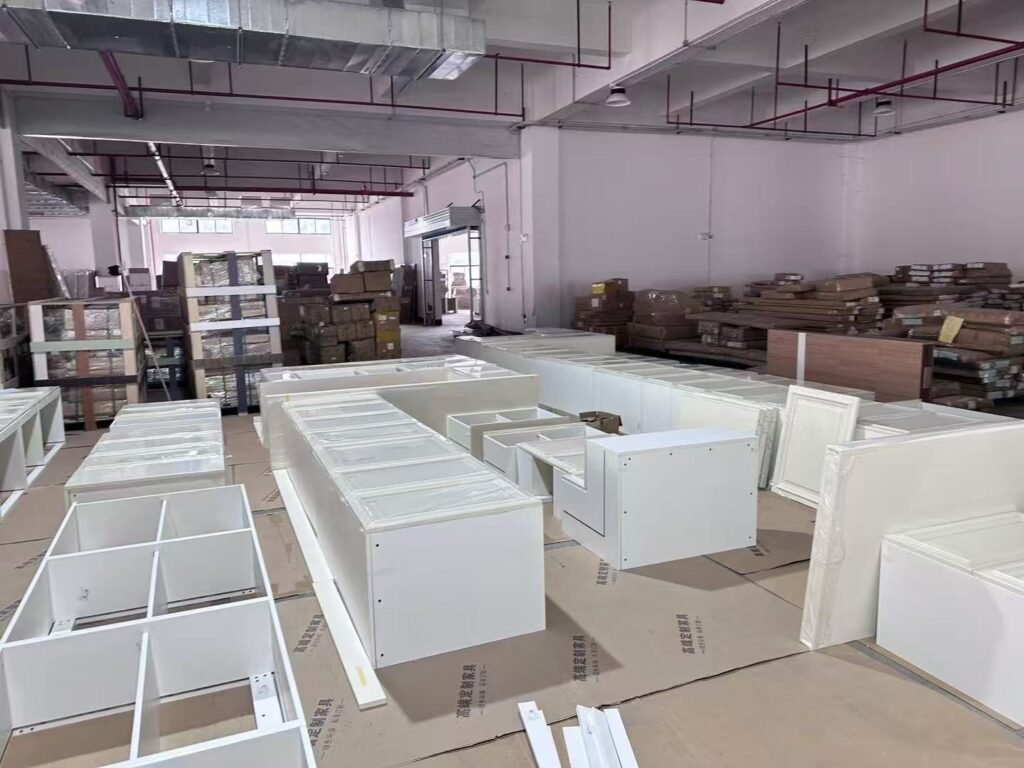
For a B2B project, attractive photographs are not enough. Buyers need confidence that the approved finish can be manufactured consistently, inspected against a clear reference, and delivered with identifiable components.
1. Confirm Substrate and Coating Specifications
Obtain the actual door substrate, coating-system description, finish sample reference, hardware selection, and critical construction details. Clarify which manufacturing stages are completed by the primary supplier and which may involve qualified specialist partners.
2. Approve and Retain Physical Samples
A physical sample is the reference for intended color and sheen. For repeat kitchens, identify how batch-to-batch consistency will be checked. Numerical color or gloss tolerances can be used if the specification and measurement method are agreed beforehand.
3. Inspect Relevant Manufacturing Stages
4. Use Standards Accurately
Different standards address different properties. For example, ISO 2813 describes gloss measurement; ISO 2409 describes a coating cross-cut test with defined applicability limits; and ANSI/KCMA A161.1 covers performance and construction requirements for kitchen and vanity cabinets.
A published method does not establish a universal pass/fail threshold for every product. Referencing a standard is not evidence that a particular BoyceCasa product has passed it or carries a certification. Ask for applicable results and agreed acceptance criteria when they are material to the order.
5. Clarify the Full Quotation and Delivery Scope
Check whether the price includes carcasses, door finishes, hardware, accessories, countertops, export packaging, shipping, and installation. Confirm the agreed responsibilities for sample approval, production follow-up, inspections, delivery, replacement parts, and on-site support.
For more on supplier evaluation, see BoyceCasa’s B2B Kitchen Cabinet Manufacturer Sourcing Guide. To review the wider manufacturing setup, visit Our Factories.
9. Completed Project Case Study: From 3D Design to Installed Lacquer Kitchen in Guam
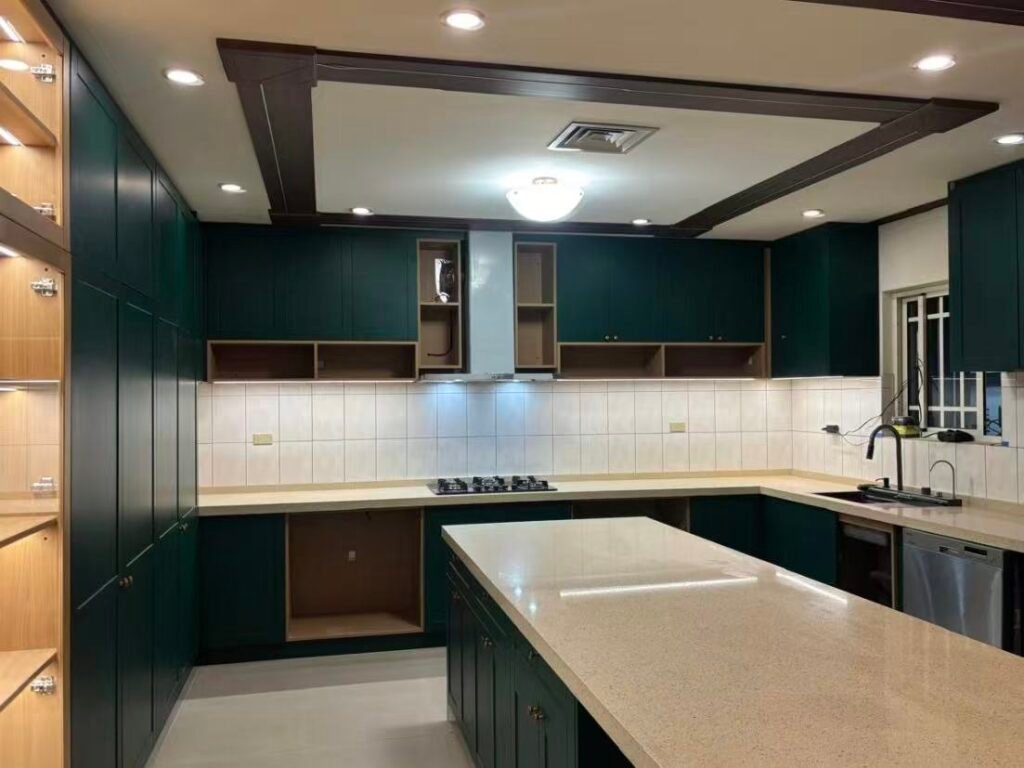
A residential kitchen project in Guam, a U.S. territory, illustrates how custom Shaker-style lacquer cabinetry, glass display units, integrated lighting, and a central island move from design documents into an on-site installation. The project is supported by 3D renderings, technical drawings, installation photographs, and feedback shared by the project team.
Project relevance · The installed doors are dark green, not white. This case demonstrates shaped lacquer cabinet fronts and design-to-installation coordination; it is not evidence for the anti-yellowing performance or durability of a white lacquer product.
9.1 Project Overview
9.2 From 3D Design to Actual Installation
The design package includes base- and wall-cabinet plans, elevations, and multiple 3D views. Its approval notes specifically call for confirmation of room dimensions, cabinet heights, door-opening directions, and drawing annotations before ordering. The documents distinguish design renderings from the drawings governing fabrication.
On-site photographs show the same overall material direction: dark green recessed-panel fronts, a central island, lighter worktops, and integrated storage around the cooking and sink areas. Architectural finishes and some site details differ from the visualization; the photographs should be presented as evidence of execution, not as a pixel-perfect match.
9.3 Glass Display Cabinets and Coordinated Finishes
An important feature of the project is the contrast between painted green cabinetry and wood-tone display units. In the design image, tall glass-front cabinets and lit shelving frame a dedicated display wall; the installed photograph documents how those components were assembled in the kitchen.
INSTALLED DISPLAY CABINETRY
For custom cabinetry buyers, the technical value lies in coordinating different door constructions, shelf lighting, display proportions, and adjoining lacquered panels. Visual consistency depends on the specified dimensions, samples, hardware, and site interfaces.
9.4 Finished Cabinetry and Functional Integration
A second installation view documents how the island and perimeter cabinetry relate to the display wall and circulation space. The photos show raised profile lines on the painted doors, warm-toned display interiors, pale worktops, and several built-in storage zones.
ACTUAL INSTALLATION | ISLAND AND DISPLAY CABINETRY
This combination illustrates a practical point for overseas kitchen procurement: the finished kitchen is a system, not simply a set of matching door fronts. Cabinet proportions, opening clearances, appliance locations, countertop interfaces, and lighting must all be coordinated against the approved drawings.
9.5 Customer Feedback After Installation
Following installation, project communication included positive reactions to photographs of the cabinetry. Two short comments were:
“The kitchen is beautiful!”
“Quality is very good.”
9.6 What This Project Demonstrates for White Lacquer Buyers
Although this example uses a green finish, its production and installation considerations also apply to white lacquer kitchen cabinets:
- Custom profiles: Shaker-style recessed panels require accurate geometry, consistent door gaps, and a compatible finishing process.
- Finish coordination: painted doors, glass cabinetry, shelving, countertops, and lighting should be reviewed as a unified specification.
- Design-to-site review: 3D renderings communicate intent; dimensions, opening directions, appliance clearances, and approved shop drawings control fabrication and installation.
- Evidence of delivery: completed-project photographs, design documents, and authentic comments help buyers assess real project experience.
The project should not be used to support unverified claims about white lacquer gloss retention, yellowing resistance, coating thickness, or formal test compliance. Those claims require evidence for the particular white lacquer system being supplied.
For related products, explore BoyceCasa’s custom kitchen cabinet solutions and completed project portfolio.
Relevant BoyceCasa pages: boycecasa kitchen cabinets boycecasa projects
10. One-Stop Kitchen and Interior Project Coordination with BoyceCasa
A kitchen does not stand alone. Countertops, doors, walls, lighting, decorative glass, furniture, and other materials must work together in the completed space. Misaligned specifications or unclear responsibilities can lead to delays, rework, or unexpected costs.
Foshan-Based Custom Cabinetry and Project Support
BoyceCasa is a Foshan-based custom cabinetry manufacturer and one-stop interior project coordination provider for residential and hospitality applications. Depending on the agreed project scope, support can include drawing review, material coordination, custom cabinet manufacturing, related product sourcing, quality inspection, export packing, shipping coordination, and installation guidance.
Different product categories and specialist processes can involve different manufacturing arrangements. The actual supply scope and responsibilities should always be confirmed in writing.
Learn more through BoyceCasa’s Custom Kitchen Cabinets Manufacturer page and Factory & Manufacturing Network.
Compare Finishes and Materials in Our Foshan Showroom
Finish selection from digital images alone is difficult: the same white sample can look different under varying light and beside different countertops, floors, and wall materials.
At the BoyceCasa 30,000 m² Foshan Showroom, visiting designers and buyers can compare cabinetry and related interior categories in person. This helps align material decisions around the complete project rather than treating each product in isolation.
From Drawings to Delivery
A practical sequence is project review → drawings and specifications → finish/sample approval → scope and quotation confirmation → manufacturing → quality inspection → export packing → delivery and installation support.
For projects involving several interiors or kitchen types, each stage should identify an approver, required inputs, and responsibility for changes.
What Should Buyers Send for a Quotation?
Architects, developers, contractors, and kitchen retailers can start with available floor plans and elevations, approximate dimensions, kitchen quantities, appliance information, preferred finishes, project location, and desired delivery scope. Missing details can be clarified during technical review.
White lacquer kitchen cabinets offer a versatile way to achieve clean contemporary interiors, but finish selection should be based on more than appearance.
High-gloss and matte surfaces behave differently under light and in daily maintenance. Coating quality influences visible defects and discoloration risk. Cabinet substrates, edge details, and site conditions matter in humid environments. For international B2B buyers, sample approval, manufacturing traceability, inspection, and delivery coordination are essential.
Planning a villa, apartment, or hospitality kitchen project? Explore BoyceCasa’s custom kitchen cabinet solutions or contact our team with your drawings, selected materials, quantities, and delivery requirements. We can help review the specifications and clarify the appropriate manufacturing and supply scope.
FAQS