Part One
The Trends Defining 2026 Kitchens
01
What Are the Biggest Kitchen Design Trends in 2026?
Across luxury, residential, and budget-conscious markets alike, three threads repeat consistently: warmer, more tactile materials replacing cold minimalism; storage and technology designed to disappear rather than dominate; and kitchens planned as social, multi-use spaces rather than single-purpose cooking zones. The specifics below break each of these down.
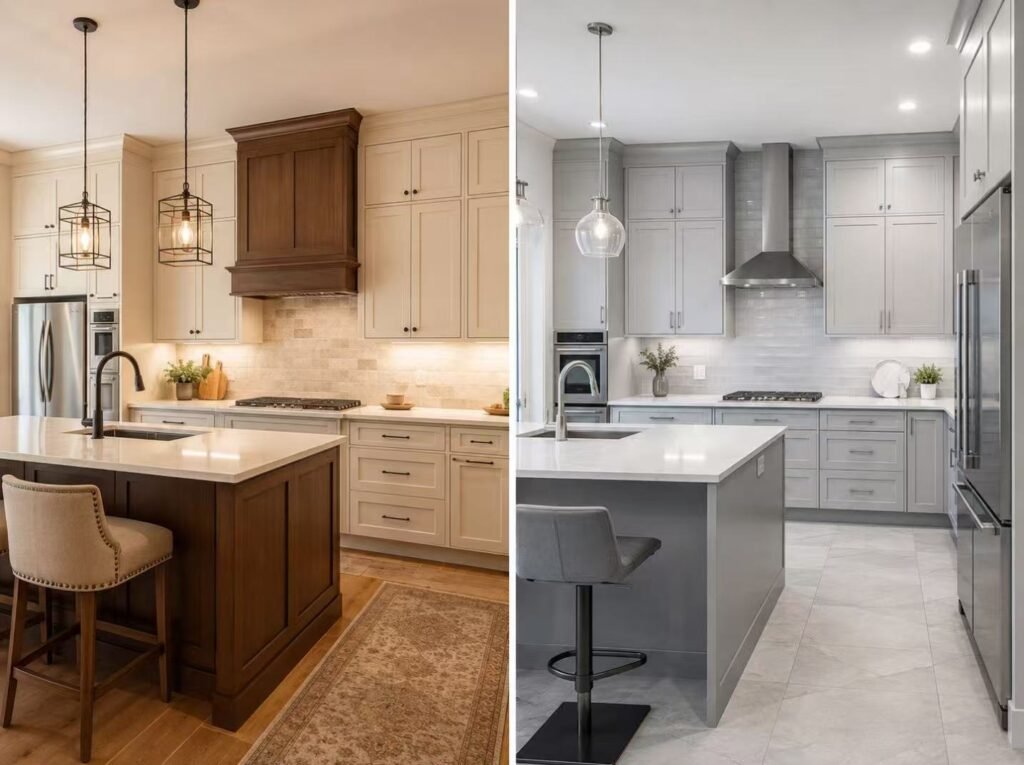
Why Are Warm Neutral Kitchen Cabinets Replacing Grey Kitchens?
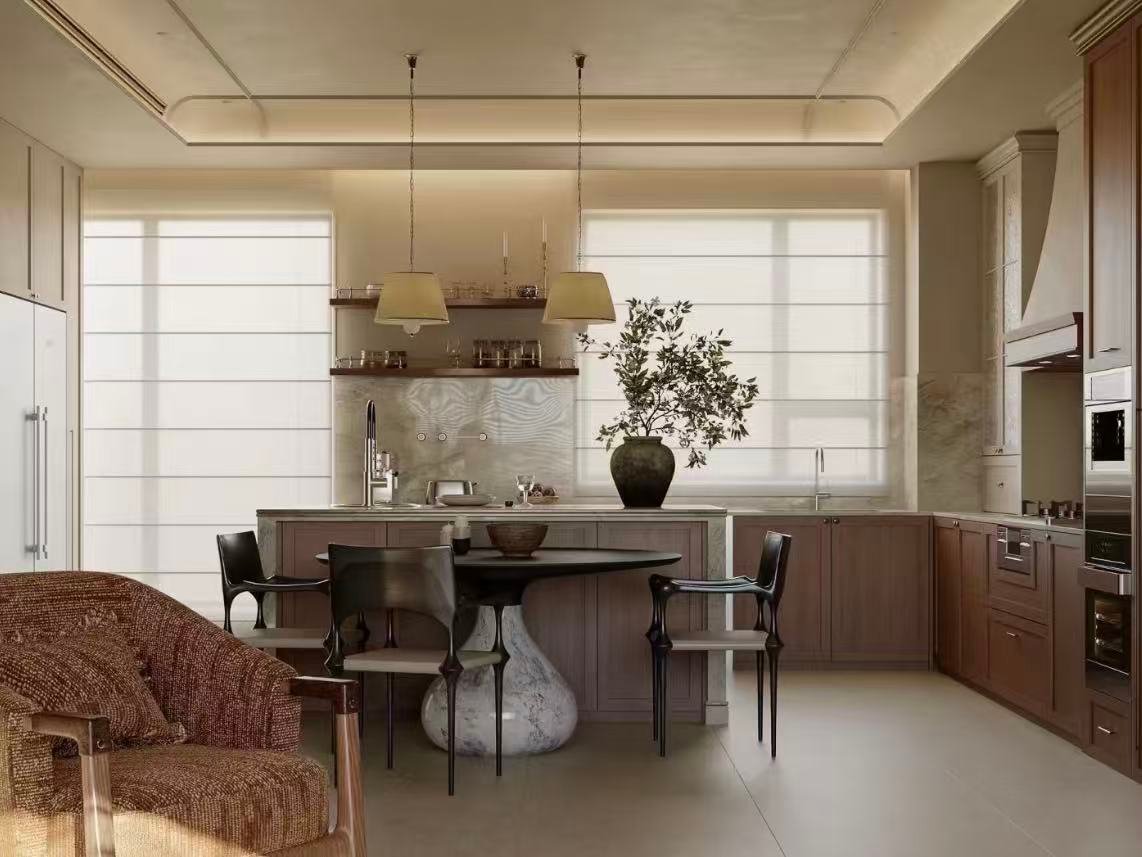
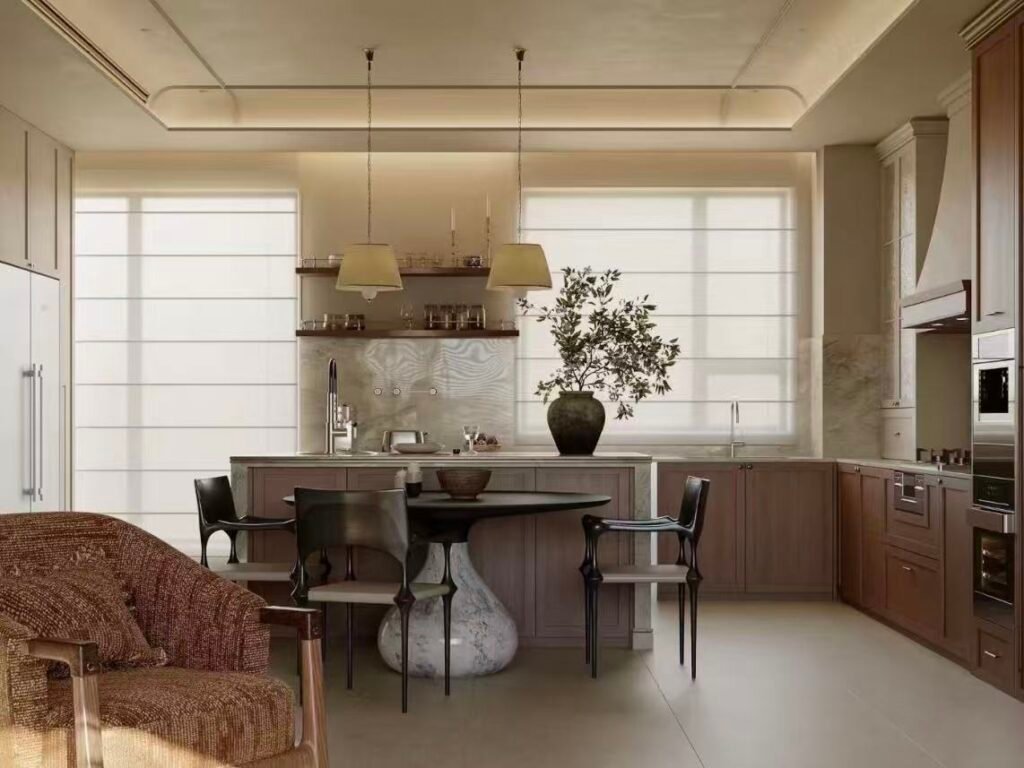
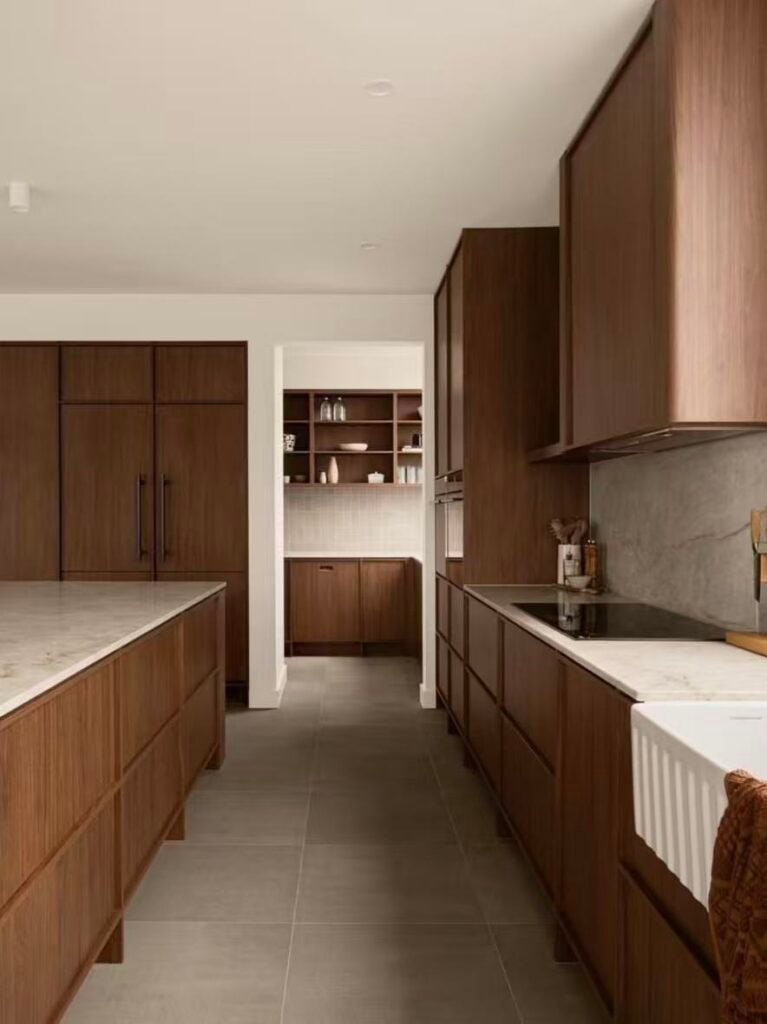
The cool grey-and-white palette that dominated the last decade is giving way to warmer neutrals — wool white, sand, beige, deep brown, and velvet-toned finishes. The shift reflects a broader move toward kitchens that feel inhabited rather than clinical, with matte surfaces replacing high-gloss finishes for the same reason: warmth and tactile depth over showroom shine. Our grey and white kitchen cabinets guide covers the technical side of this transition, including which finishes hold their color longest.
03
Are Natural Wood Kitchen Cabinets Coming Back?
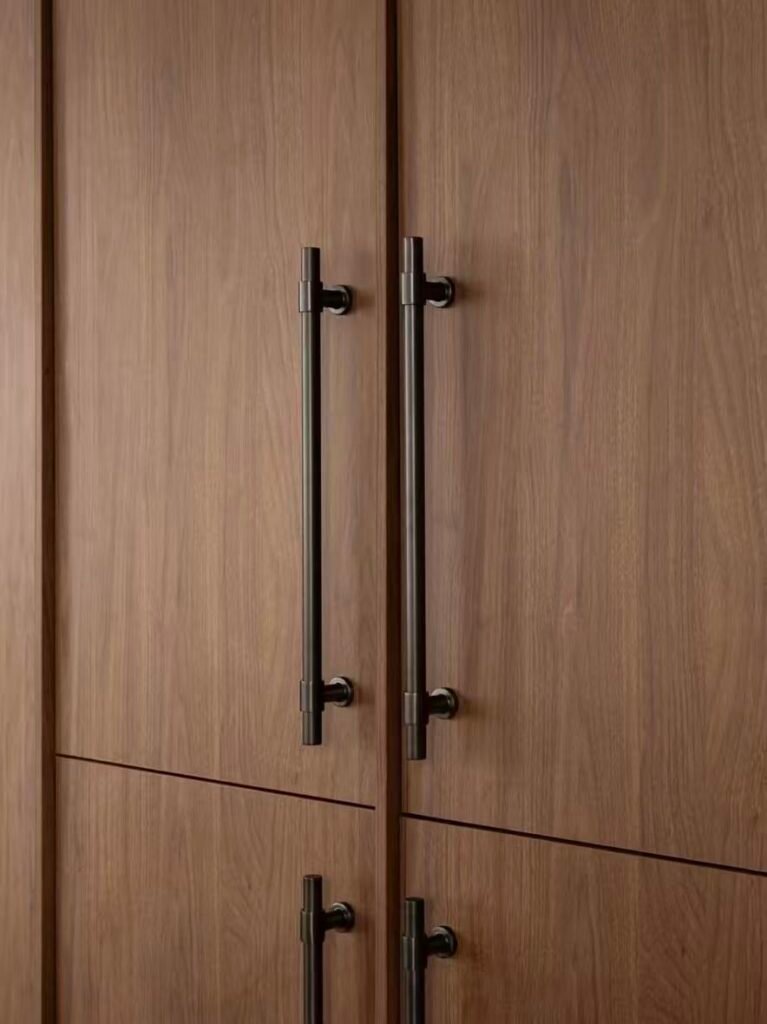
Yes — oak, walnut, and structured wood veneer are returning as primary cabinet materials rather than accent details, part of the same tactile-materials shift covered below. This isn’t a rejection of engineered materials; it’s a preference for visible grain and texture, which can be achieved through real veneer over an engineered core just as effectively as solid timber, at meaningfully better dimensional stability in humid climates.
04
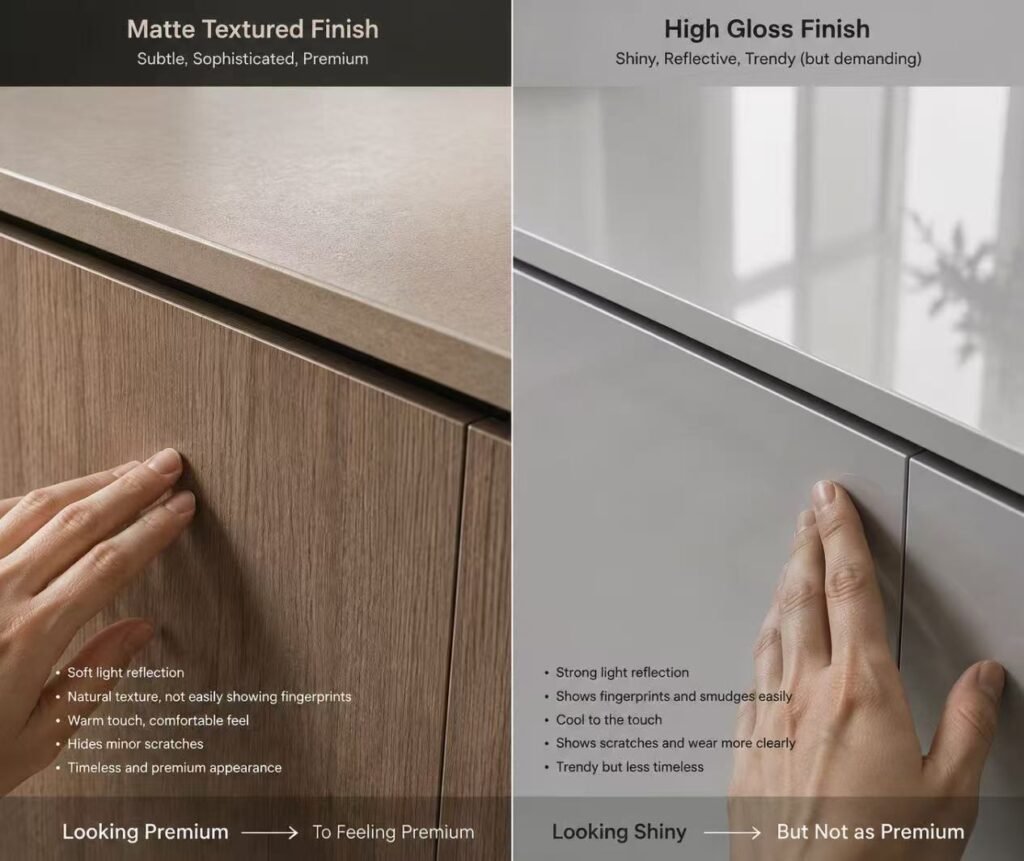
Materials With Depth: From "Looks Premium" to "Feels Premium"
A consistent thread across 2026 trend reporting: buyers are no longer satisfied with a perfectly smooth, uniform surface. Structured veneer, textured matte finishes, and visible wood grain are replacing flawless gloss as the marker of quality — a shift from judging a kitchen by how it photographs to judging it by how it feels under a hand resting on the counter edge.
05
Why Are Curved Kitchen Islands Becoming Popular?
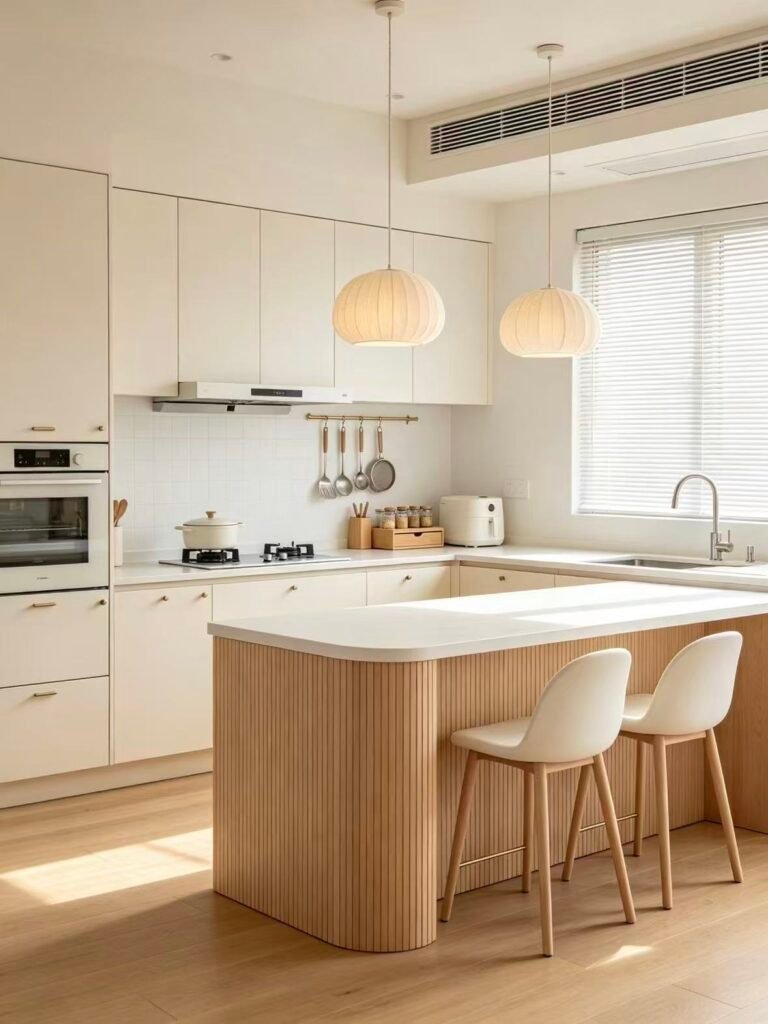
Curved islands and rounded cabinet edges are replacing sharp, industrial geometry, softening the transition between kitchen and living space as the two increasingly share one open floor plan. The appeal is genuine — but a curved island is a meaningfully more demanding build than a straight one, a distinction covered in Part Two.
06
What Is Quiet Luxury Kitchen Design?
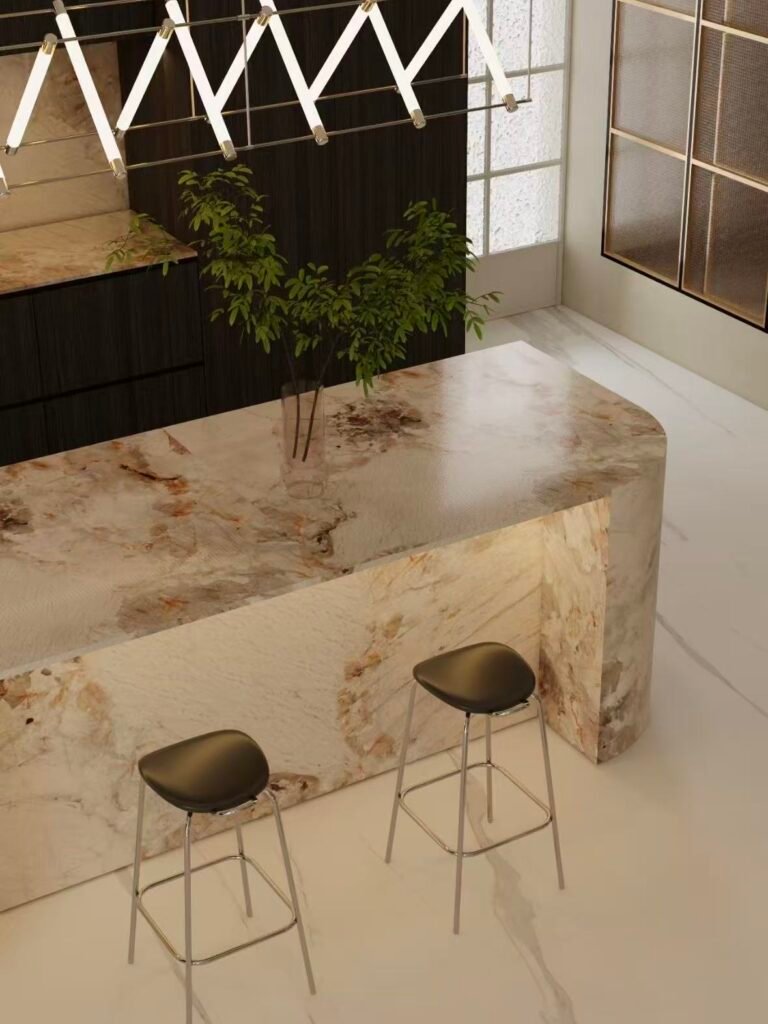
“Quiet luxury” in kitchen design means the opposite of ornamentation — no visible logos, no attention-seeking finishes, just genuinely high-grade materials, precise joinery, and consistent detailing across every cabinet in the room. It’s a design philosophy that rewards close inspection rather than a first glance, which makes construction quality more visible under this style, not less.
07
Why Are Handleless Kitchen Cabinets Growing?
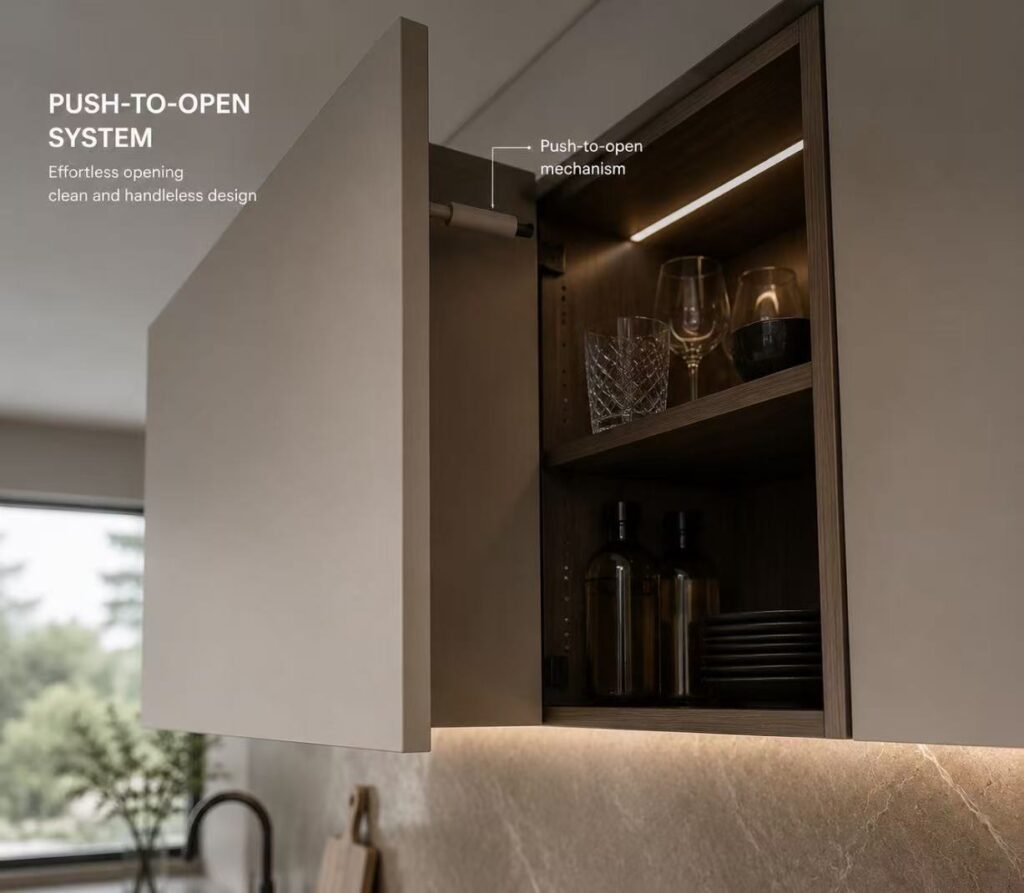
Handleless cabinetry continues to grow because it reinforces the clean, uninterrupted surface language behind most 2026 trends — but it shifts the entire opening mechanism onto push-to-open hardware or a recessed grip channel, both of which depend on precise machining tolerance to feel effortless rather than sticky or inconsistent door to door.
08
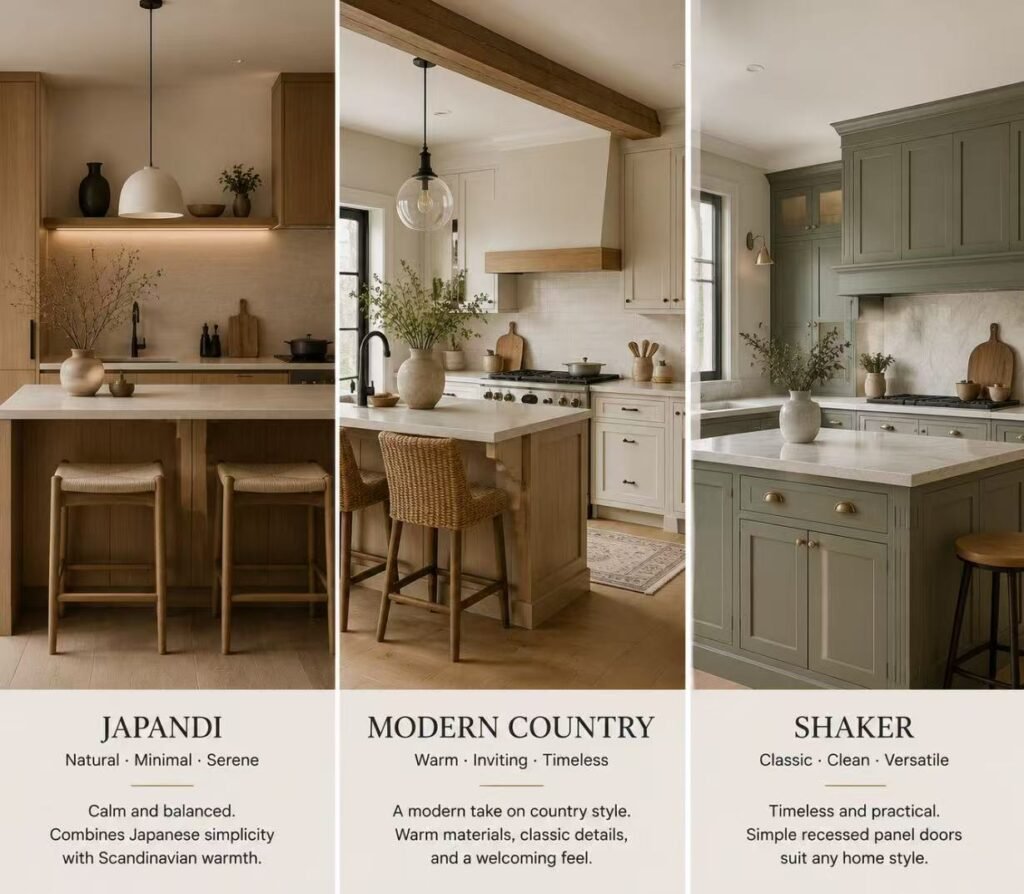
Three 2026 Style Directions: Japandi, Modern Country & Emotional Minimalism
- Japandi — calm, muted colors, natural wood, matte finishes; a fusion of Japanese restraint and Scandinavian warmth.
- Modern country — framed cabinet doors, warm materials, a softened take on farmhouse styling.
- Emotional minimalism — minimalism without the coldness: clean lines paired with warm tones and tactile materials rather than stark white and chrome.
Alongside these three, Shaker-style cabinetry remains one of the most consistently requested door profiles going into 2026 — its simple recessed-panel frame pairs naturally with the warmer, matte-finished palettes covered above, which is part of why it has aged better than more ornate traditional profiles rather than falling out of favor.
Part Two
What It Actually Takes to Build These Trends
09
A Trend on a Moodboard and a Trend in Your Kitchen Are Two Different Things
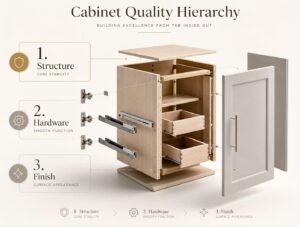
A curved island, a handleless door, and a matte finish all look identical in a rendering. What separates a well-executed version from a disappointing one is entirely in the production process — the same station-by-station logic that determines any cabinet’s quality, covered in full in our high-quality kitchen cabinets buying guide, applies with extra weight to these more demanding 2026 styles specifically.
10
The Stations Where Each Trend Actually Gets Made — or Doesn't
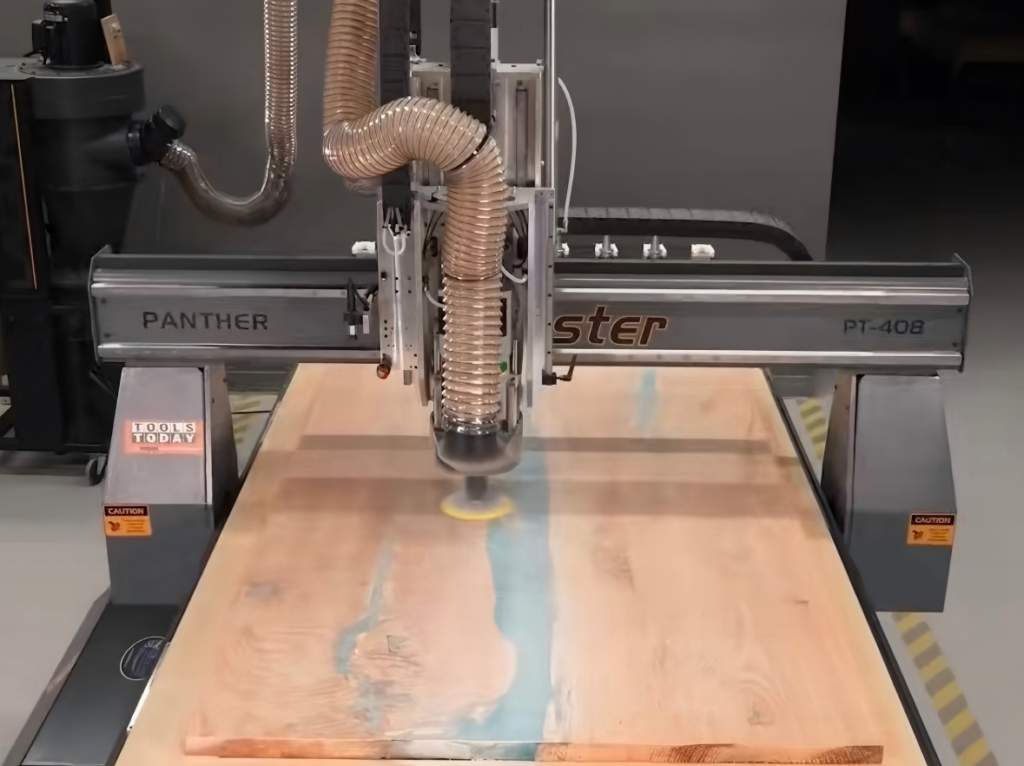
- Curved islands depend on CNC forming/cutting precision — an inconsistent curve radius is far more visually obvious than a straight-edge tolerance issue would be.
- Handleless doors depend on hinge and push-to-open mechanism tolerance at the hardware assembly stage — too loose and the door doesn’t stay closed; too tight and it won’t release cleanly.
- Matte finishes depend on consistent spray thickness and cure time at the surface finishing stage — an inconsistent application shows up as uneven sheen under angled light.
- Integrated/disappearing appliances depend on precise cutout dimensions at the CNC drilling stage — a few millimeters off and the appliance either doesn’t sit flush or leaves a visible gap.
11
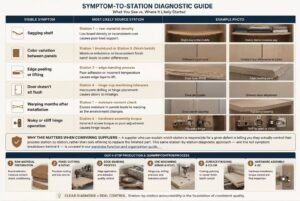
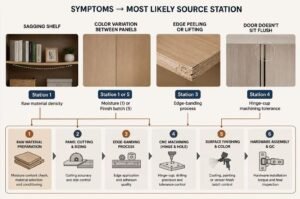
Symptom-to-Station Diagnostic Table for 2026 Trend Features
What you see vs. where it likely started| Visible symptom | Most likely source station |
|---|
| Curved island edge looks uneven or wavy | Forming/cutting stage — CNC tolerance |
| Handleless door won’t stay closed or won’t release | Hardware assembly — push-to-open mechanism tolerance |
| Matte finish shows uneven sheen under light | Surface finishing — spray thickness/cure consistency |
| Integrated appliance leaves a visible gap | CNC drilling — cutout dimension precision |
| Wood veneer grain doesn’t align between panels | Raw material selection and panel matching before cutting |
Why this matters when specifying a 2026-style kitchen — these trend features are inherently less forgiving of tolerance issues than a simple flat-panel cabinet. Ask a supplier directly how they control curve-forming tolerance or push-to-open mechanism consistency — a vague answer is a signal the trend may look better in their showroom sample than in your finished kitchen.
12
Why Climate Changes How Some 2026 Trends Should Be Specified
In humid Southeast Asian climates, matte and wood-veneer finishes — two of 2026’s dominant material directions — need a moisture-resistant core grade behind them as standard, since the visual trend doesn’t change the underlying humidity risk covered in our kitchen cabinet materials guide for Singapore’s climate. In hot, high-UV Middle East climates, deep brown and velvet-toned finishes (popular 2026 color choices) need heat- and UV-stable coatings to avoid fading faster than a lighter finish would under the same sun exposure.
Part Three
Storage, Cost & Where to Start
13
How Are Kitchen Storage Systems Changing in 2026?
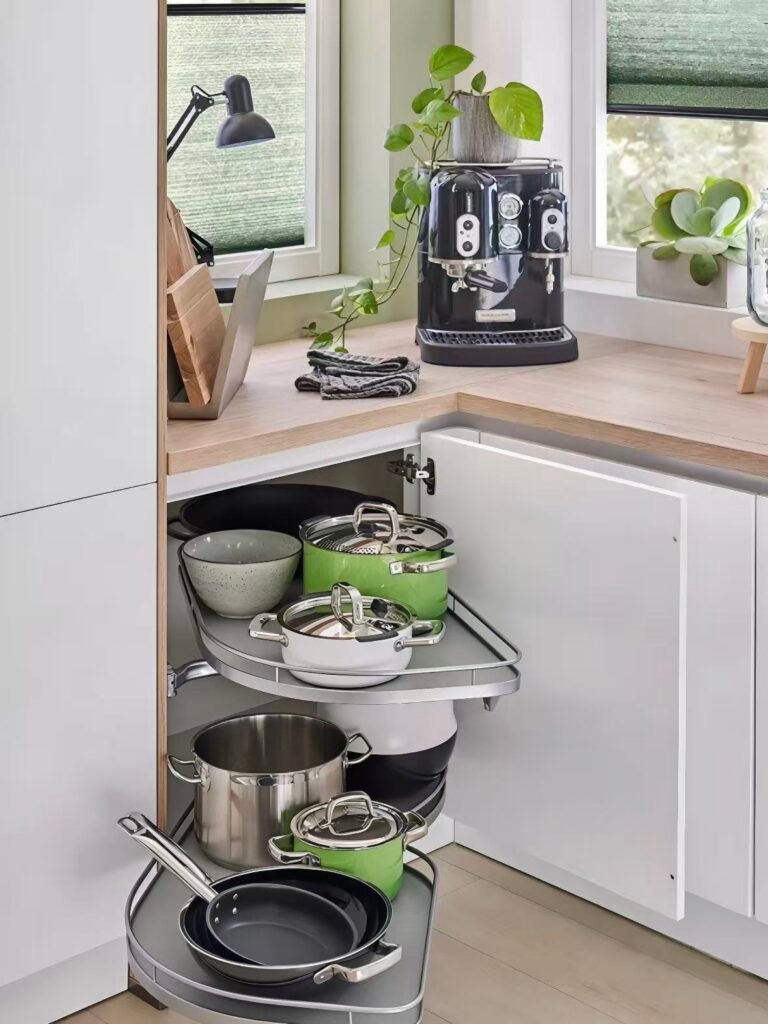
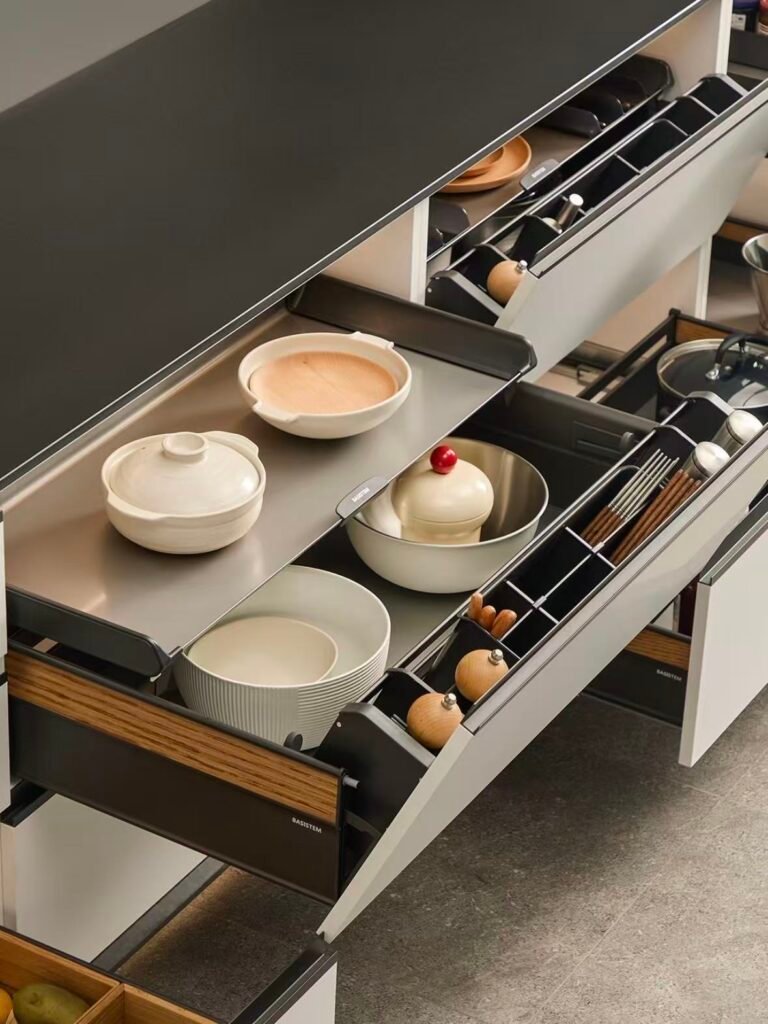
Interior organization is taking priority over exterior appearance in 2026 kitchen planning — pull-out pantry systems, drawer dividers, and dedicated organizers are being specified before finish decisions, not after. This mirrors the module-based planning logic covered in our modular kitchen cabinets guide, where the internal system matters as much as the visible cabinet front.
14
Are Open Kitchens Still Popular in 2026?
Yes, though increasingly paired with a defined “wet kitchen” for heavy cooking in humid climates specifically — a hybrid approach covered in detail in our open concept kitchen guide for Southeast Asia and the Middle East, which remains one of the more practical ways to keep an open-plan aesthetic without sacrificing ventilation for daily wok cooking.
15
Which Kitchen Cabinet Materials Are Trending in 2026?
Structured wood veneer, matte-finished MDF with a verified moisture-resistant core, and — for Middle East and coastal Southeast Asian projects specifically — thermally broken aluminium framing for handleless and integrated designs are the dominant material choices this year, each covered in full technical depth in our best material for kitchen cabinets guide.
16
How Much Does a Modern Kitchen Cost in 2026?
Rather than a flat price, cost in 2026 kitchen design scales with feature complexity: a curved island, handleless mechanisms, and fully integrated appliances each add real fabrication cost on top of standard cabinetry, since each depends on tighter tolerances and more specialized hardware than a straight-edge, handled equivalent. Requesting an itemized quote — material, hardware, and feature-specific fabrication cost separately — is the only reliable way to compare two 2026-style kitchen proposals fairly.
17
Bringing 2026 Trends to Your Kitchen — Built to Last, Not Just Photograph Well
At BoyceCasa, 2026 design trends — curved forms, handleless mechanisms, matte and wood-veneer finishes — are built against the same station-level tolerance control and climate-matched material specification that governs every cabinet we produce, so the trend still looks and performs the way it did on the moodboard a few years in. Explore how each style translates into our current collections:
Planning a 2026-style kitchen for a villa or hospitality project? Ask how curve tolerance, push-to-open hardware, and finish consistency are controlled before comparing renderings — that’s what determines whether the trend still looks right in year three.
FAQS
Explore our Kitchen Cabinets and Wardrobe collections to see factory-direct cabinetry for villa and hotel projects, or contact our team for a project-specific consultation and quote.
Related reading:
High-Quality Kitchen Cabinets: A Complete Buying Guide →
Modular Kitchen Cabinets: What "Modular" Actually Means Beyond Pre-Fabricated →
Grey and White Kitchen Cabinets: What the Color Choice Actually Depends On →
Best Material for Kitchen Cabinets: Choosing by Budget, Climate & Upkeep →
Open Concept Kitchen: SEA & Middle East Guide →
Kitchen Cabinet Materials in Singapore: Density, Moisture Resistance & What the Test Reports Actually Say →