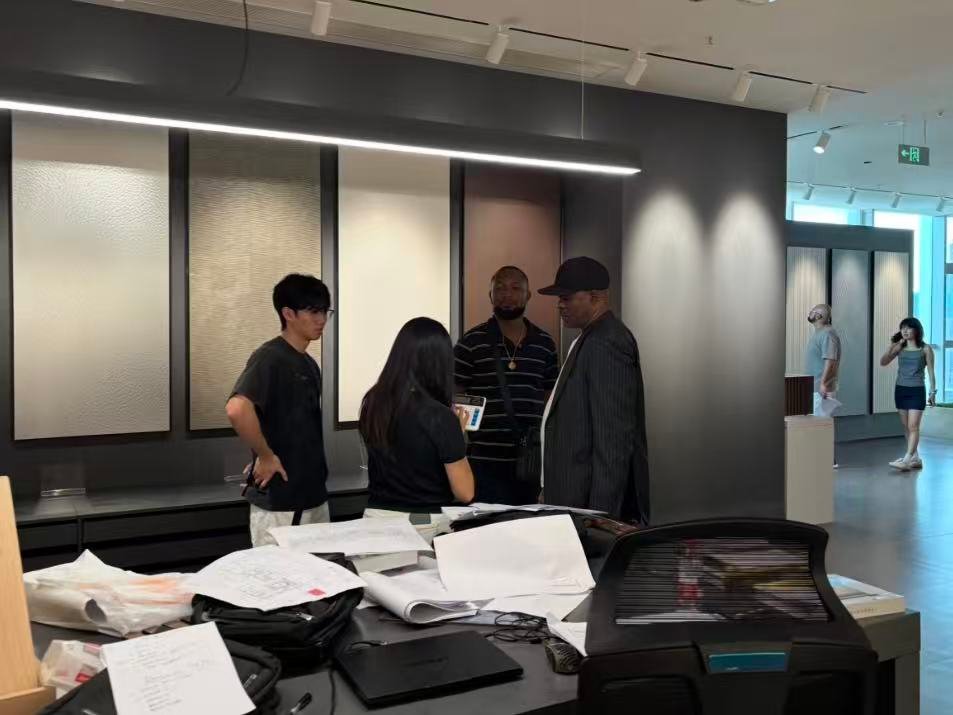
In the pursuit of personalized spaces and premium living, mass-produced furniture often falls short of capturing the true essence of a home.

As modern minimalism and light luxury styles continue to dominate global design trends, high-end custom furniture has become the absolute core of creating an ideal living space.However, the custom furniture market can be highly complex.

Bridging the gap between a stunning design blueprint and the final product involves navigating materials, hardware, and craftsmanship. Here is how to choose bespoke luxury furniture like a professional designer.

A practical decision guide for developers, contractors, designers and distributors comparing kitchen cabinet manufacturers — not a ranked list.

Read time — 17 min
Covers — Layout · Storage · Appliances · Materials · Project Scale
Scope — Residential & multi-unit developments

A reliable kitchen cabinet manufacturer should be evaluated by more than price. B2B buyers should compare customization capability, material options, shop drawing support, production capacity, quality control, batch consistency, packaging, project experience and after-sales support. For apartment, hotel and villa projects, the manufacturer should also demonstrate how it manages drawings, unit coding, bulk production and delivery.


01

What Should You Look for in a Kitchen Cabinet Manufacturer?

Manufacturer evaluation factors
Factor What B2B buyers should check
Customization Can they manufacture from your drawings?
Materials Are multiple board, finish and hardware options available?
Engineering Can they provide shop drawings?
Capacity Can they handle your project quantity?
QC How is each production stage inspected?
Consistency Can finishes remain consistent across batches?
Packing Are cabinets coded by unit or room?
Delivery Can they coordinate project shipping?
Experience Have they completed similar projects?

02

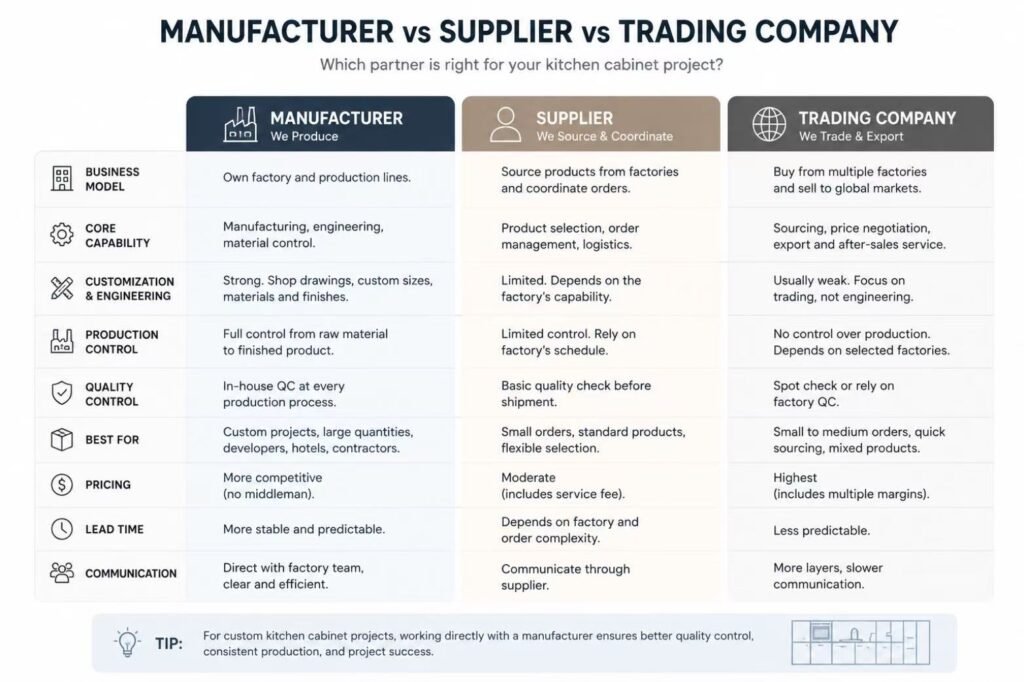
Manufacturer vs. Supplier vs. Trading Company: What's the Difference?

Kitchen cabinet manufacturer supplier and trading company comparison

Manufacturer

Own production, engineering and customization capability.

Supplier

May manufacture or source products from other factories.

Trading Company

Coordinates products from different factories under one order.

Which One Should You Choose?

A direct manufacturer is often better for customized cabinetry and repeat production, while a sourcing company can be useful when a project needs furniture, doors, stone, and sanitary ware from multiple factories coordinated under one order.

03

What Types of Kitchen Cabinets Can Manufacturers Produce?

Kitchen Cabinet Types

04

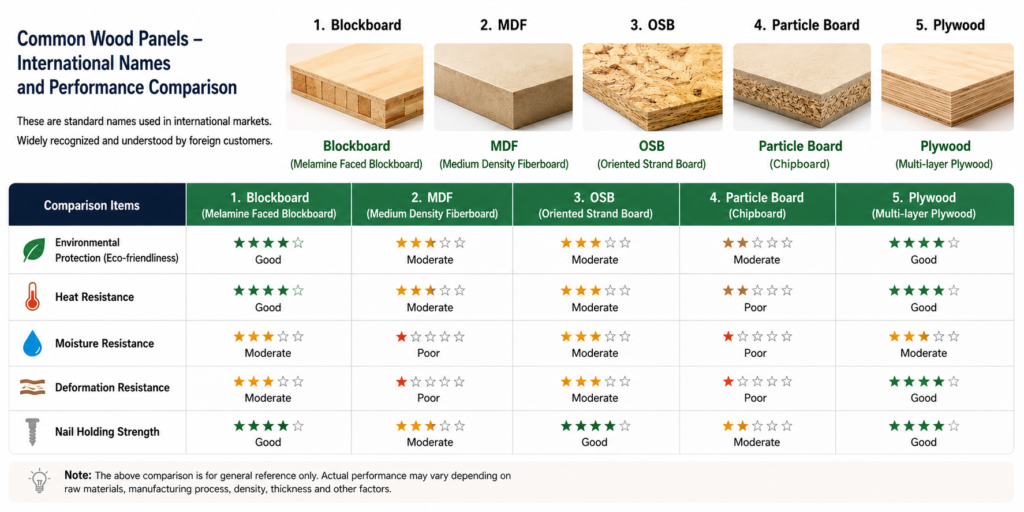
What Materials Should You Compare?

wood panel comparison blockboard mdf osb plywood particle board
Material and component comparison
Component Common options What to compare
Cabinet box Plywood / MDF / Particle board Moisture resistance, strength, cost
Door MDF / Plywood / Glass / Aluminum Style, durability, maintenance
Finish Melamine / PET / Lacquer / Veneer Appearance, scratch resistance
Countertop Quartz / Sintered stone / Marble Durability, cost, maintenance
Hardware Standard / Hettich / Blum Load capacity, durability, budget

The question isn’t which material is best — it’s which material suits your specific project, climate and budget.

05

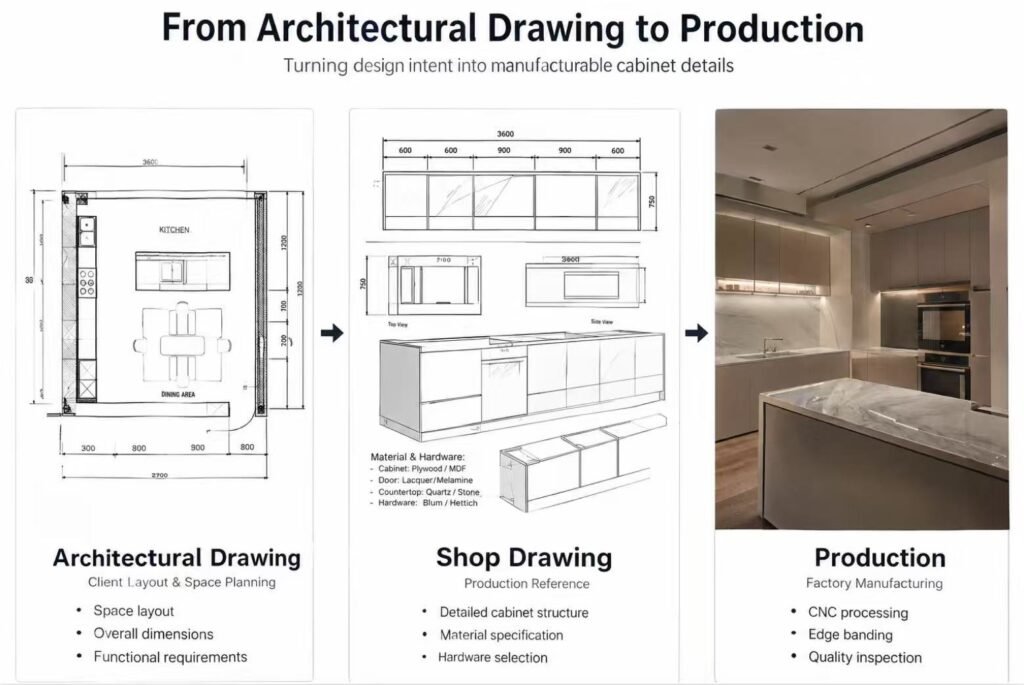
Why Shop Drawings Matter in Custom Cabinet Projects

Architectural drawings transformed into cabinet production details

Beautiful renderings are not enough for manufacturing. A capable manufacturer converts a concept into production-ready specifications:

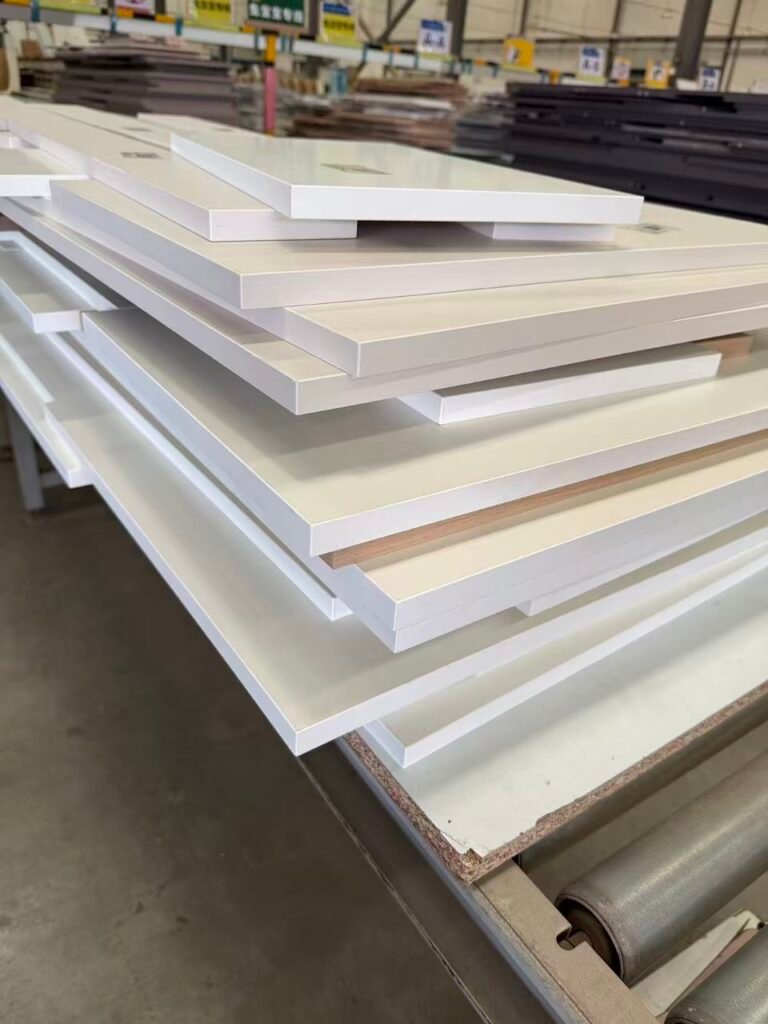
Finished edge banded cabinet panels inspection
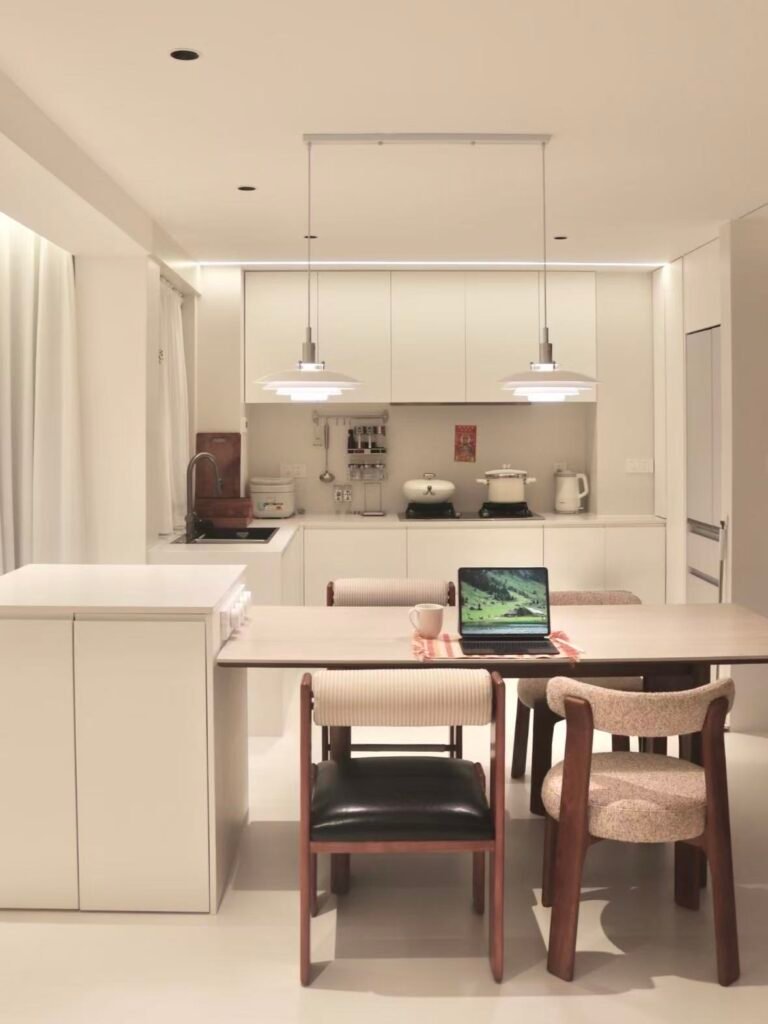
White modular galley kitchen with cove lighting

Architectural Drawing→Cabinet Layout→Shop Drawing→Material Confirmation→Production Drawing→Manufacturing

06
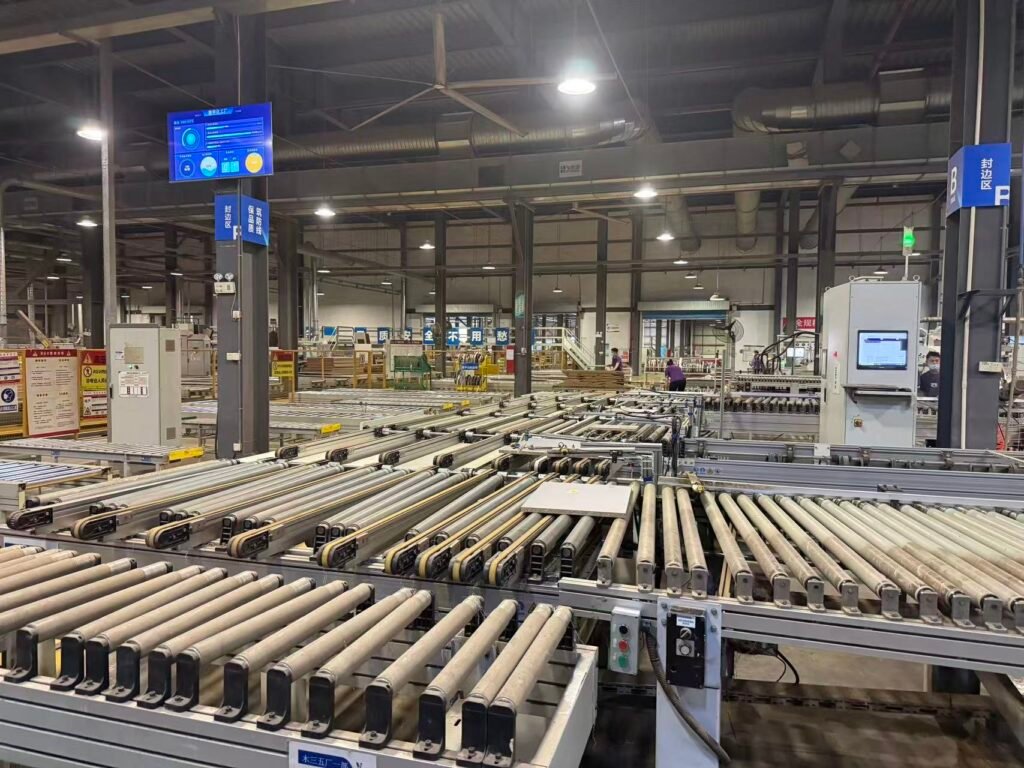
How to Evaluate a Kitchen Cabinet Factory

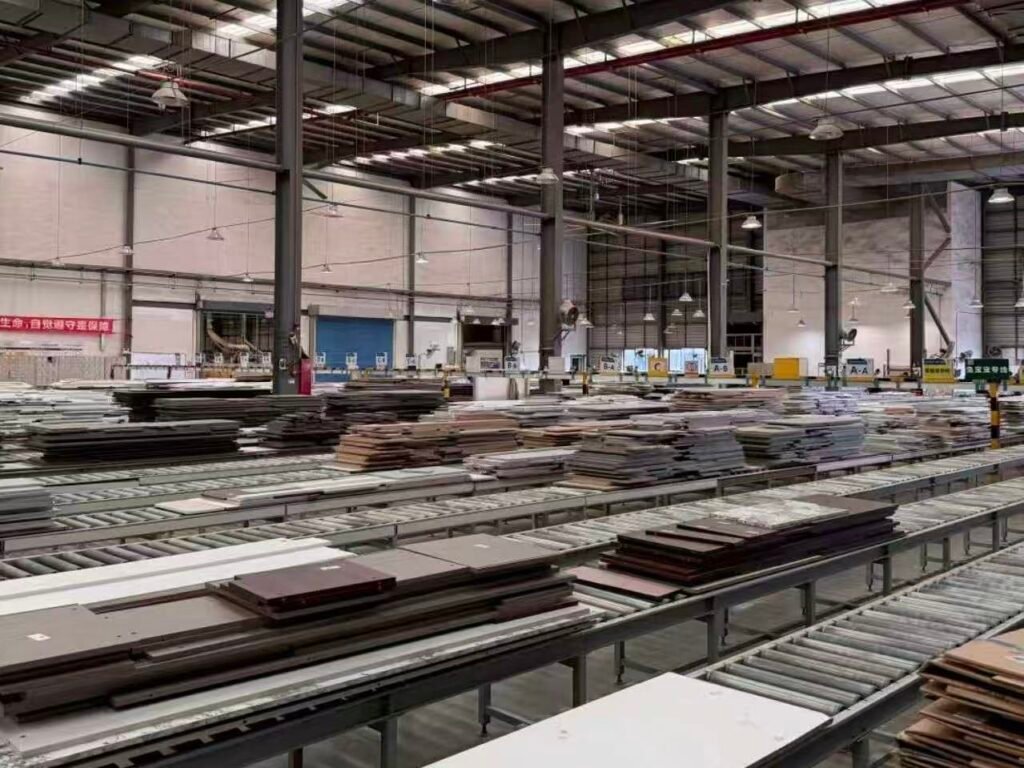
Automated production line inside kitchen cabinet factory
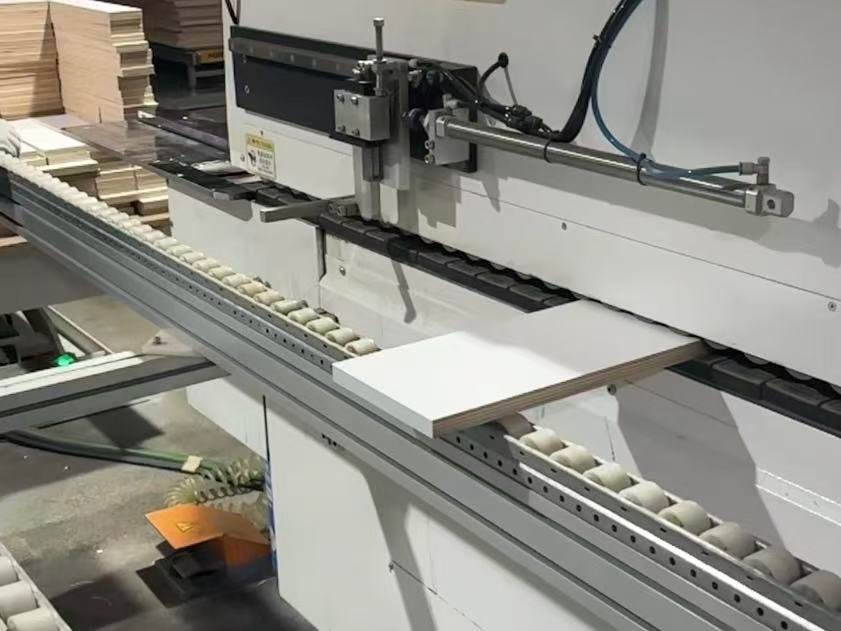
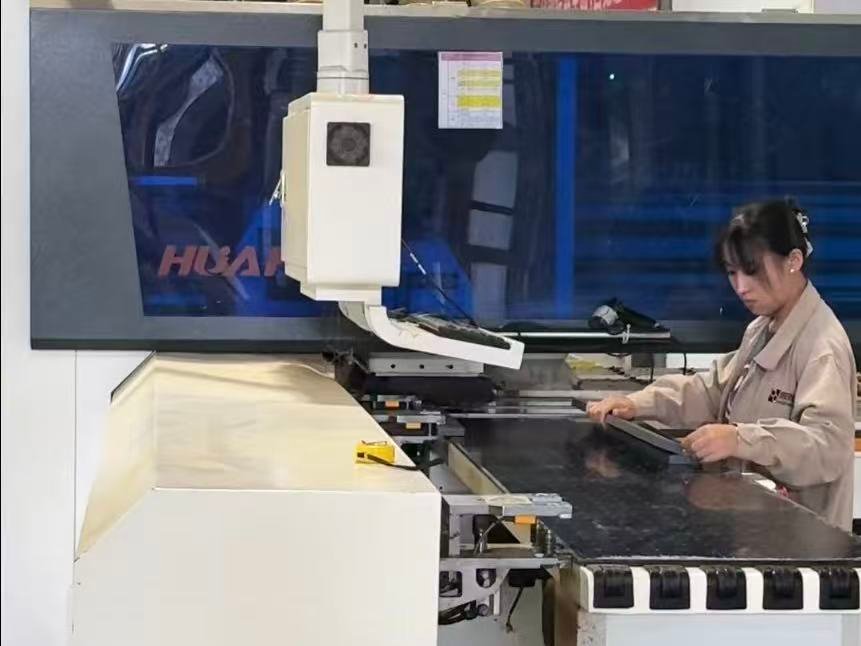
Cabinet panel processed by automatic edge bander
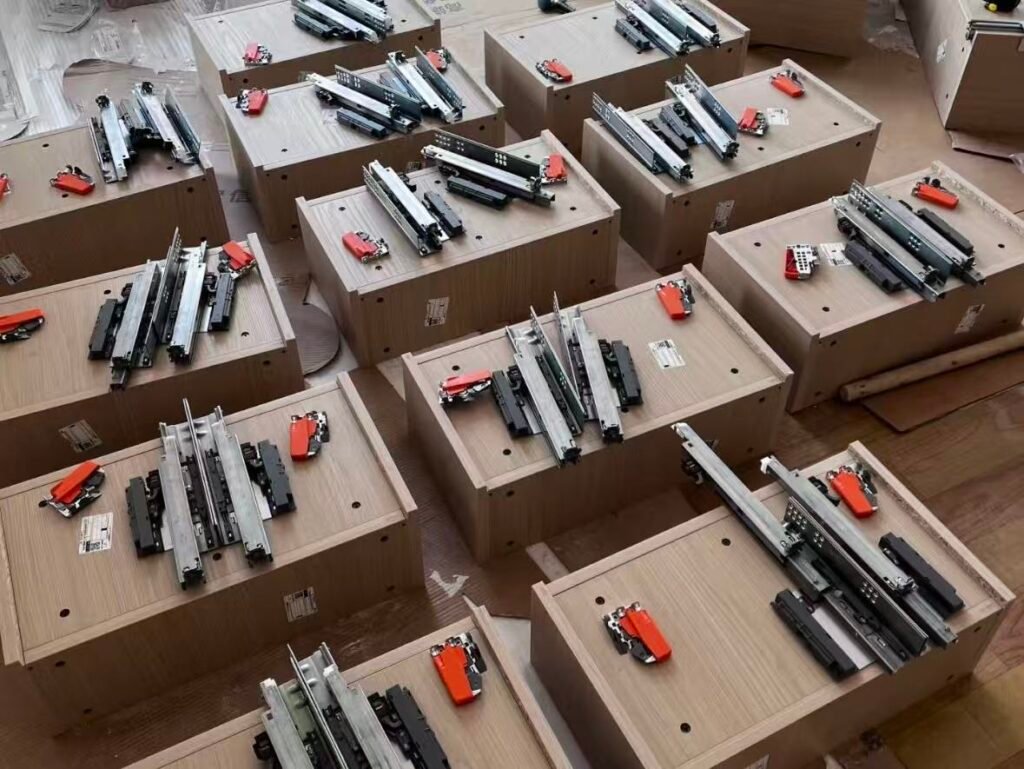
Cabinet hardware prepared for batch production assembly
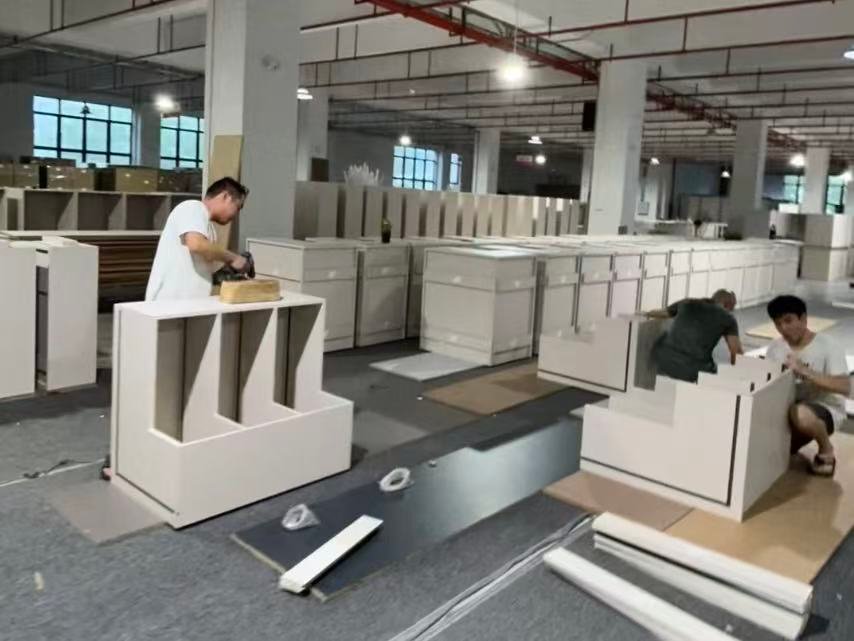
Custom cabinets undergoing pre-assembly quality inspection onsite
  1. Production equipment
  2. Material management
  3. Edge banding quality
  4. Hardware installation
  5. Trial assembly
  6. Final inspection

Key point — a large factory does not automatically mean better project execution. Buyers should evaluate whether the production system matches their project type, customization level and required quantity.

07

How Do Manufacturers Maintain Batch Consistency?

Cabinet panels moving through automated production line
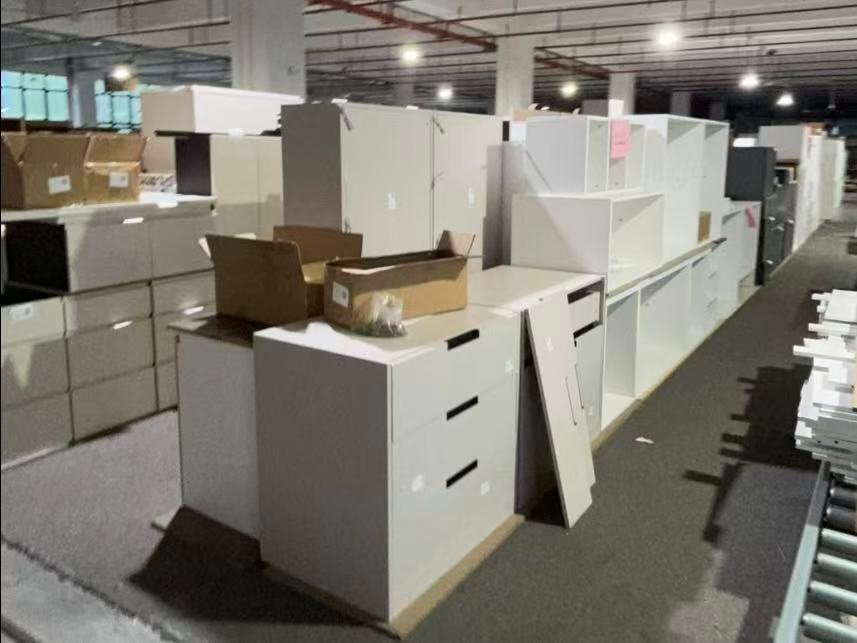
Custom cabinet units prepared for batch production

Approved Sample→Material Batch Control→Standardized Production→Final Comparison

For a 100-unit apartment project, the challenge is not producing one good kitchen. It is producing the 100th kitchen with the same dimensions, finish and hardware standard as the approved sample.

08

How Are Cabinets Coded, Packed and Shipped?

Worker operating precision cabinet manufacturing equipment onsite
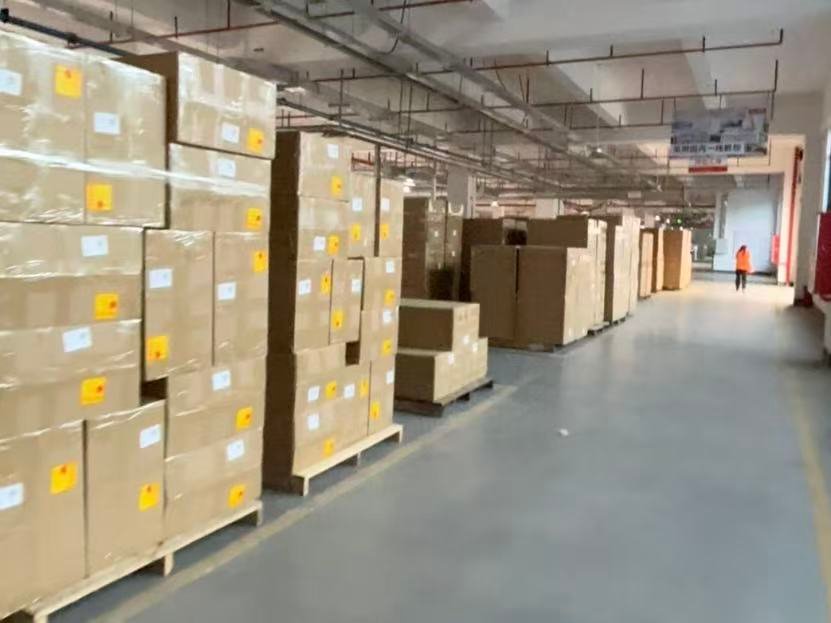
Packed kitchen cabinets prepared for export shipping

Cabinet Coding

Building / Floor / Unit / Room / Cabinet number, for example:

Packing

Corner protection, panel protection, hardware separation, labels, packing list.

Shipping

Container planning, loading sequence, shipping documents, delivery coordination.

09

Which Manufacturer Is Right for Your Project Type?

Manufacturer priorities by buyer type
Buyer / project What matters most
Private villa Customization + finish + design flexibility
Apartment developer Cost + consistency + coding + delivery
Hotel project Design match + durability + schedule
Contractor Drawings + coordination + lead time
Interior designer Customization + samples + design execution
Distributor Price + repeatability + product range

10

How Much Do Custom Kitchen Cabinets Cost?

Cost is driven by cabinet dimensions, board material, door finish, hardware, countertop, accessories, quantity, and packing/shipping — not a single number that applies to every project. This is why professional manufacturers usually request drawings, dimensions and material requirements before providing a project quotation.

The underlying point — visual simplicity is often the result of better storage planning, not simply minimalist styling.

11

What Should You Send Manufacturers for an Accurate Quote?

  • Floor plan
  • Cabinet dimensions
  • Elevations or renderings
  • Project quantity
  • Material preference
  • Door finish
  • Hardware requirements
  • Countertop requirements
  • Delivery country
  • Required completion date

If specifications are not finalized, a manufacturer can usually recommend suitable options based on the project type, design target and budget range.

12

Should You Visit the Factory Before Ordering?

Cabinet project consultation with international clients onsite
Overseas client inspecting hotel furniture production

For large customized projects, a factory visit can be valuable before final supplier selection, but it should be used to verify production systems rather than simply inspect the showroom.

What to Check During a Factory Visit

  • Raw materials
  • Production line
  • Edge banding
  • Hardware
  • QC
  • Finished products
  • Packing area
  • Current projects

13

Questions to Ask Before Choosing a Kitchen Cabinet Manufacturer

  • Do you manufacture the cabinets yourself?
  • Can you work from architectural drawings?
  • Do you provide shop drawings?
  • What board materials do you offer?
  • Which hardware brands are available?
  • How do you control batch consistency?
  • How are cabinets inspected?
  • How are different units coded?
  • How are cabinets packed for export?
  • Can you support installation?
  • What is your production lead time?
  • Can I inspect the factory before ordering?

Have a kitchen project to quote? Send your floor plan, cabinet drawings or project requirements. Our team can review the layout, materials, hardware and quantity before recommending a suitable cabinet specification.


FAQS

Custom cabinets are built to exact project dimensions, while modular cabinets use standardized module widths combined to fit a space — modular is generally faster and more cost-effective, custom offers more design flexibility.

Check the factory’s registered business details, ask for material and hardware test certificates, request examples of past shop drawings, and where possible arrange a factory visit or virtual audit before placing a large order.

Minimum order quantity varies by manufacturer and project type — small custom orders and single villas are often accepted, while some factories set higher minimums for fully bespoke production runs.

Capable manufacturers can develop shop drawings from an architect’s or designer’s floor plan rather than limiting orders to standard catalogue sizes.


Lead time depends on order complexity, quantity and material availability, and should be confirmed directly against the specific project rather than assumed from a general estimate.

Yes, provided the manufacturer can demonstrate batch consistency control, unit-based coding, and production capacity matched to the project’s total quantity and schedule.

Explore our Kitchen Cabinets and Wardrobe collections to see factory-direct cabinetry for villa and hotel projects, or contact our team for a project-specific consultation and quote.
Related reading:
High-Quality Kitchen Cabinets: A Complete Buying Guide →
Foshan China Furniture Manufacturers: How to Verify Who You're Actually Buying From →
Apartment Kitchen Cabinets: How to Add Storage Without Crowding Small Spaces →
Scroll to Top