Why "Foshan" Alone Tells You Nothing About Quality
Foshan's furniture manufacturing base runs to thousands of factories employing well over a hundred thousand workers, spanning everything from vertically integrated, internationally certified manufacturers to small subcontracted workshops with no export experience at all. The region's scale is precisely why a buyer can't treat "Foshan" as a quality marker — the same reputation that draws serious manufacturers there also draws a wide range of smaller operators riding on that same regional name.
How to Verify a Manufacturer's Legitimacy — Not Just Their Website
A professional-looking website and a well-produced catalogue are the easiest things for any supplier to put together, real or not. Actual legitimacy is checkable through a specific official channel:
- China’s National Enterprise Credit Information Publicity System (GSXT) — a public registry where a company’s Unified Social Credit Code, registered business scope, and registration status can be looked up directly, rather than taken on the supplier’s word.
- Cross-check the details — confirm the registered company name and credit code shown on this registry match exactly what appears on the supplier’s contracts, invoices, and business license copy. A mismatch between any of these documents is worth asking about directly before proceeding.
Showroom Visit vs. Factory Floor: They're Not the Same Thing
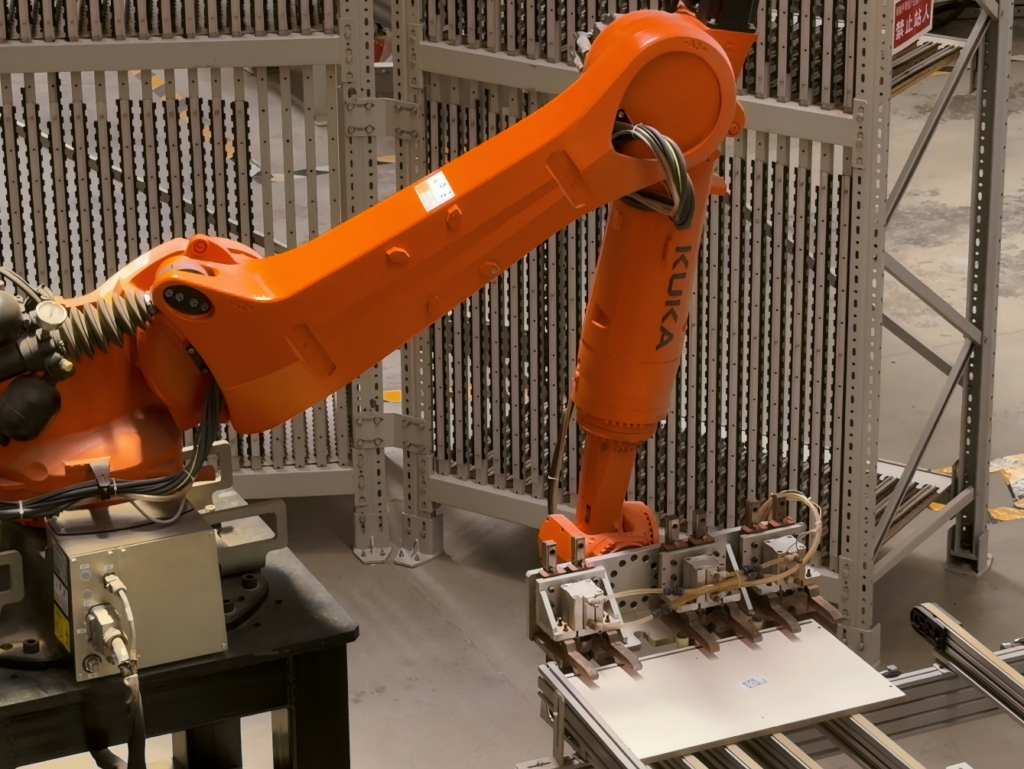
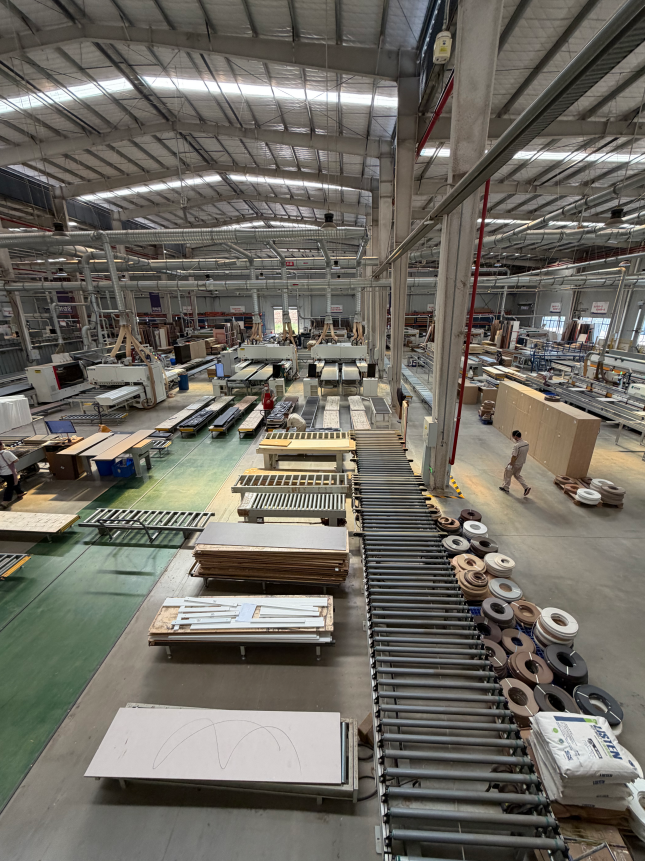
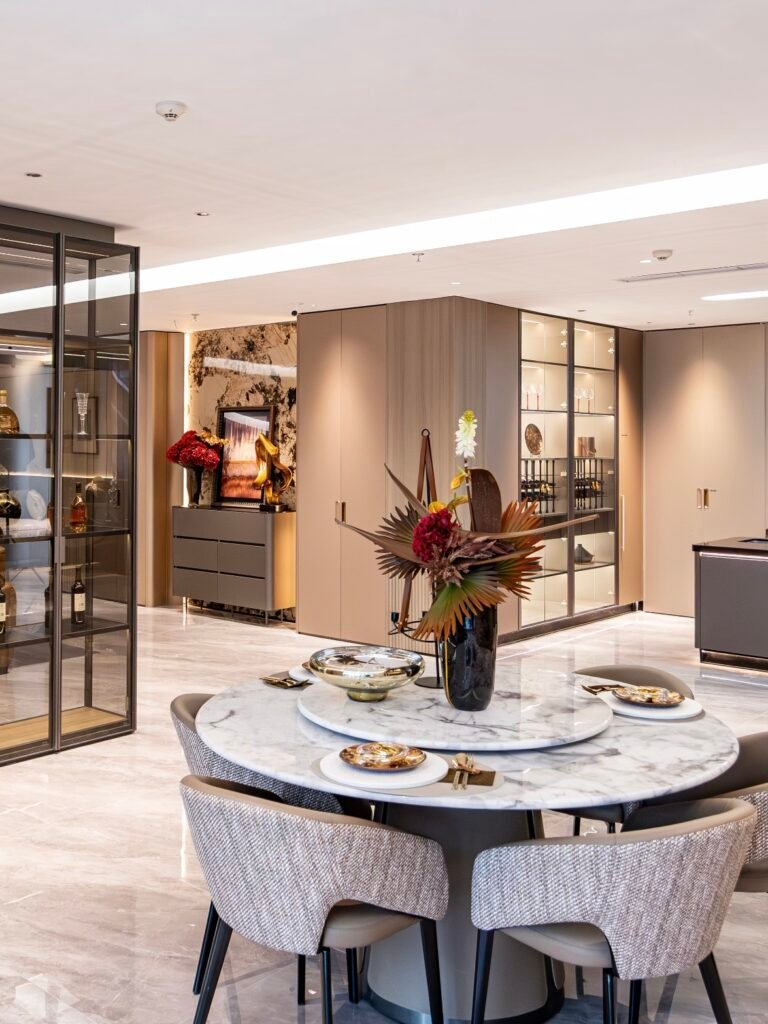
A showroom is built to sell — polished samples, ideal lighting, a curated selection of the best pieces a factory has produced. It tells you almost nothing about the consistency of what actually comes off the production line for a full order. The production floor tells a different story: raw material storage conditions, the equipment actually in use, and the quality-control checkpoints in place between raw material and finished piece.
What to ask for specifically — request to walk the actual production floor, not just the showroom, and ask to see the material storage and quality-inspection area. A manufacturer confident in their operation will generally accommodate this; reluctance to show anything beyond the showroom is itself informative.
What a Real Evaluation Actually Requires
- Material test certificate — board density, moisture resistance, or wood specification with an actual test reference, not a general marketing claim.
- Third-party lab verification — accredited labs such as SGS or TÜV are commonly used to verify quality claims independently of the manufacturer’s own testing.
- ISO 9001 certification — a widely held quality management standard among established Chinese furniture factories, though holding it should be confirmed, not assumed.
- Hardware specification — named brand and cycle rating for hinges, slides, and other hardware, not a generic “premium hardware” description.
- Batch consistency process — relevant for any multi-unit or repeat order, confirming whether finish is checked against a retained master sample across production runs.
Certification by Destination Market
Furniture regulatory requirements differ significantly by destination, and a manufacturer experienced in one market’s compliance isn’t automatically compliant with another’s:
Common furniture compliance requirements by market| Destination | Common requirement | What it covers |
|---|
| United States | CA TB 117 | Flammability standard for upholstered furniture |
| United Kingdom | BS 5852 | Fire resistance testing for upholstered furniture |
| European Union | CE marking, EN standards | General product safety and specific furniture category standards |
| Southeast Asia / Middle East | No single unified standard — varies by country and project type | Often follows the specifying architect’s or hotel brand’s own standard where no national mandate applies |
The absence of one unified Southeast Asian or Middle Eastern standard doesn’t mean compliance doesn’t matter — it means the applicable standard is more often set by the project’s own specification (a hotel brand’s PID document, for instance) than by a single national regulation, which makes confirming the project’s actual requirement upfront more important than assuming a general certification covers it.
The Real Cost Picture: What Buyers Actually Pay
Beyond the factory price itself, a realistic cost picture for sourcing furniture from Foshan includes several layers that are easy to underestimate:
- Factory price — commonly significantly lower than equivalent retail pricing in Southeast Asian or Middle Eastern markets, reflecting production scale and lower intermediary markup.
- Freight and shipping — can add a substantial percentage on top of the goods value, depending on order volume, destination, and consolidation efficiency.
- Import duties and taxes — vary by destination country and product classification, and should be confirmed before finalizing a landed-cost comparison against local sourcing.
Comparing only the factory quote against a local retail price without adding freight, duties, and project-management overhead is a common way project budgets end up understated at the sourcing stage.
Red Flags Worth Checking Before You Commit
- No match on GSXT — a company name or credit code that doesn’t correspond to a registered entity is a serious concern, not a minor discrepancy.
- No production floor access — a supplier that only ever offers a showroom tour, never the factory itself.
- Quote with no material or certification breakdown — a single lump-sum price with no specification detail behind it.
- No named sub-manufacturer from a trading company — reluctance to disclose which factory actually produces the goods.
Sourcing With Full Transparency
At BoyceCasa, factory registration details, material test certificates, and destination-specific compliance documentation are provided before production begins — not assembled into a self-promotional “top manufacturers” list. This same standard applies across our kitchen cabinets, wardrobe, interior doors, and window lines for villa and hospitality projects across Southeast Asia and the Middle East.
Sourcing furniture or fixed joinery from a Foshan-area manufacturer? Verify the company on GSXT and ask to see the production floor — not just the showroom — before committing to an order.
FAQS
Explore our Kitchen Cabinets and Wardrobe collections to see factory-direct cabinetry for villa and hotel projects, or contact our team for a project-specific consultation and quote.
Related reading:
Kitchen Island Dimensions: Sizing & Clearance Guide
Kitchen Cabinet Materials in Singapore: Density, Moisture Resistance & What the Test Reports Actually Say
Best Material for Kitchen Cabinets: Full Comparison
L-Shaped Cupboard Design: Corner Storage That Actually Works