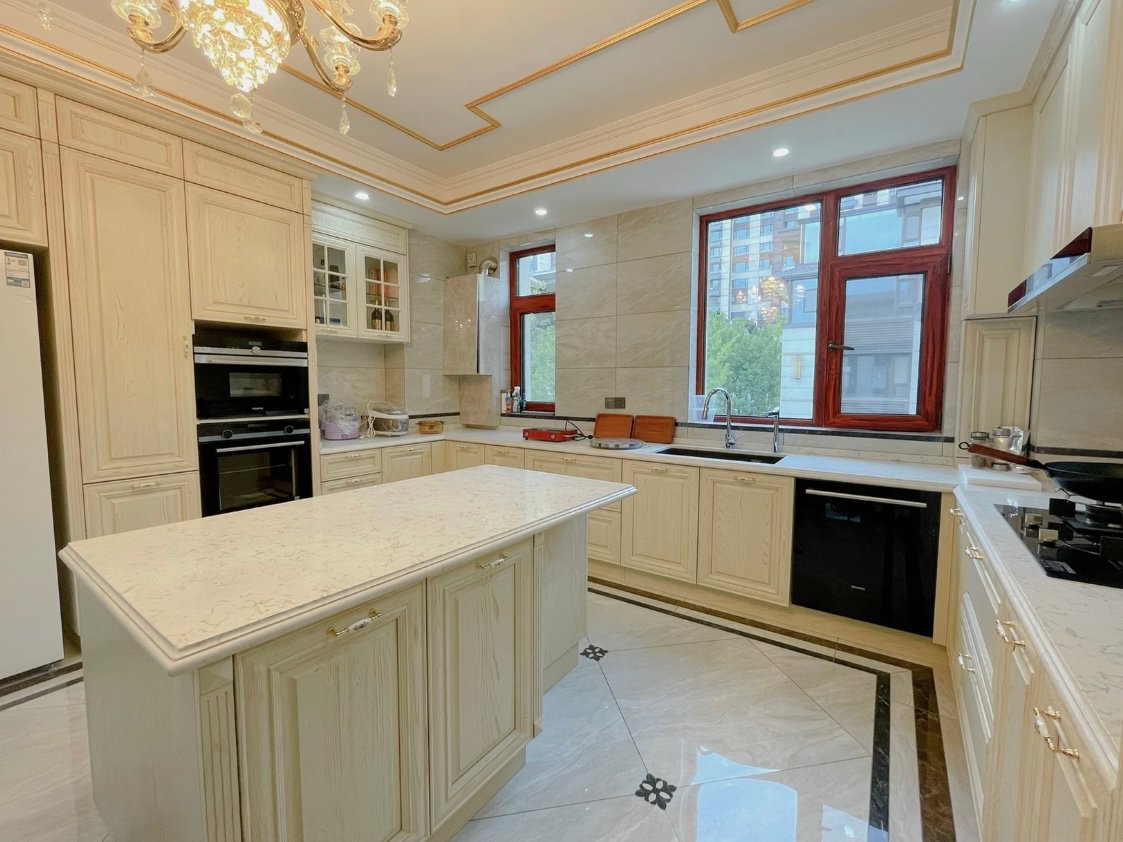
In the pursuit of personalized spaces and premium living, mass-produced furniture often falls short of capturing the true essence of a home.
As modern minimalism and light luxury styles continue to dominate global design trends, high-end custom furniture has become the absolute core of creating an ideal living space.However, the custom furniture market can be highly complex.
Bridging the gap between a stunning design blueprint and the final product involves navigating materials, hardware, and craftsmanship. Here is how to choose bespoke luxury furniture like a professional designer.
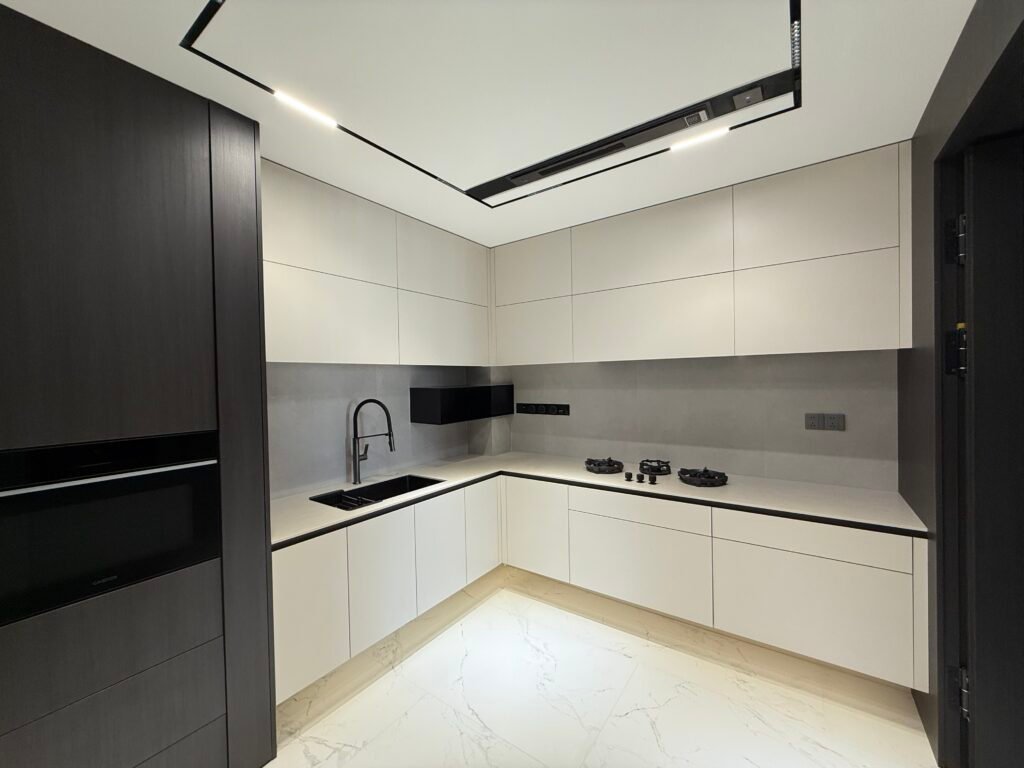
When a villa designer or a hotel procurement manager says they want a "European style kitchen," they are usually referring to far more than a particular look. They are describing a complete cabinet construction logic that originated in early twentieth-century Germany: frameless cabinet bodies, flat door panels, concealed hardware, and a design philosophy that places function ahead of ornamentation.
This distinction matters because the term "European style kitchen" is used loosely across the global interior design and procurement industry, often as shorthand for "modern" or "white and sleek." But understanding what actually defines the category — at the structural and specification level, not just the visual level — is essential for anyone specifying or sourcing kitchen cabinets for a villa, hotel, or residential development project.
This guide breaks the category down completely: where it came from, what structural and material decisions define it, how it differs fundamentally from American-style cabinetry, and what to specify and verify when sourcing European-style kitchen cabinets from a factory-direct manufacturer for an international project.
The Complete Definition
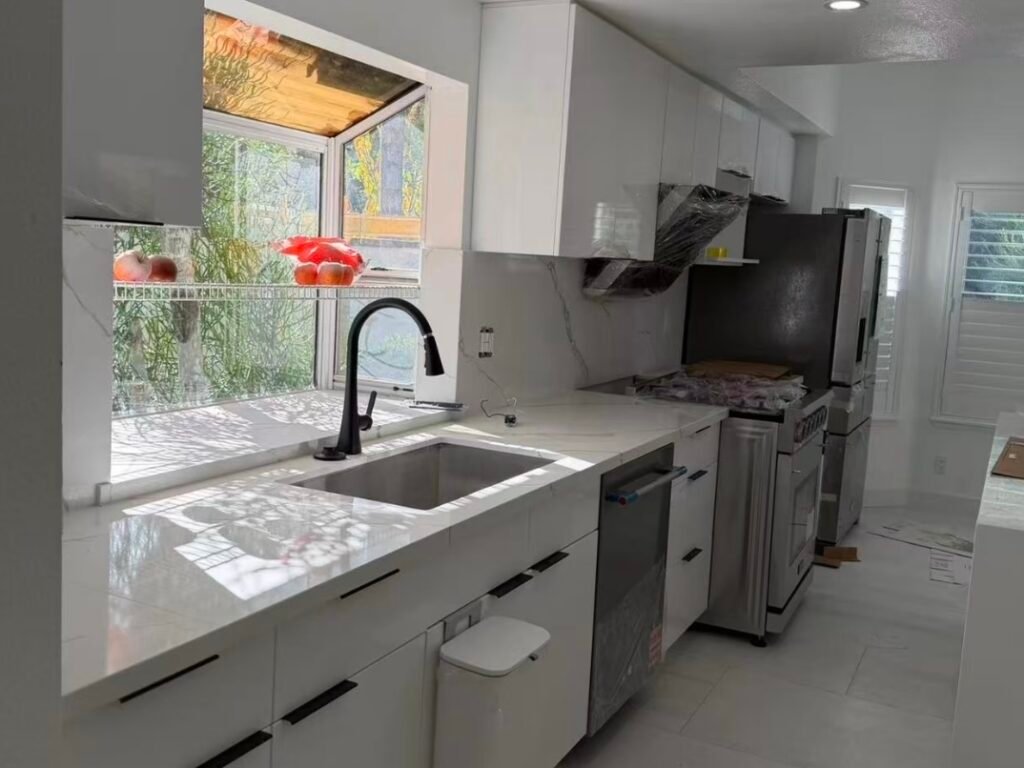
A European style kitchen is a kitchen cabinet design system characterized by frameless ("full access") cabinet construction, flat or minimally profiled door panels, concealed hardware, and an emphasis on functional efficiency over decorative ornamentation. The style originated from the Bauhaus design movement in early 20th century Germany, which established the principle that form should follow function — a philosophy that continues to define how European-style kitchens are engineered today.
The Bauhaus Origin: From Design Movement to Global Standard
The Bauhaus movement, active in Germany between 1919 and 1933, established the design principles that continue to define European-style kitchens nearly a century later.
This design logic has evolved over nearly a century into distinct regional expressions — German precision engineering, Italian sculptural modernism, Scandinavian natural minimalism — but frameless construction combined with functional priority remains the unchanging structural core that identifies the category regardless of regional variation.
The Contemporary Scope of "European Style"
This guide focuses on the structural commonality that defines european style kitchen across all of these regional expressions: frameless construction combined with functional priority and minimalist aesthetics. This is the engineering distinction that separates European-style cabinetry from American-style or traditional cabinetry — not a particular visual preference.
Principle One: Frameless Construction
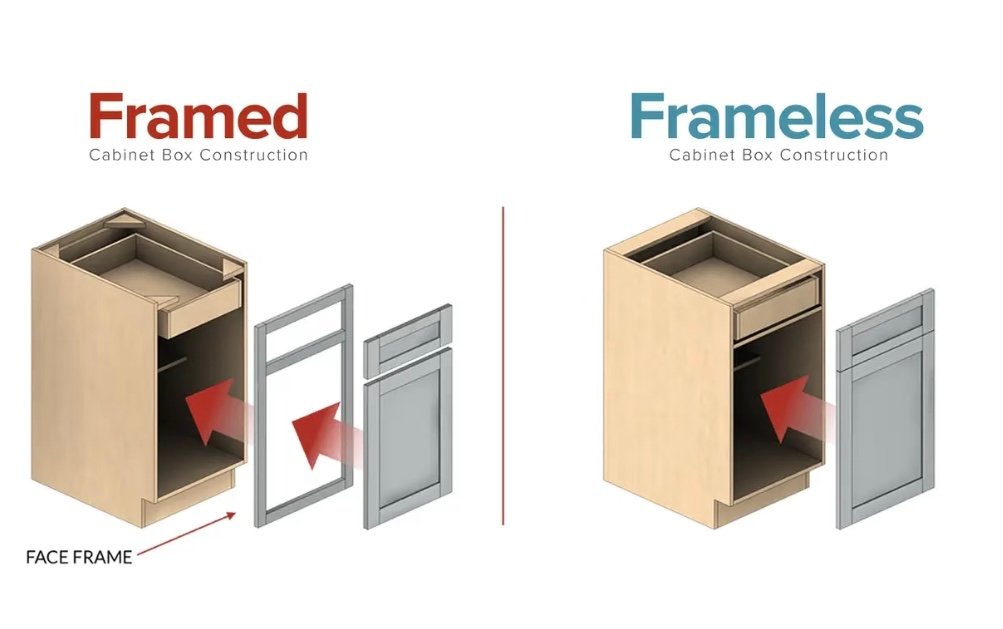
The procurement implication: Frameless construction places significantly higher demands on a manufacturer's panel precision and hinge installation tolerances than face-frame construction does. This is one of the most important capability indicators when evaluating a supplier for European-style cabinetry, because the structural design provides no margin for error that a face frame would otherwise conceal.
Principle Two: "Less Is More" Minimalist Aesthetics
The flat panel door (also called a slab door) is the most direct visual expression of European kitchen design — no raised profile, no carved detailing, no decorative moulding. The door panel itself is the design statement, communicated through proportion, colour, and surface finish rather than carved relief.
This principle extends naturally to hardware selection. Concealed handle channels (recessed grip profiles routed into the top edge of the door), push-to-open mechanisms, and integrated aluminium pull profiles are the dominant hardware approaches in contemporary European kitchen design, all serving the same objective: an uninterrupted door face.
Principle Three: Lacquered and High-Gloss Finish Systems
Lacquer finishes — matte or high gloss — and high-gloss wood veneer are the signature surface treatments of European kitchen design. The reflective, smooth quality of these finishes reinforces the sense of space and contemporary luxury that defines the style, and pairs naturally with frameless construction: an uninterrupted, continuous surface across a frameless door run shows lacquer and high-gloss finishes to maximum effect, without the visual interruption of a face frame breaking up the surface continuity.
Principle Four: Maximum Functional Density
The historical constraint of limited kitchen space in much of Europe drove the development of storage efficiency systems that remain standard equipment in European-style kitchens globally: pull-out baskets, drawer-based pull-out shelving, and corner Lazy Susan mechanisms are expected standard features rather than premium upgrades.
Integrated appliances — refrigerators, dishwashers, and ovens fully concealed behind matching cabinet door panels — extend this principle of visual and functional continuity, eliminating the visible appliance fronts that would otherwise interrupt the uniform cabinet surface.
Principle Five: Neutral Colour Palettes and Composite Material Freedom
European kitchens favour engineered composite materials — plywood, MDF, particleboard, and even stainless steel — over natural solid timber, a material choice that directly serves the dimensional precision frameless construction requires. Engineered composites achieve dimensional consistency that natural timber cannot match, which matters significantly for the precision joints that frameless cabinet construction demands.
Colour choice in European kitchens leans toward neutral palettes — white, grey, black — that produce a contemporary aesthetic with lasting appeal, though the underlying design philosophy is open to any colour direction that supports the minimalist, functional design intent.
European Kitchen vs American Kitchen: The Project Buyer's Core Distinction
Complete Comparison
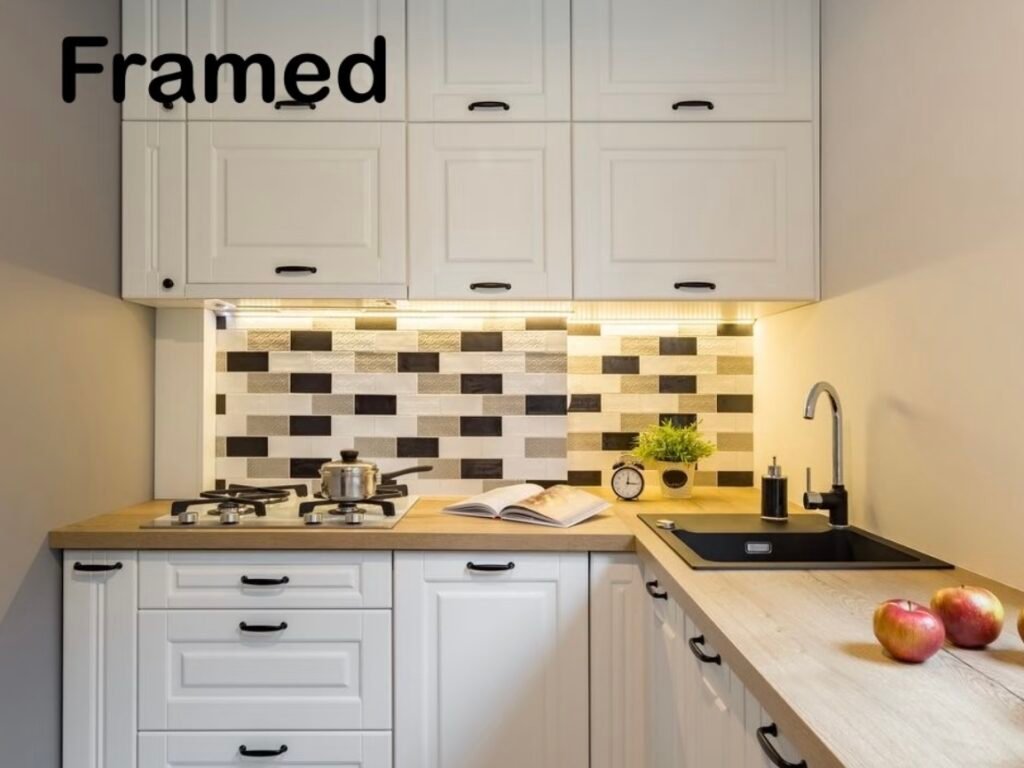
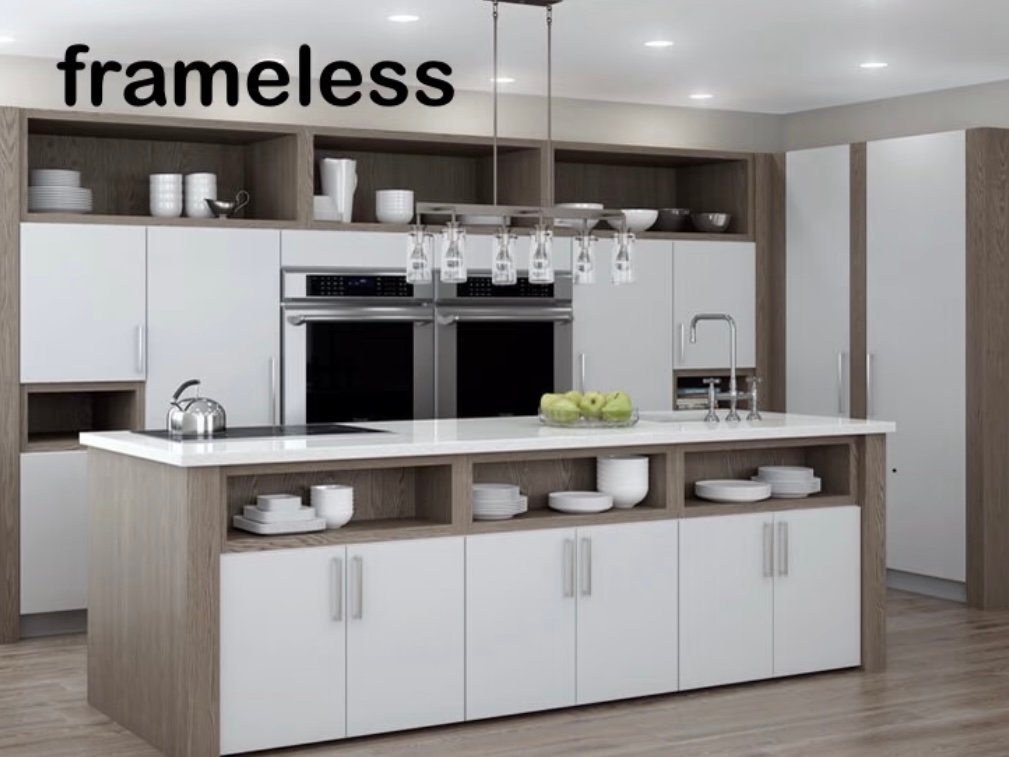
Project Selection Guidance
The Material System for European-Style Kitchens
Substrate Selection and Compatibility with Frameless Construction
Frameless construction demands higher dimensional stability and panel thickness from the substrate than face-frame construction, because there is no additional frame structure to distribute structural stress.
Surface Finish Selection
Hardware Systems: The Structural Foundation of Frameless Design
The visual purity of frameless construction depends heavily on the precision and concealment of its hardware systems.
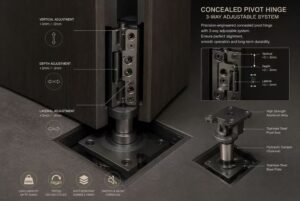
Concealed hinges are completely invisible when the door is closed and remain largely hidden even when open — the signature hardware of frameless European kitchens, requiring tighter load and angle-adjustment tolerances than face-frame hardware because there is no frame to absorb minor installation variance.
Push-to-open systems are the core hardware mechanism enabling handleless design, requiring precisely calibrated spring mechanisms to deliver consistent, reliable operation across thousands of opening cycles.
Soft-close damping systems are standard equipment in quality European kitchens, contributing to the overall sense of engineered quality that the style aims to deliver.
European hardware brand references: Blum, Hettich, and Grass — these manufacturers design their product lines specifically optimised for frameless construction, and their hardware represents the appropriate quality benchmark for any European-style kitchen specification.
Layout Types for European Kitchens
Door Panel Styles for European Kitchens
Flat Panel (Slab)
A completely flat centre panel with no profile or moulded detail — the purest expression of European modern style. Common materials include melamine, lacquered MDF, metal foil, and wood veneer.
Glass-Front Cabinets
Glass door panels integrated into the same frameless cabinet system, used for displaying tableware and glassware. Glass-front sections can be mixed with flat panel doors within the same kitchen to add visual layering and depth.
Handleless Design
Achieved through one of three primary methods: a recessed channel routed into the top edge of the door (C-channel profile), a push-to-open (tip-on) mechanism, or an integrated aluminium profile pull. Handleless design remains the most closely watched design trend within contemporary European kitchen specification.
European Style Kitchen Applications by Project Type
Luxury Villa Kitchens
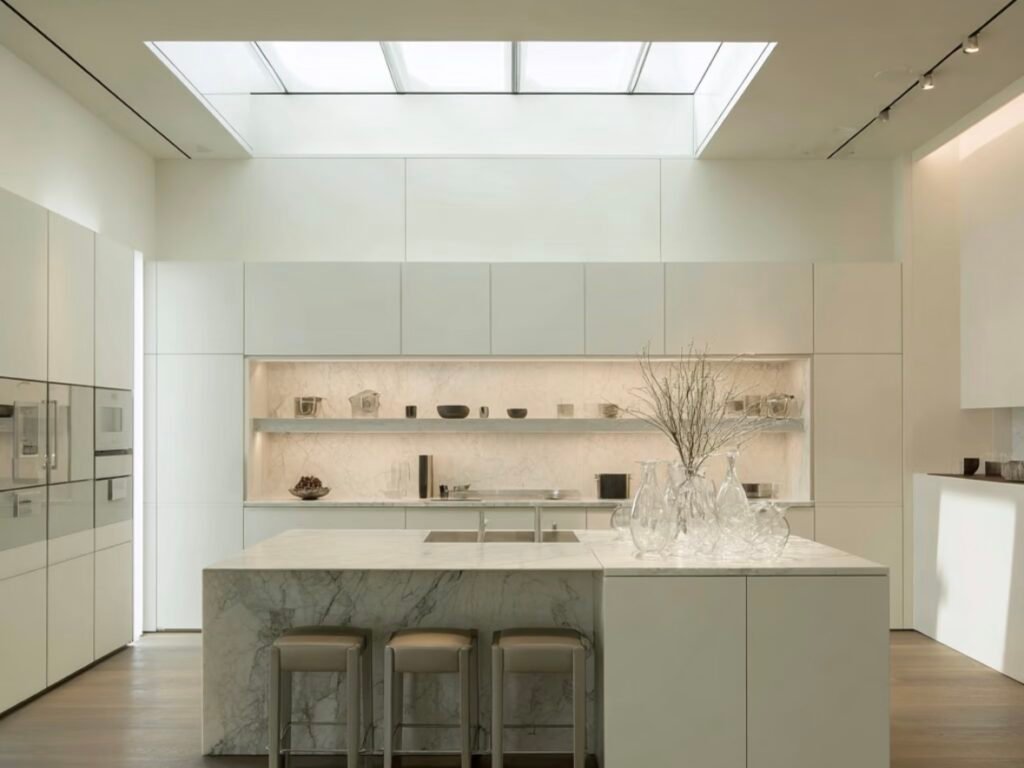
Why villa projects specify European style kitchens: Frameless construction combined with a large island and fully integrated appliances has become the standard design language of contemporary high-end villa kitchens. The neutral colour pairing — white cabinetry, marble worktops, timber flooring — appears with striking consistency across premium villa markets globally.
Recommended specification:
Boutique Hotel Kitchen Suites
Why hotel projects specify European style kitchens: The compact efficiency of frameless construction is particularly well suited to the constrained space typical of hotel guest room kitchenettes. Neutral colour schemes and standardised modular dimensions simplify volume procurement while guaranteeing visual consistency across dozens or hundreds of rooms. Flat panel design with lacquer finish is straightforward to clean and maintain — an operational priority for hospitality projects.
Recommended specification:
Residential Development Kitchens
Why developments specify European style kitchens: The modular production logic of frameless construction is naturally suited to large-scale standardised manufacturing. Flat panel door design simplifies production processes and reduces manufacturing cost at volume.
Recommended specification:
The Pros and Cons of European Style Kitchens
Core Advantages
Quality and durability: Built using high-quality composite materials and precision construction methods capable of withstanding long-term daily use and wear.
Storage efficiency: Frameless design delivers more internal storage volume and easier access to stored items than equivalent face-frame cabinetry.
Visual coherence: Clean lines and an uncluttered appearance transform any kitchen into a stylish, functional contemporary space.
Batch consistency: Modular standardised dimensions facilitate unified procurement and quality control across large-scale projects.
Limitations
Cost factor: Higher-quality materials and precision construction — particularly the hardware precision frameless construction demands — typically result in higher cost than standard face-frame cabinetry of equivalent quality tier.
Style compatibility: The modern minimalist design language may not harmonise well with traditional or rustic interior decor approaches.
Tolerance requirements: Frameless construction's higher demands on installation precision and substrate dimensional stability set a higher capability bar for manufacturing partners than face-frame construction requires.
Procurement Checklist for European Style Kitchens
FAQS
Conclusion:
Related reading:— White Lacquer Glass Texture Kitchen Cabinets: Design Guide for Villa & Hotel Projects
— Which Material Is Best for Kitchen Cabinets? Complete Guide for Villa & Hotel Projects
— Cabinetry Factory: How to Choose the Right Custom Cabinet Manufacturer for Villa and Hotel Projects
— Woodwork Wardrobe: Design Styles, Materials & Custom Guide for Villa and Hotel Projects
— Turnkey Interior Solutions: The Complete Guide for Property Projects
— What Is a Flush Door? Complete Guide to Types, Materials & Project Applications
— Hotel Fit-out Projects: Case Studies and Delivery
— Villa Fit-out Projects: Full-House Interior Solutions