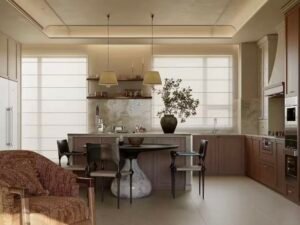
The Five Elements That Define Italian Kitchen Design
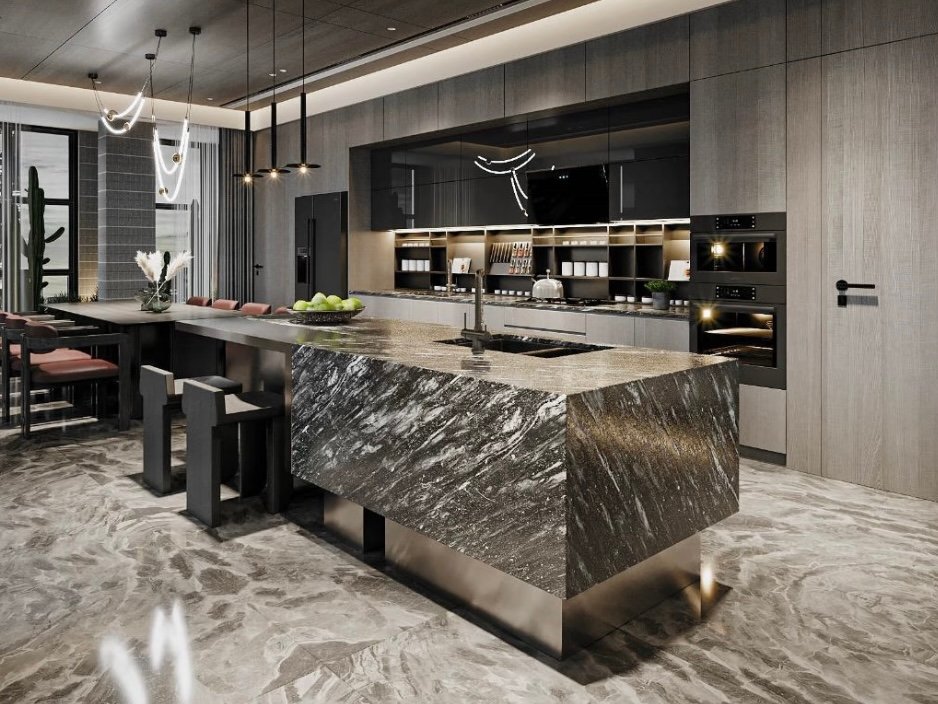
Across Italian kitchen design content, the same five elements come up repeatedly: open shelving in place of upper cabinets, natural materials (wood, stone, brick), an earthy neutral color palette, statement pendant lighting, and copper or brass accents. Each one carries a genuine design logic — but each one also carries a climate assumption baked in from where the style originated.
Open Shelving: Beautiful, But Reconsider It in Humid Climates
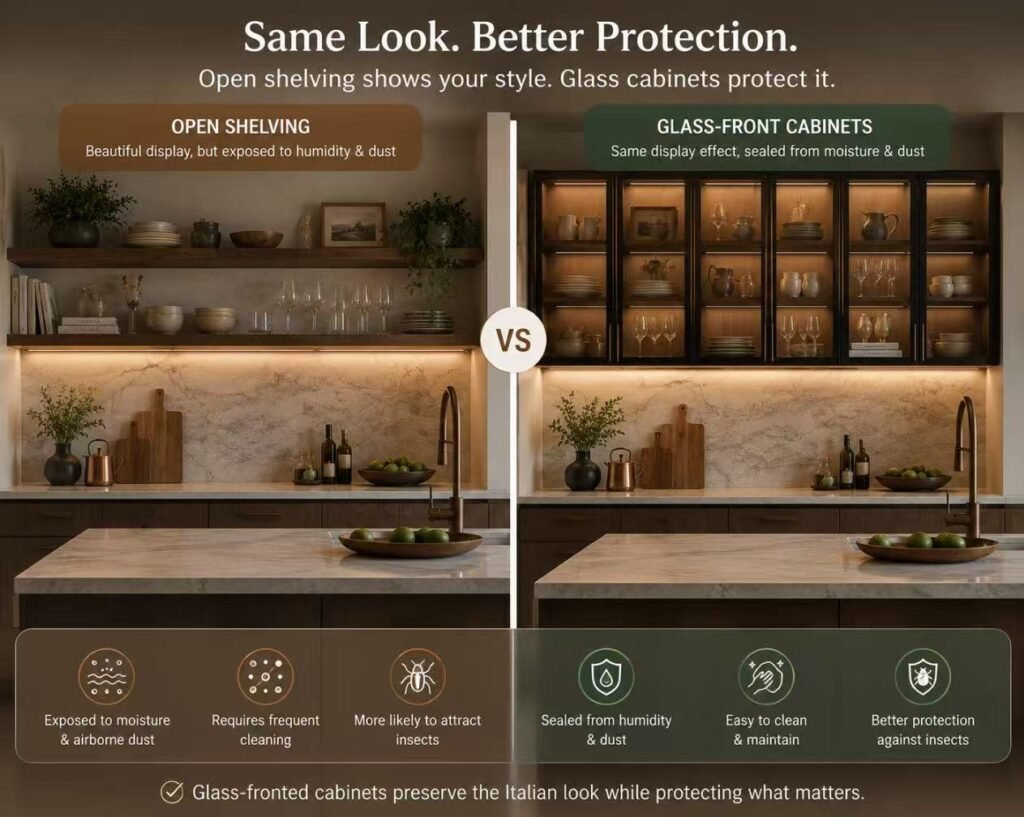
Open shelving is arguably the single most recognizable Italian kitchen signature — showcasing ceramics, cookbooks, and glassware instead of hiding them behind cabinet doors. In a humid, high-dust, or insect-prone climate, though, open shelving exposes everything on it to ambient moisture and airborne particles continuously, rather than only when a cabinet door is opened.
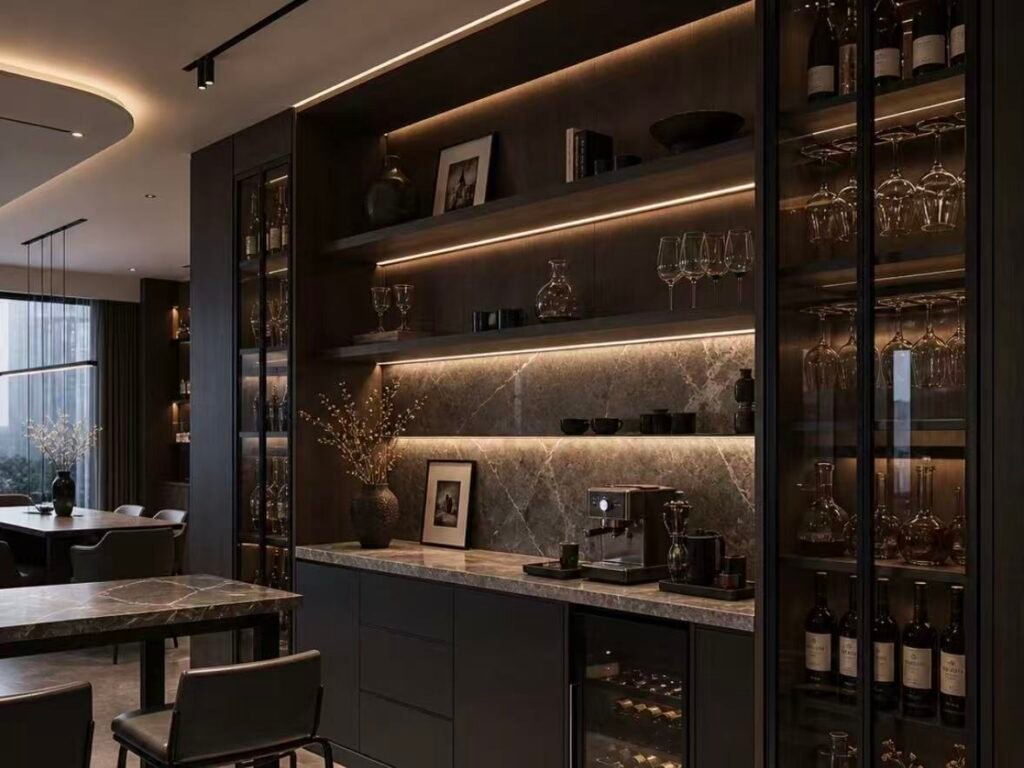
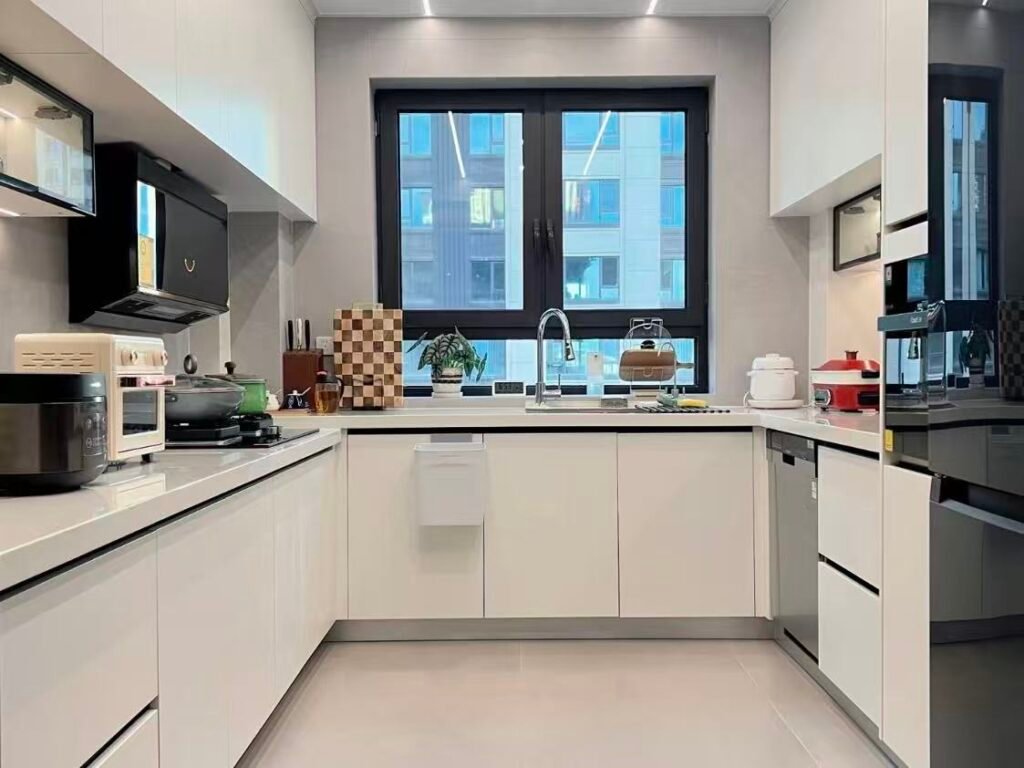
The substitution that keeps the look: glass-fronted cabinets. They preserve the same visual effect — displaying ceramics and glassware as intentional decor rather than hidden storage — while keeping contents sealed against humidity and dust. This is a genuine style-preserving swap, not a compromise dressed up as one.
Solid Wood Cabinetry: What Actually Happens in Sustained Humidity
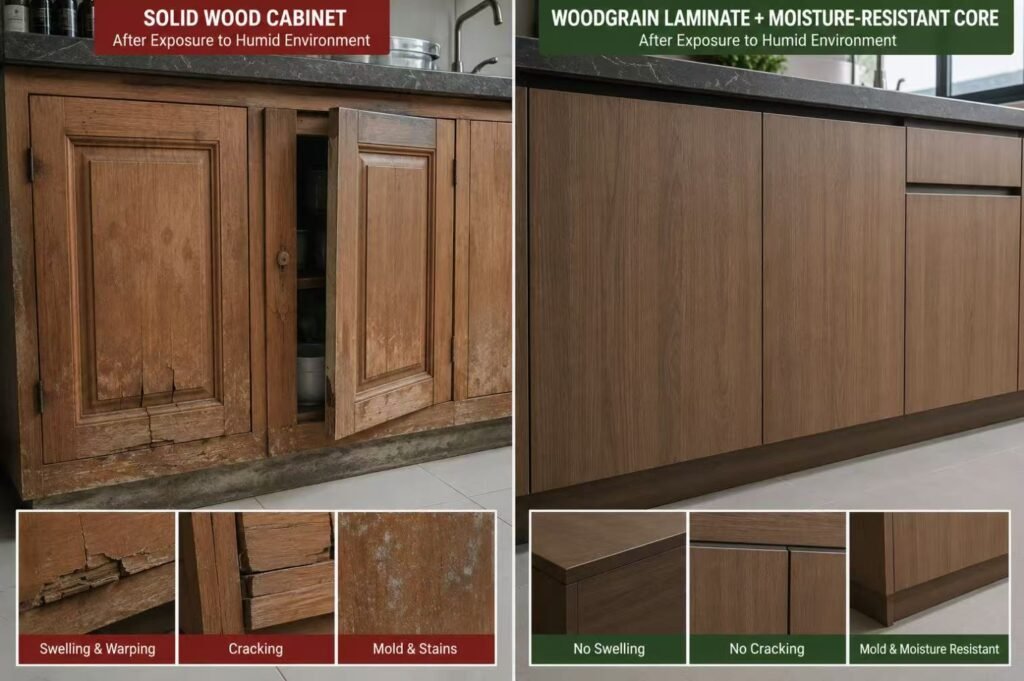
Traditional and rustic Italian kitchens lean heavily on solid wood — walnut, oak — for cabinetry warmth. Solid wood is a genuinely poor performer in sustained high humidity: it continuously absorbs and releases moisture from the surrounding air, which over time causes swelling, warping, and misaligned doors, regardless of how well the wood was finished initially.
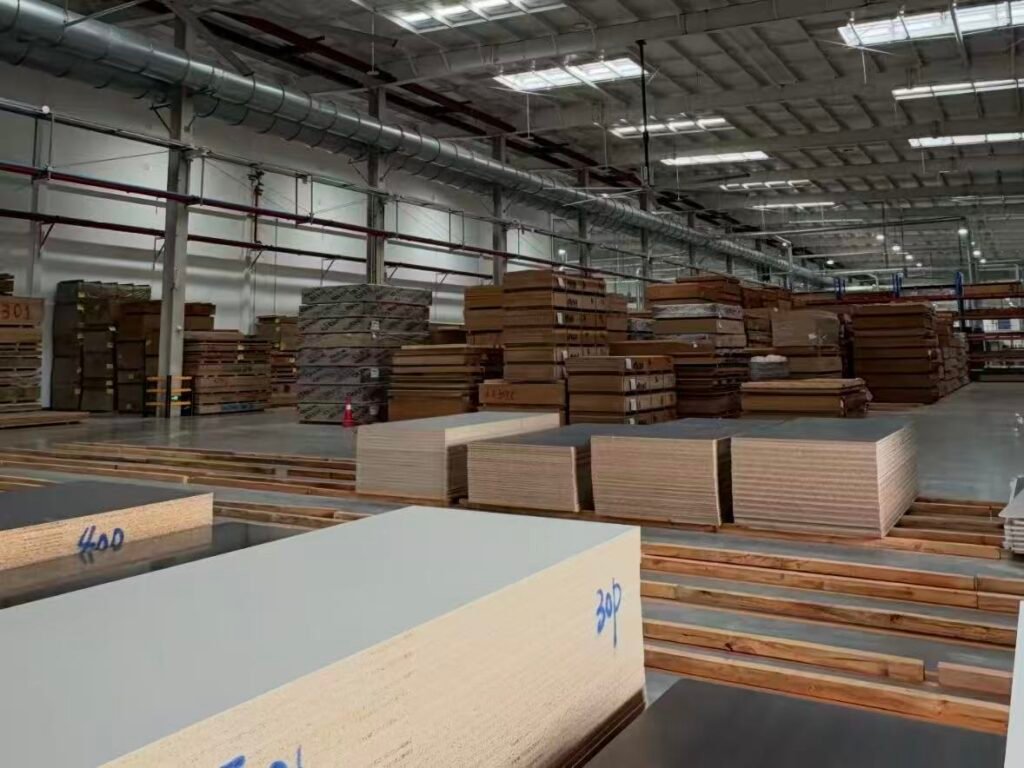
The substitution that keeps the look: wood-veneer or wood-effect laminate over a moisture-resistant (MR/HMR) engineered core. This preserves the grain and warmth of oak or walnut visually while resisting the dimensional movement that solid wood can’t avoid in humid conditions.
Natural Stone Countertops: Matching the Material to the Climate
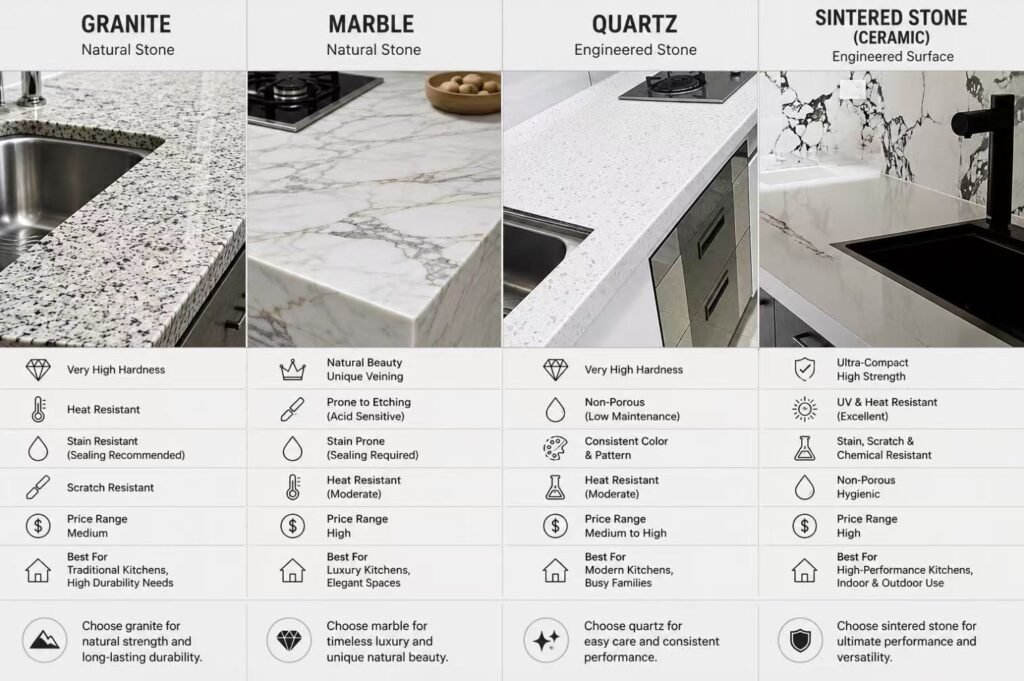
Countertop heat performance comparison| Material | Heat resistance | Note |
|---|
| Granite | Excellent — withstands very high direct heat | Requires periodic sealing due to natural porosity |
| Marble | Good, but prone to thermal shock | A hot pan set on a cool marble surface can crack or etch it — the risk is the sudden temperature shift, not the heat itself |
| Quartz (engineered) | Poor — resin binder can discolor or degrade under sustained heat | Requires consistent trivet use despite its stone-like appearance |
| Porcelain slab | Good | A practical alternative that reads similarly to natural stone |
Granite is generally the strongest match for the Italian aesthetic in a hot climate specifically, since it combines genuine heat resistance with the natural stone look the style calls for — a more climate-appropriate choice than marble for a kitchen with heavy daily cooking, even though marble carries more of the classic Italian association.
Terracotta & Stone Flooring: Why It Actually Makes Sense in Hot Climates
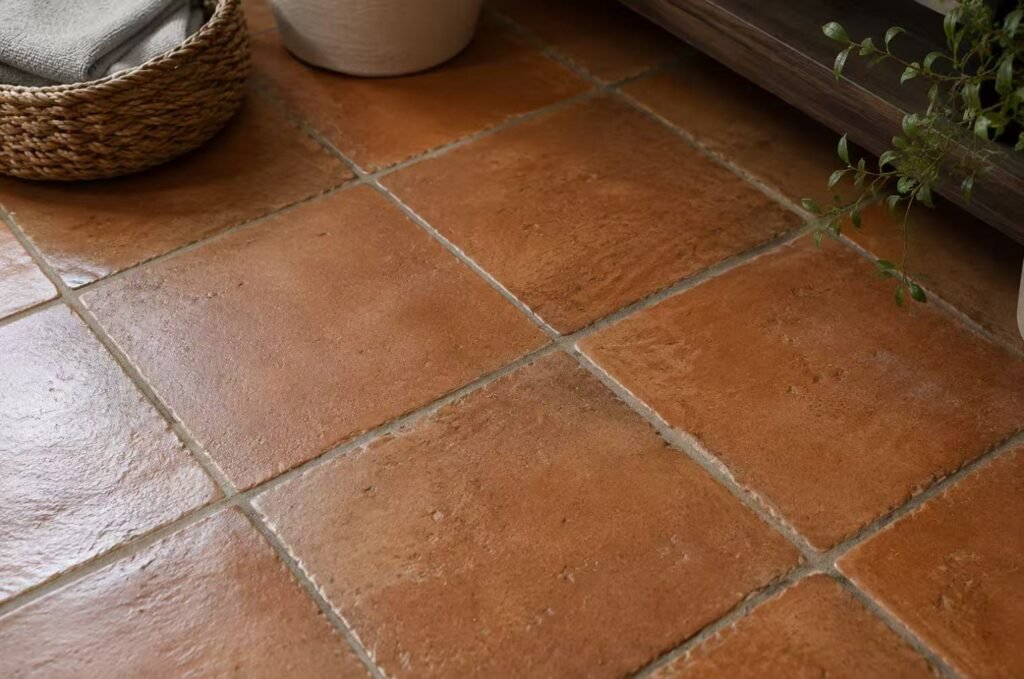
Terracotta tile — a hallmark of rustic Italian kitchen flooring — has a genuinely useful property for hot climates: low thermal conductivity. This means it resists transferring ambient heat quickly, helping a room stay cooler underfoot than materials with higher conductivity. This is one Italian design element that translates directly and favorably into hot-climate use, without needing a substitution at all.
The one caveat — terracotta is porous and needs proper sealing in humid climates specifically, to prevent moisture absorption and staining. The material itself is climate-appropriate; the sealing detail is what needs adjusting region to region.
Color Palette: Earthy Tones That Also Perform Well in Strong Sunlight
The cream, terracotta, and warm taupe palette associated with Italian kitchens isn’t purely an aesthetic choice in a hot-sun climate — light-to-mid-toned warm colors reflect more light than very dark tones without the stark, high-glare quality of pure white, making them a genuinely practical palette for a kitchen with strong daily sun exposure, not just a stylistic one.
Bringing It Together: A Climate-Adapted Material Substitution Table
Italian design element vs. climate-adapted substitution| Classic Italian element | Climate risk | Substitution that keeps the look |
|---|
| Open shelving | Humidity, dust exposure | Glass-fronted sealed cabinets |
| Solid wood cabinetry | Warping, swelling in humidity | Wood-veneer/laminate over MR-core board |
| Marble countertop | Thermal shock cracking | Granite or porcelain slab |
| Terracotta flooring | Moisture absorption if unsealed | Same material, humidity-rated sealant |
| Earthy color palette | None — genuinely climate-appropriate | No substitution needed |
Getting Consistent Italian-Style Cabinetry Across a Multi-Unit Project
On a single kitchen, choosing the right climate-adapted substitution is a one-time decision. Across a villa development or hotel project aiming for a consistent Italian-inspired aesthetic in every unit, the substitution materials — veneer color match, glass panel finish, stone slab veining — need to stay consistent batch to batch, or the “identical” units will visibly diverge over the course of production. Locking each substitution against a retained master sample is the standard way to prevent this.
Sourcing Italian-Inspired Cabinetry Built for Your Climate
At BoyceCasa, Italian-inspired kitchen designs are built using the climate-appropriate substitution for each classic element — moisture-resistant cores under wood-effect finishes, sealed glass-front storage, and stone or porcelain surfaces matched to actual heat exposure — so the aesthetic holds up in Southeast Asian humidity or Gulf heat, not just in a temperate showroom. This same material logic is covered in more depth in our kitchen cabinet materials guide for Singapore’s climate.
Want the Italian kitchen look for a hot or humid climate project? Confirm the climate-adapted substitution for each classic element before finalizing the design — not after installation reveals which one needed it.
FAQS
Explore our Kitchen Cabinets and Wardrobe collections to see factory-direct cabinetry for villa and hotel projects, or contact our team for a project-specific consultation and quote.
Related reading:
Kitchen Island Dimensions: Sizing & Clearance Guide
Kitchen Cabinet Materials in Singapore: Density, Moisture Resistance & What the Test Reports Actually Say
Best Material for Kitchen Cabinets: Choosing by Budget, Climate & Upkeep
L-Shaped Cupboard Design: Corner Storage That Actually Works