In the pursuit of personalized spaces and premium living, mass-produced furniture often falls short of capturing the true essence of a home.
As modern minimalism and light luxury styles continue to dominate global design trends, high-end custom furniture has become the absolute core of creating an ideal living space.However, the custom furniture market can be highly complex.
Bridging the gap between a stunning design blueprint and the final product involves navigating materials, hardware, and craftsmanship. Here is how to choose bespoke luxury furniture like a professional designer.
You have the project. You have the floor plans. You have a budget and a delivery deadline that cannot move. What you do not yet have is confidence that the cabinetry factory you are about to sign with can actually deliver — not just a sample, but 200 sets of kitchen cabinets and wardrobes, on time, to consistent quality, packaged for sea freight, with documentation that clears customs without delay.
This is the real challenge of sourcing custom cabinetry for villa, hotel, and residential development projects. Every supplier claims to be a factory. Every quote looks similar at the headline level. The differences — in equipment precision, production capacity, quality management, and project delivery experience — only become visible when you know what to look for, and when you ask the right questions before production begins rather than after it goes wrong.
This guide gives you the framework to evaluate a cabinetry factory the way experienced procurement professionals do: systematically, with specific criteria, and with a clear understanding of what each factor means for your project outcome.
A cabinetry factory is a manufacturing facility that designs, produces, and supplies custom or semi-custom cabinet products — including kitchen cabinets, wardrobes, bathroom vanities, and built-in storage units — for residential, hospitality, and commercial interior projects. Unlike furniture retailers or trading companies, a cabinetry factory controls the full production process from raw material processing through finished product assembly and quality inspection.
This definition is important because "factory" is one of the most overused and least verified claims in the international cabinetry supply chain. Trading companies present themselves as factories. Agents with factory partnerships present themselves as manufacturers. The distinction between a supplier who manufactures and one who sources from manufacturers is not merely a matter of price — it determines accountability, quality control, production scheduling, and problem resolution in ways that affect every major outcome of your project.
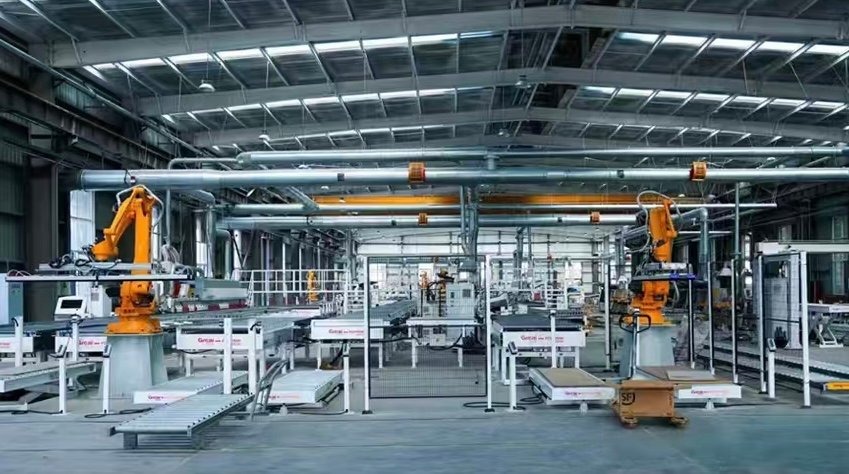
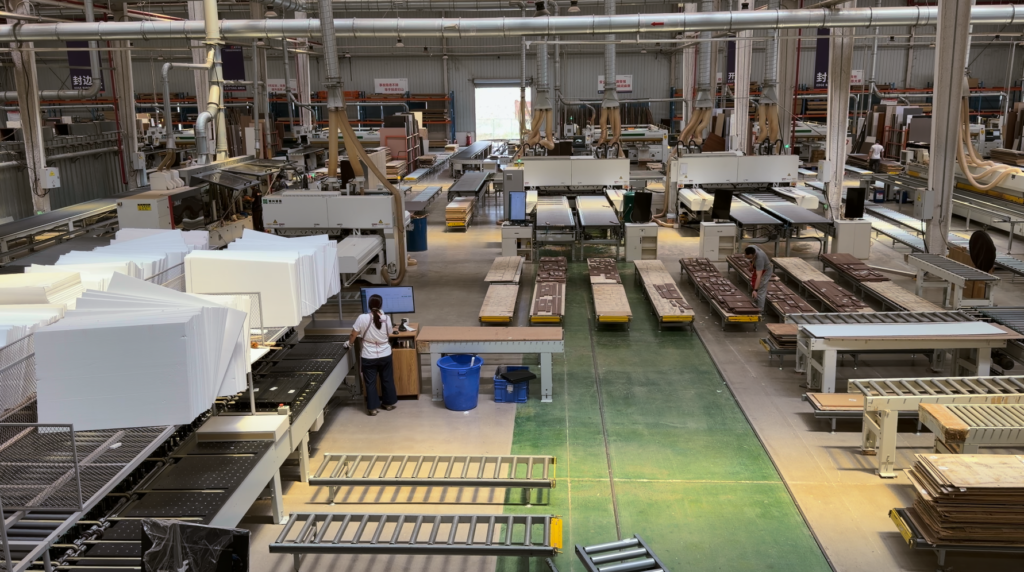
The practical test for whether a supplier is a genuine factory: ask for the factory registration certificate and the physical address of manufacturing. Request a video factory tour showing the actual production floor — not a showroom. If the tour shows a space without heavy CNC equipment, the "factory" claim deserves scrutiny.
What a Complete Cabinetry Factory Provides
A factory with full capability for hotel and villa project supply covers the entire scope from design to delivery:
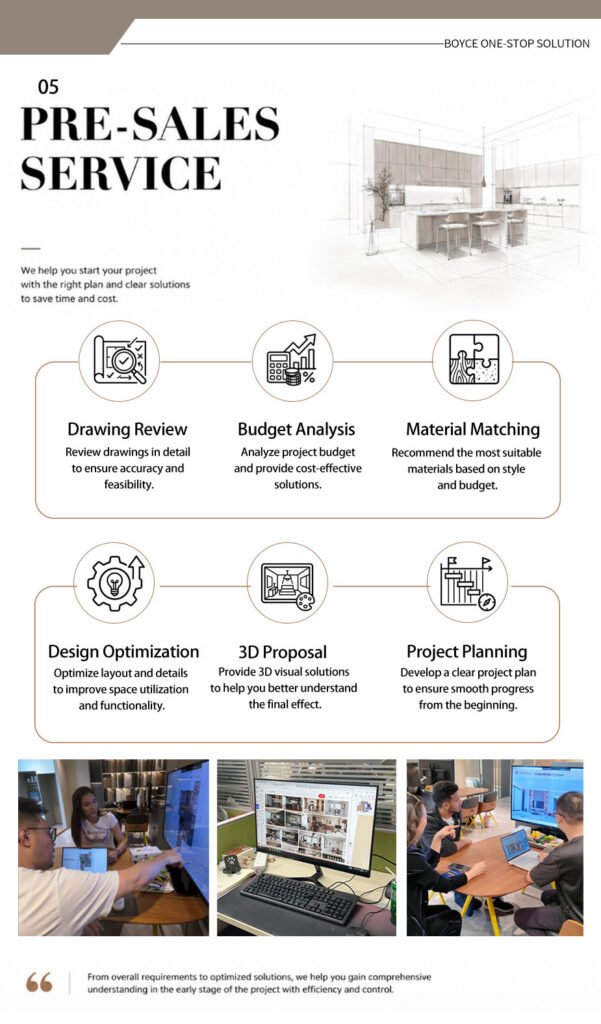
Design support — 2D floor plans, 3D rendered visualizations, and production engineering drawings that translate design intent into manufacturable specifications.
Raw material processing — procurement of certified board materials and processing to project specification, with material lot documentation.
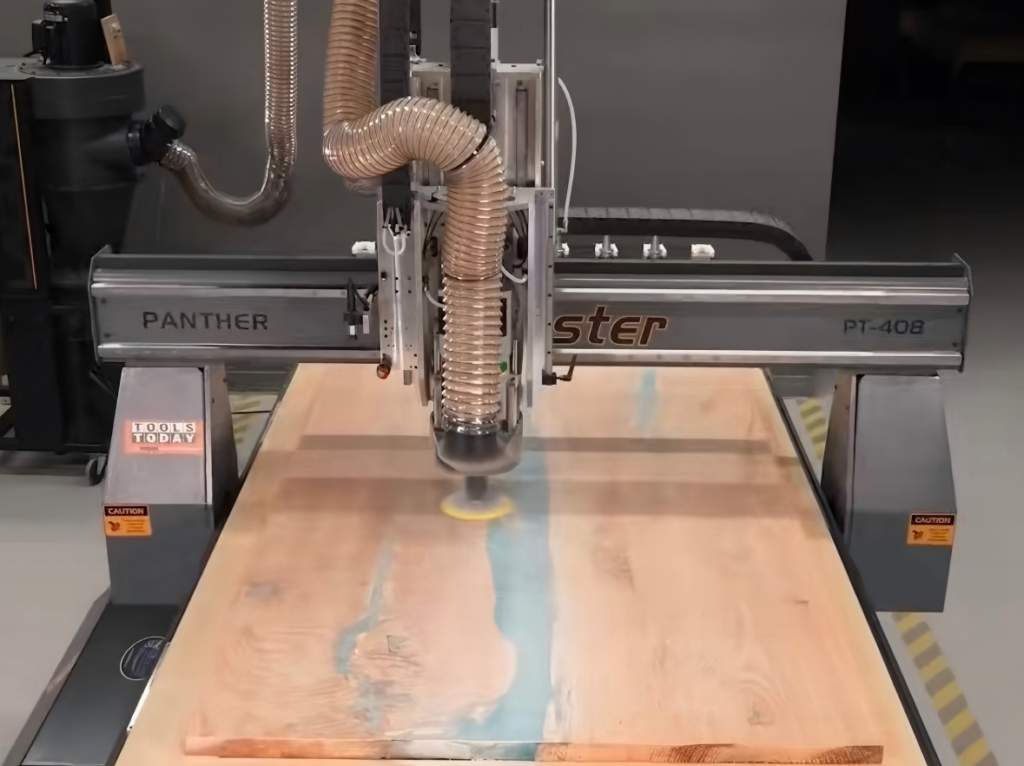
CNC precision cutting — computer-controlled cutting and shaping of all panel components to dimensional tolerances appropriate for the project specification.
Surface treatment — applying the specified finish, whether PVC wrapping, spray lacquer, wood veneer, or acrylic, to the required standard and color specification.
Edge banding — sealing all exposed panel edges to protect core material and achieve the specified visual finish at panel edges.
Hardware fitting and assembly — installing hinge systems, drawer runners, and other hardware to the specified brand and grade, and assembling complete cabinet units ready for inspection.
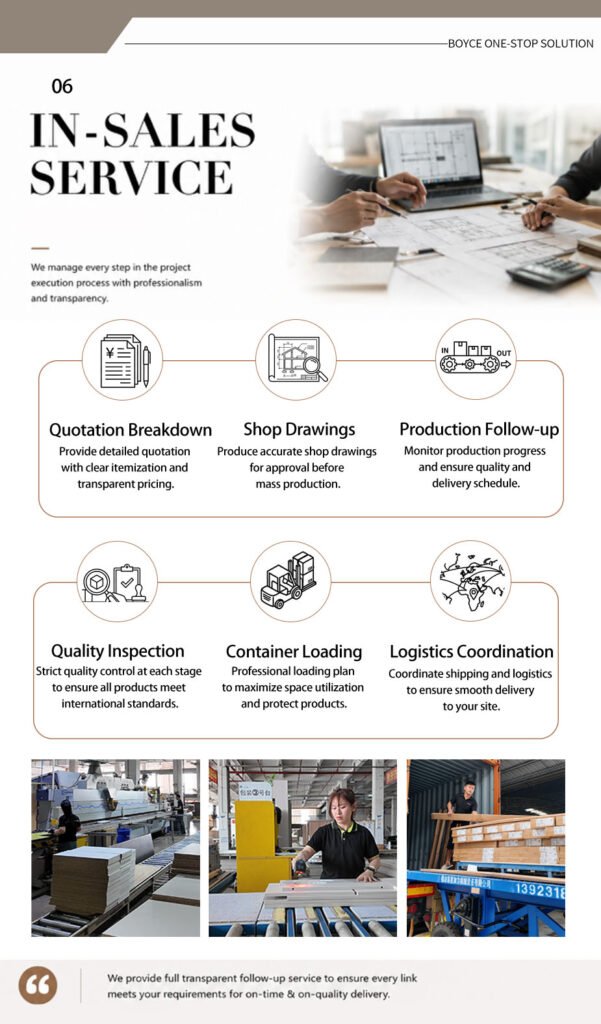
Pre-shipment quality inspection — 100% visual and functional inspection of all finished units before packaging.
Export packaging and documentation — flat-pack packaging designed for sea freight protection, with complete export documentation.
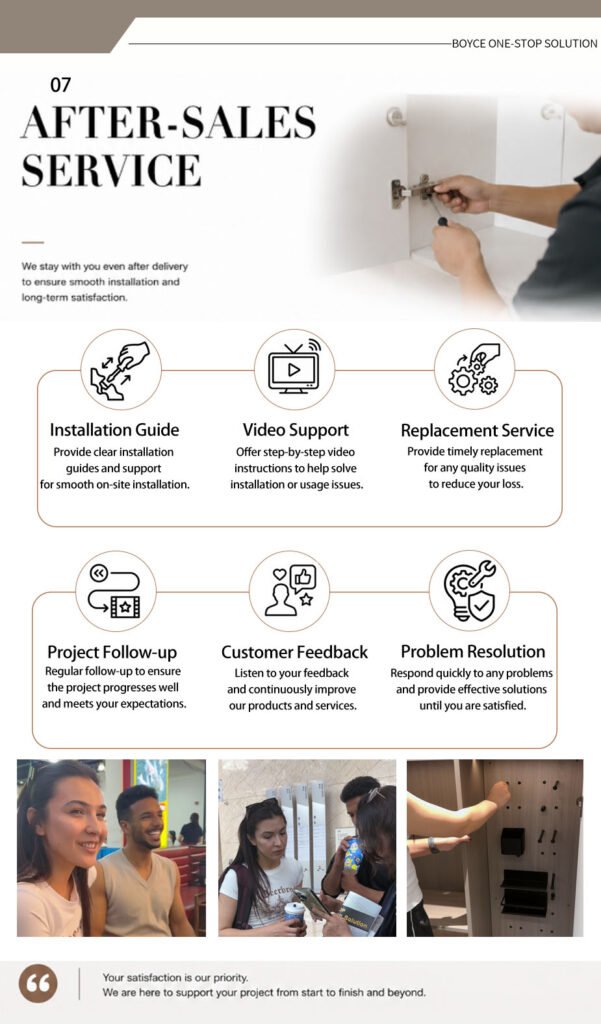
After-sales support — structured process for addressing defects or damage discovered after delivery, with defined replacement lead times and responsibility allocation.
Six Core Capability Indicators That Separate Top Cabinetry Factories
1. Production Equipment: CNC Is the Dividing Line
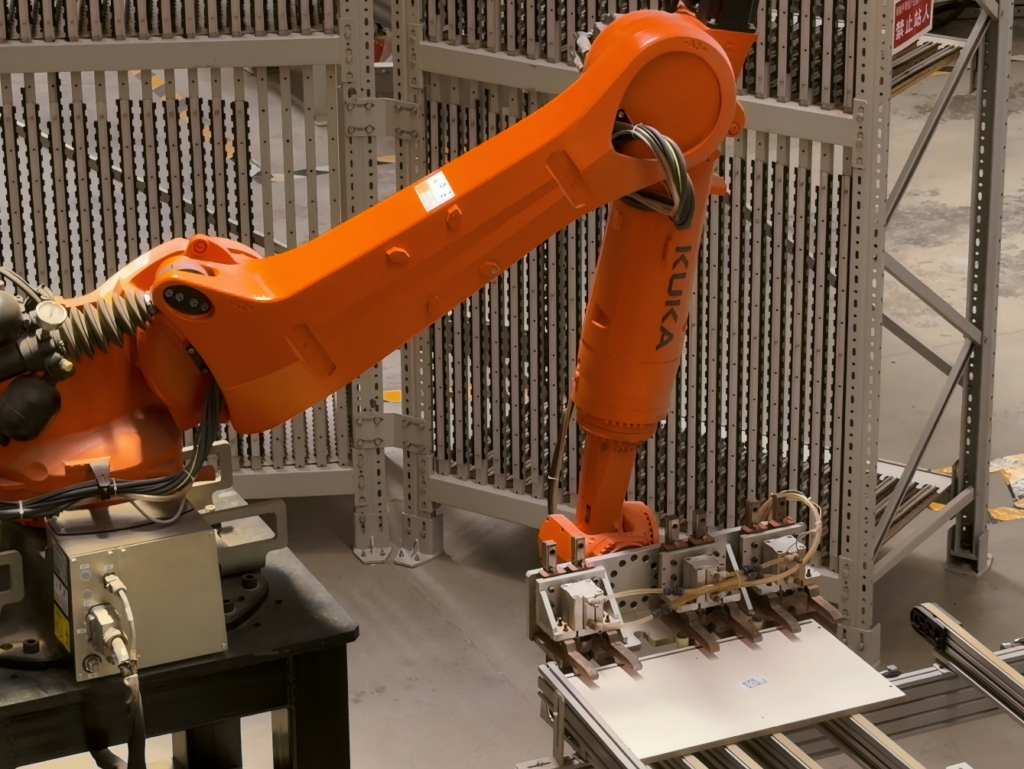
The single most reliable indicator of a cabinetry factory's production capability is the specification of its CNC machining equipment. CNC cutting centers are the foundation technology for precision cabinet production — they determine the dimensional accuracy of every panel, the precision of every hinge hole and hardware boring, and the consistency of every component across a production batch.
What to look for:
2. Production Scale and Capacity Matching
3. Quality Management System
The single most reliable indicator of a cabinetry factory's production capability is the specification of its CNC machining equipment. CNC cutting centers are the foundation technology for precision cabinet production — they determine the dimensional accuracy of every panel, the precision of every hinge hole and hardware boring, and the consistency of every component across a production batch.
4. Material Certification System
5. Custom Design Capability
6. International Delivery and Project Management
Cabinet Product Types and the Factory Capabilities Each Requires
Kitchen Cabinets
Kitchen cabinets are the highest-complexity product category in residential and hospitality cabinetry. A complete kitchen involves base units, wall units, tall pantry towers, integrated appliance housings, drawer systems, and pull-out interior fittings — all of which must be dimensionally coordinated with each other, with the worktop, and with the appliances that will be installed.
Kitchen CabinetsFactory requirements specific to kitchen cabinet production:
hinge boring accuracy within ± 0.1mm (critical for consistent door alignment across full-height larder units), drawer runner specification appropriate to the load (kitchen drawers carry significantly more weight than wardrobe drawers), and worktop coordination if the factory is supplying the surface.
Wardrobes and Walk-in Closets
Wardrobe production requires the ability to manage non-standard dimensions — the dimension that most commonly requires customization in villa and hotel projects. Ceiling heights above 2700mm, which are increasingly standard in premium residential and hospitality construction in markets including Malaysia, the UAE, and Australia, require door heights above the standard 2100mm catalog specification.
A carpenter frames the walls, lays the floor structure, and builds the roof. Once that work is complete and the building is weathertight, the joiner comes in to fit the doors, install the cabinetry, hang the paneling, and build the staircase. The carpenter's work disappears behind plaster and flooring. The joiner's work is what you see, touch, and interact with for the life of the building.
Hotel wardrobe configuration presents a specific set of requirements that experienced hotel FF&E factories know and inexperienced ones do not: the in-room safe requires a specific recess with reinforced sides and back; the ironing board compartment must be dimensioned to accommodate the folded board with minimum clearance; the luggage shelf must be positioned at a height that allows comfortable handling of a loaded suitcase. These details are not typically found in residential wardrobe specifications, and a factory without hotel project experience will need to be guided through them.
Drawer box construction is the most visible quality differentiator in wardrobes. Dovetail-jointed drawer boxes — where the drawer corners use the trapezoidal interlocking joint that mechanically resists separation under tension — indicate manufacturing investment in quality. Staple-and-glue drawer boxes, which are faster and cheaper to produce, are adequate for light residential use but inadequate for hotel room use where the drawer is opened and closed thousands of times over the asset's life.
Bathroom Vanities
Bathroom cabinetry operates in the most demanding moisture environment of any interior cabinet installation. Water splashes, steam from showers, and cleaning product contact are constant over the life of the installation — making moisture resistance at the material, joint, and finish level the primary specification consideration.
Hotel wardrobe configuration presents a specific set of requirements that experienced hotel FF&E factories know and inexperienced ones do not: the in-room safe requires a specific recess with reinforced sides and back; the ironing board compartment must be dimensioned to accommodate the folded board with minimum clearance; the luggage shelf must be positioned at a height that allows comfortable handling of a loaded suitcase. These details are not typically found in residential wardrobe specifications, and a factory without hotel project experience will need to be guided through them.
High-moisture-resistant (HMR) board substrate is the minimum appropriate specification for bathroom vanity production. Standard particleboard absorbs moisture through exposed edges and joints, causing swelling, delamination, and structural failure within a few years in bathroom environments. HMR board reduces this absorption significantly.
Polyurethane (PUR) adhesive for edge banding — rather than standard EVA hot-melt adhesive — provides significantly better moisture resistance at panel edges. Panel edges are the most vulnerable point for moisture ingress, and PUR-bonded banding maintains its bond under repeated moisture exposure that would eventually lift EVA-bonded banding.
Whole-House Cabinet Packages
For villa, hotel, and residential development projects that require cabinetry across multiple product categories — kitchen, wardrobe, bathroom, and built-in storage — sourcing from a single factory that covers all categories has significant advantages over multi-supplier coordination.
The design advantage is visual coherence: all surfaces share the same material palette, the same hardware family, and the same finish standard, producing an interior that reads as a unified composition. The procurement advantage is negotiating leverage: a single large order across multiple categories creates better pricing terms than separate smaller orders to separate suppliers. The logistics advantage is consolidated shipping: all products leave the factory together, arrive together, and can be installed in a coordinated sequence.
Boutique Hotels and Resorts
Hotel cabinetry procurement presents requirements that do not exist in residential projects. Every room must be identical — identical dimensions, identical finish, identical hardware specification, identical configuration. Color variation between rooms is immediately visible and reflects on the property's quality perception. Hardware that fails in a hotel guest room creates an immediate guest experience problem and a maintenance cost that the operator would not face if the specification had been correct from the start.
Key factory selection criteria for hotel projects: verifiable experience with hotel FF&E production at comparable scale (request project references with room counts and delivery dates), demonstrated batch color control capability (request batch inspection reports from recent hotel production), fire rating documentation for any products installed in fire compartmentation locations, and packaging capability appropriate for the delivery distance and transport mode.
For hotel projects in Southeast Asia (Malaysia, Indonesia, Thailand) and the Middle East (UAE, Saudi Arabia), the combination of tropical climate and air conditioning creates significant humidity variation that affects cabinet performance. Board material specification must account for this — high-density plywood substrate is more moisture-resistant than particleboard and is the appropriate specification for humid-climate hotel projects.
Luxury Villas
Villa cabinetry projects are defined by customization depth — the requirement to produce products that are designed specifically for the architectural spaces they will occupy rather than adapted from catalog standards. Non-standard room dimensions, custom ceiling heights, unique design brief requirements, and the need for all cabinet products across the villa to share a unified design language create specification requirements that standard production factories cannot meet.
The factory capabilities that distinguish villa-appropriate suppliers from standard producers: dedicated design team capability to produce shop drawings from architectural input (not just adapt from standard templates), production flexibility to accommodate non-standard dimensions and material combinations, and the quality of their premium finish options (real wood veneer, high-gloss lacquer, and acrylic finishes require specialized production equipment and finishing expertise that not all factories possess).
For high-end villa projects, the relationship between the cabinetry factory and the interior designer is as important as the factory's technical capabilities. A factory that can receive a design brief, interpret it accurately into producible specifications, and communicate proactively when specification elements are not achievable in production is a fundamentally more valuable partner than one that simply produces what it is given and raises problems after the production deadline has passed.
Residential Developments
Large-scale residential developments — where the same cabinet specification is repeated across 100, 500, or 1,000 identical units — represent the production scenario where factory scale and batch consistency capability matter most. The specification is typically standardized (the same kitchen layout and wardrobe configuration in every unit), but the production volume is high enough that any quality issue in the specification propagates across the entire project.
The most important factory capability for residential development supply is the combination of sufficient production capacity to complete the entire project within the required timeline and a quality management system capable of maintaining specification consistency across the full production run. A factory that produces 500 identical kitchen units over several months must maintain the same color, the same dimensions, and the same hardware specification in the last batch as in the first — which requires material lot management, color control processes, and inspection protocols that go beyond what smaller or less-organized factories maintain.
Material Evaluation Guide
The Complete Cabinetry Factory Evaluation Checklist
Residential DevelopmenPre-Contract Factory Verification
Before signing any production agreement, verify the following:
Factory registration documentation: the business license and registered address of the manufacturing entity should match the physical factory location. This is the primary verification that you are contracting with a manufacturer rather than a trading company.
CNC equipment list: brand, model, and year of purchase for primary cutting centers, edge banding machines, and boring equipment. This information takes minutes to obtain if the factory is genuine and forthcoming.
Production capacity confirmation: annual output in sets and current monthly volume. Compare the monthly output figure against your order size to assess scheduling risk.
Quality management certification: ISO 9001 or equivalent, with the certificate name, certification body, and certificate number that allows independent verification.
Material certifications: E0 or E1 formaldehyde emission certificates from accredited third-party laboratories for the board materials to be used in your project.
Project references: contact information for clients from recent hotel or villa projects of comparable scale. Request references specifically from the project type (hotel or villa) that matches yours.
Production and Delivery Verification
Written delivery commitment: the contract should specify the completion date for production and the agreed shipment date, with clear consequences if either milestone is missed.
Packaging specification: request the packaging plan for sea freight, including the method of individual panel protection, moisture barrier wrapping, and corner and surface protection for finished door faces.
Export documentation: confirm which documents the factory will prepare (commercial invoice, packing list, certificate of origin, material certifications) and who is responsible for any documentation that requires separate procurement.
After-Sales Verification
Warranty terms: product warranty period, what defects are covered, and the process for making a claim — in writing, not as a verbal commitment.
Replacement lead time: the specific number of days from defect notification to dispatch of replacement parts. This matters for hotel projects where a visible cabinet defect in an open room affects guest experience.
Damage responsibility allocation: who is responsible for damage that occurs during shipping (typically the buyer's responsibility under FOB terms) versus manufacturing defects (always the factory's responsibility). Clarifying this before signing prevents disputes after delivery.
China Cabinetry Factory vs Local Factory: The Project Buyer's Decision Framework
When to Choose a China Factory Direct
The economics of sourcing from a China factory-direct cabinetry manufacturer become clearly favorable when the project scale exceeds 50 sets of cabinets. At this volume, the cost advantage — typically 15 to 30% on total landed cost compared to equivalent local sourcing in Southeast Asia or the Middle East — more than offsets the additional freight cost and the longer total lead time.
The specification advantages of China's large-scale cabinetry factories — access to a wider range of surface finishes, larger non-standard dimension production capability, and availability of European hardware at factory-integrated pricing — are also meaningful for villa and hotel projects where the standard catalog of a local factory cannot meet the design requirements.
The prerequisite for China factory-direct sourcing to work well is adequate lead time. A minimum of 60 days before the required on-site date — and 90 days for large projects of 200 sets and above — is necessary to accommodate production, quality inspection, shipping, and customs clearance without creating schedule risk.
When Local Factory Supply Makes More Sense
For projects below 30 sets, the freight cost per unit makes China sourcing less competitive unless the factory minimum order quantity also applies to the specific customization required. For projects with delivery requirements under 30 days, sea freight from China is not feasible. For projects requiring frequent on-site modification or adjustment during installation — which is more common in renovation projects than in new construction — local supply with accessible technical support has practical advantages that outweigh the cost differential.
China Cabinetry Factory vs Local Factory: The Project Buyer's Decision Framework
FAQS
Conclusion:
Related reading:— White Lacquer Glass Texture Kitchen Cabinets: Design Guide for Villa & Hotel Projects
— Which Material Is Best for Kitchen Cabinets? Complete Guide for Villa & Hotel Projects
— Cabinetry Factory: How to Choose the Right Custom Cabinet Manufacturer for Villa and Hotel Projects
— Woodwork Wardrobe: Design Styles, Materials & Custom Guide for Villa and Hotel Projects
— Turnkey Interior Solutions: The Complete Guide for Property Projects
— What Is a Flush Door? Complete Guide to Types, Materials & Project Applications
— Hotel Fit-out Projects: Case Studies and Delivery
— Villa Fit-out Projects: Full-House Interior Solutions