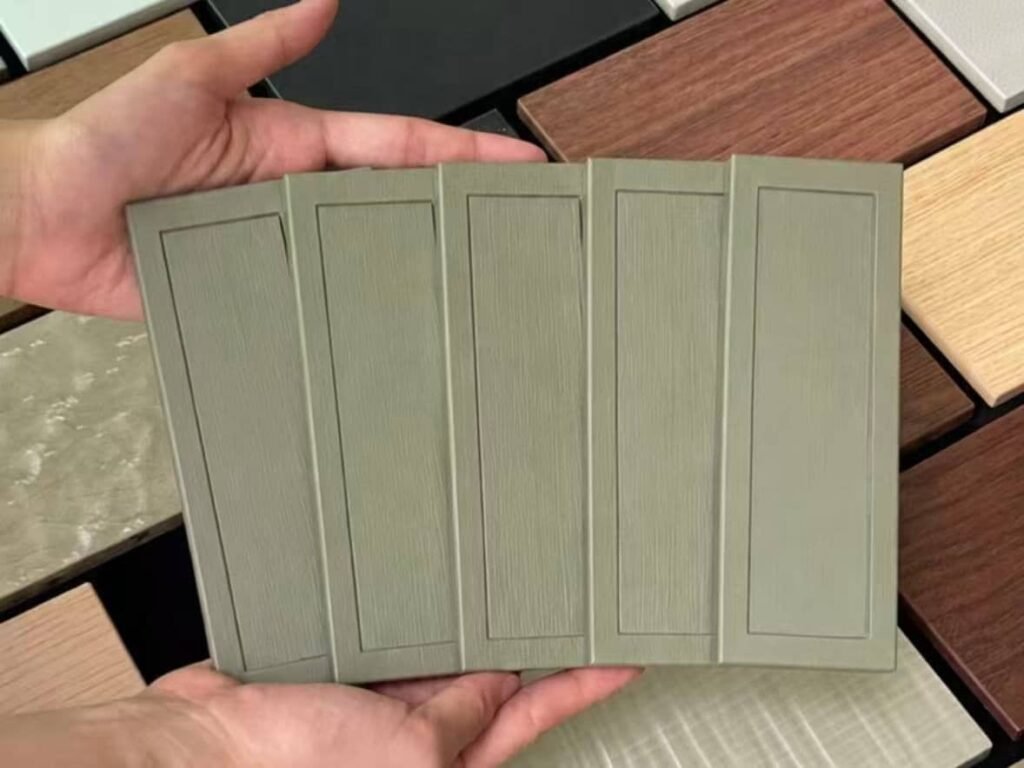
Sage Green Isn't One Color: Grey-Toned, Blue-Toned, and Warm Undertones
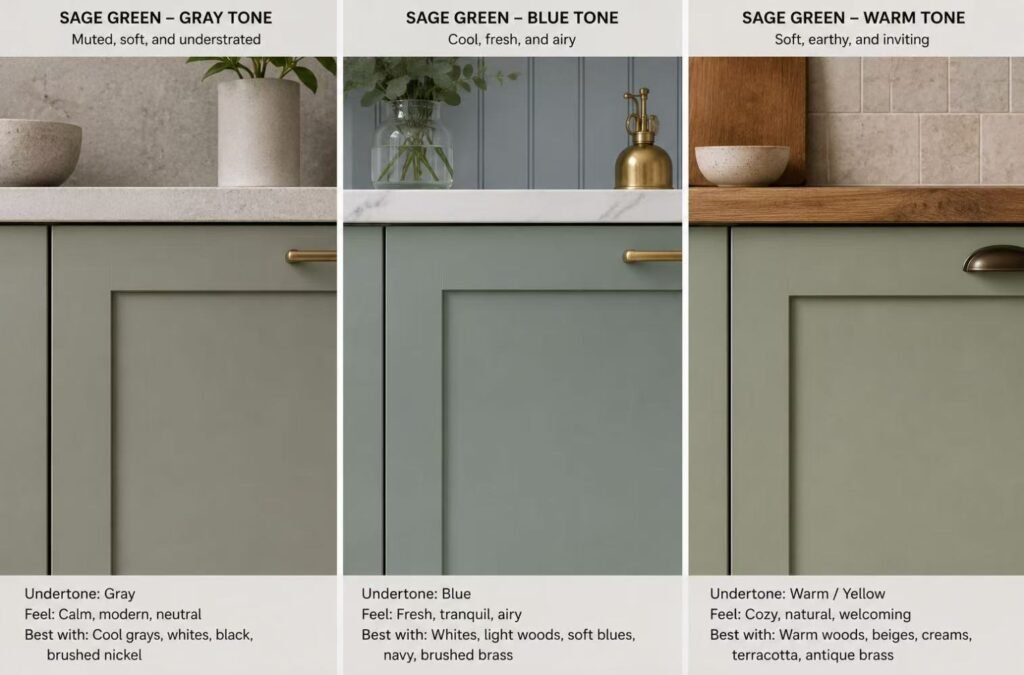
"Sage green" covers a wider range than the name suggests, and the undertone matters more than the general color family:
- Grey-toned sage — the most muted and neutral version, reads calmly in almost any lighting and pairs easily with both warm and cool accents. The safest starting point for most kitchens.
- Blue-toned sage — cooler and slightly more contemporary, this leans toward a soft eucalyptus tone and works especially well in bright, naturally lit kitchens where it won’t read as flat.
- Warm sage (yellow/olive undertone) — closer to a true herb-green, pairs naturally with wood tones and warm brass hardware, and generally reads as more traditional or farmhouse in feel.
Choosing between these isn’t primarily an aesthetic preference — it’s a lighting and room-size decision first, since the same sage color chip can shift noticeably cooler or warmer depending on the room’s actual light source, exactly as covered in our kitchen cabinet materials guide for Singapore’s climate.
Why This Color Grew So Fast — And Whether It's Here to Stay
Industry trend reporting has tracked a significant increase in sage green cabinet specification over the past several years, positioning it among the fastest-growing kitchen color choices. The underlying reason isn’t just aesthetic fashion — sage green functions almost like a neutral while still introducing color, which is why it has proven more durable as a choice than saturated trend colors that cycle in and out quickly. A color that behaves like a neutral is far less likely to feel dated the way a bold, single-season trend color typically does within a few years.
Finish Type Comparison: What Actually Determines Maintenance Difficulty
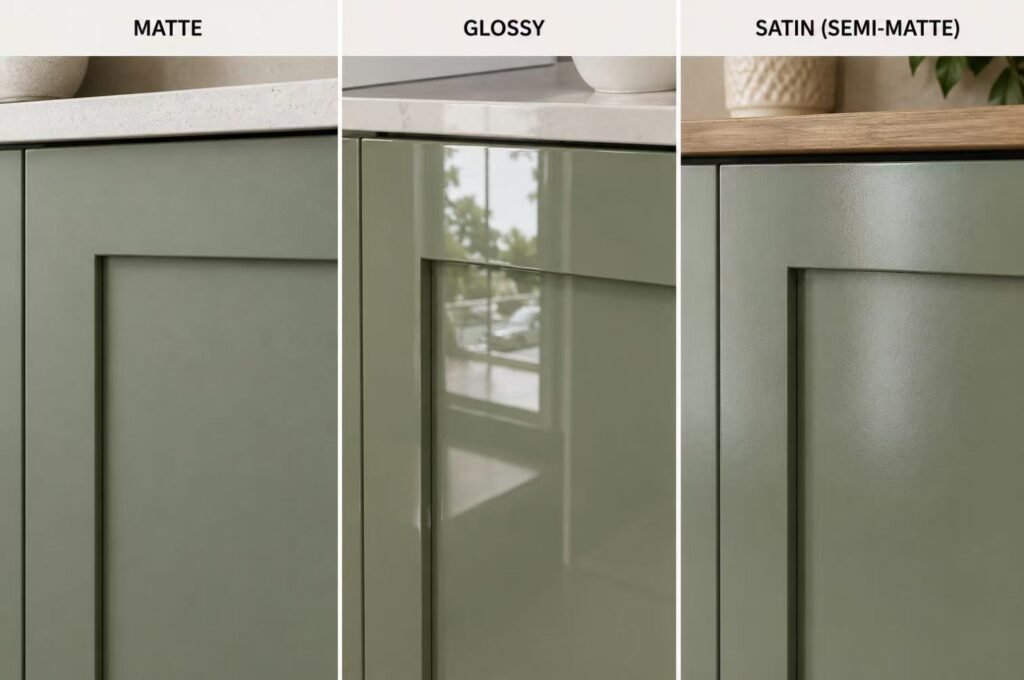
Sage green cabinet finish types compared| Finish | Fingerprint visibility | Scratch resistance | Cleaning difficulty |
|---|
| Matte lacquer | Low — diffuses light, hides marks well | Moderate — shows scuffs more than gloss | Easy, forgiving of streaks |
| High-gloss lacquer/acrylic | High — reflective surface shows every mark | Good, but scratches show more against the shine | Requires more frequent wiping |
| Satin/semi-matte | Moderate | Good | Balanced — the most common choice for sage green specifically |
Sage green in particular tends to be specified in a satin or matte finish more often than pure white or black cabinetry, since the muted, slightly greyed quality of the color reads more naturally without a high-gloss sheen — a detail worth confirming with a supplier rather than defaulting to whatever finish is offered first.
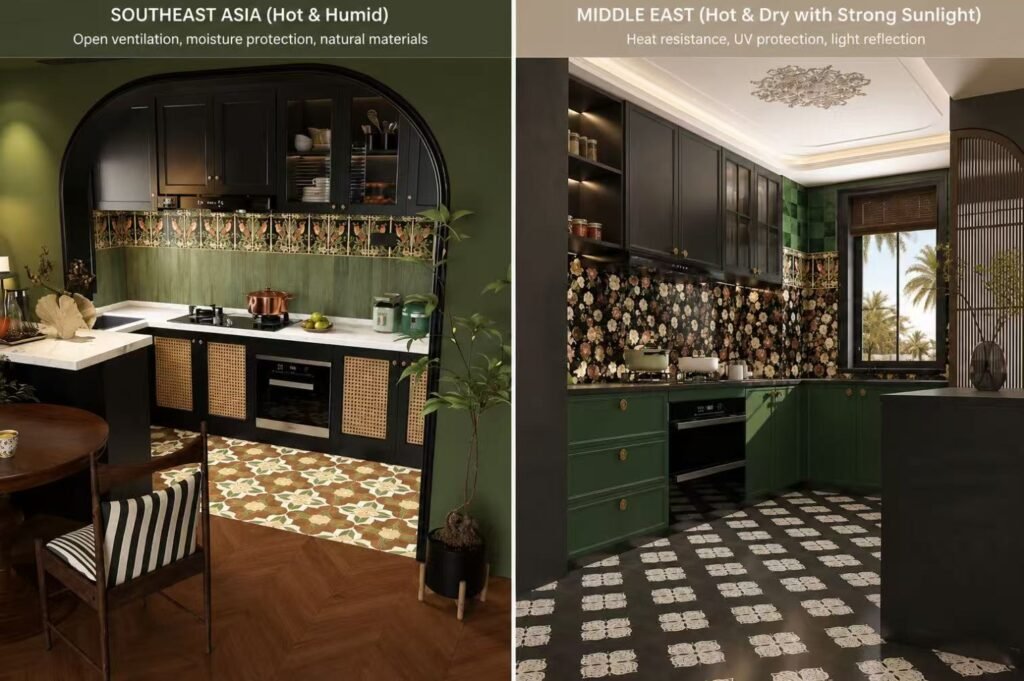
Why Sage Green Reads Cooler and Calmer in Hot, Humid Climates
Sage green sits between grey and green on the color wheel, which gives it a visual “cooling” effect similar to pure grey — reflecting more light than a dark or warm color — while avoiding the sometimes clinical feel of an all-white or all-grey kitchen. This makes it a genuinely practical choice for Southeast Asian and Middle Eastern kitchens, not just a design trend:
- Southeast Asia (humid) — a grey-toned or blue-toned sage helps a often lower-light, humid kitchen feel less visually heavy than deeper, warmer tones would.
- Middle East (hot, high sun exposure) — sage green in kitchens with large windows reduces the visual heat load of the space without the stark, high-maintenance feel of pure white.
Color Retention: The Data Most Guides Never Show You
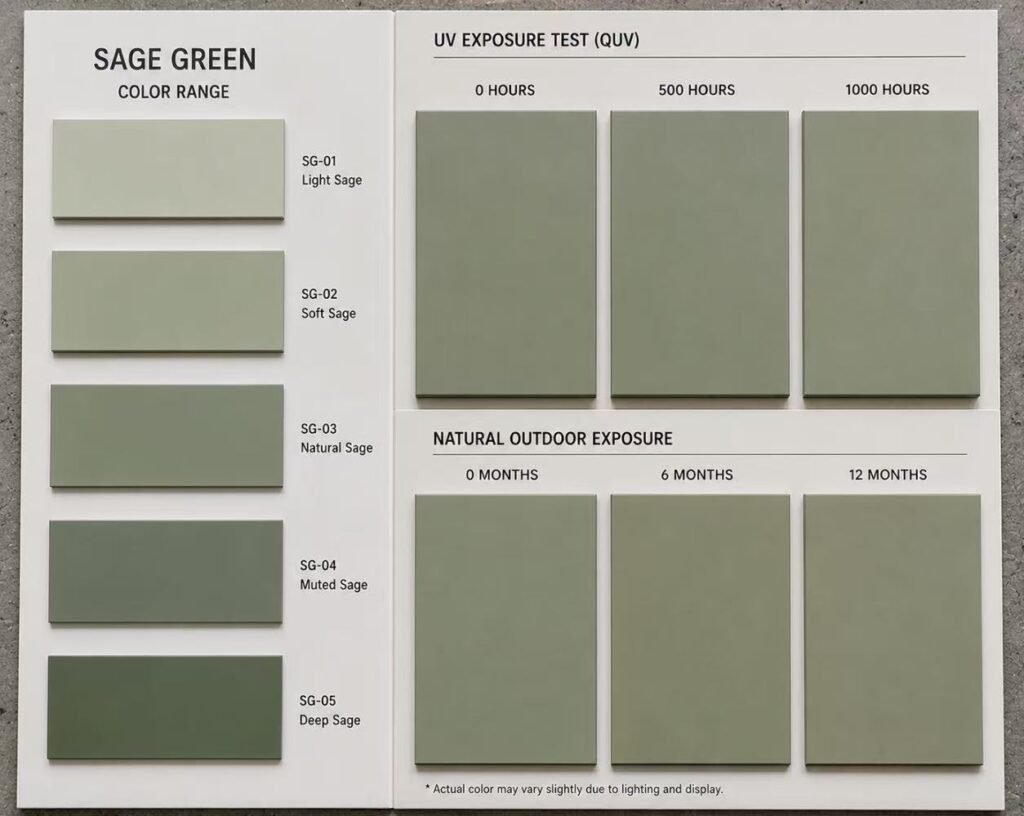
“Timeless” is a common claim about sage green cabinets, but color retention is a measurable property, not just a style opinion. Painted and lacquered cabinet finishes are commonly evaluated using accelerated light-fastness testing — exposing a sample to a xenon-arc lamp calibrated to the UV spectrum of natural daylight, then comparing the color shift against a reference scale such as the widely used Blue Wool Scale (rated 1–8, where a higher number indicates better fade resistance).
The question worth asking a supplier — “what light-fastness or UV-fade test has this sage finish been evaluated against, and what was the result?” A supplier who answers with a specific test method and rating has actually verified the finish, not just marketed it as durable. Muted, grey-based greens like sage can be particularly prone to showing a visible undertone shift as they fade, which makes this question more relevant here than for a simpler, more saturated color.
Pairing Sage Green Without the Trend Trap
Sage green pairs well with a wide range of countertops and hardware, which is part of its appeal — but the pairing should be chosen for longevity, not just what’s currently popular. Veined white or grey-toned marble and warm wood tones have stayed consistently paired with sage green across styles and years, generally outlasting more novelty-driven pairings like a single trending hardware finish, which tends to date a kitchen faster than the cabinet color itself.
Keeping Sage Green Consistent Across a Multi-Unit Project
On a single kitchen, a slight shift in a muted green is rarely noticed. Across a villa development or hotel project with the same sage specification repeated in every unit, batch-to-batch color drift becomes a real and visible risk — grey-based and blue-based greens in particular are more prone to a visible undertone shift between batches than warmer, more saturated colors. Locking the specification against a retained physical master sample, checked at every production batch, is the standard way to prevent this rather than relying on a color code or photo reference alone.
Sourcing Cabinets With Verified Color Consistency
At BoyceCasa, sage green and other muted finish specifications are backed by light-fastness test data and checked against a retained master sample across every production batch — so a project’s sage doesn’t drift between unit one and unit fifty. This same standard applies across our kitchen cabinets, wardrobe, and interior doors lines, informed by the same climate-driven material thinking covered in our Kitchen Cabinet Materials in Singapore guide.
Specifying sage green cabinetry for a villa or multi-unit project? Confirm the undertone under your actual installed lighting and ask for the light-fastness test rating before finalizing the color.
FAQS
Explore our Kitchen Cabinets and Wardrobe collections to see factory-direct cabinetry for villa and hotel projects, or contact our team for a project-specific consultation and quote.
Related reading:
Kitchen Island Dimensions: Sizing & Clearance Guide
Kitchen Cabinet Materials in Singapore: Density, Moisture Resistance & What the Test Reports Actually Say
Best Material for Kitchen Cabinets: Full Comparison
L-Shaped Cupboard Design: Corner Storage That Actually Works