
In the pursuit of personalized spaces and premium living, mass-produced furniture often falls short of capturing the true essence of a home.
As modern minimalism and light luxury styles continue to dominate global design trends, high-end custom furniture has become the absolute core of creating an ideal living space.However, the custom furniture market can be highly complex.
Bridging the gap between a stunning design blueprint and the final product involves navigating materials, hardware, and craftsmanship. Here is how to choose bespoke luxury furniture like a professional designer.
Inspiration photos show you what a changing room can look like. Almost none tell you how big it actually needs to be, what garment-specific storage should measure, or what happens to a beautiful build once it's living through tropical humidity or Gulf sun. This guide covers the numbers those photos leave out.
Read time — 15 min
Covers — Sizing · Materials · Production & QC
Scope — Southeast Asia · Middle East
Most changing room content is inspiration-led — beautiful layouts, styled islands, curated mirror walls. Genuinely useful for narrowing down a look, but it rarely answers the practical questions that actually determine whether the space works: how big does it need to be, what does each garment type actually require, and how does the build hold up in a hot or humid climate over years, not just on photo day. This guide covers all of it, plus the production layer almost no changing room content ever reaches.
Part One
01
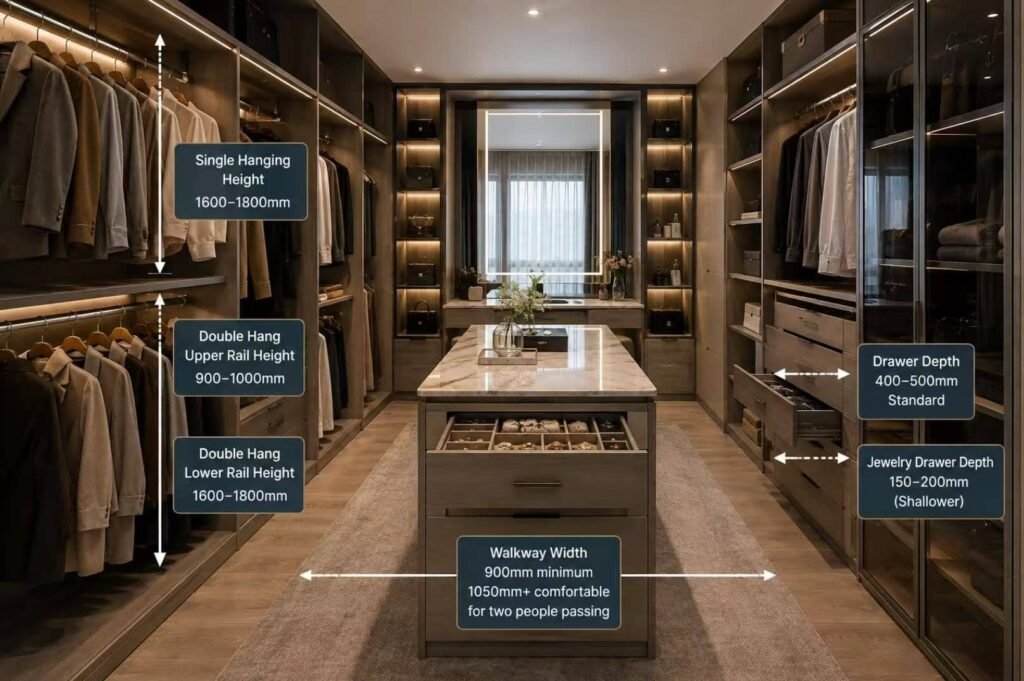
Beyond the storage wall footprint itself, every layout needs a minimum walkway clearance of roughly 900mm–1050mm to remain comfortable to move through, which is the dimension most inspiration photography doesn't reveal at all.
02
03
04

05
Part Two
06
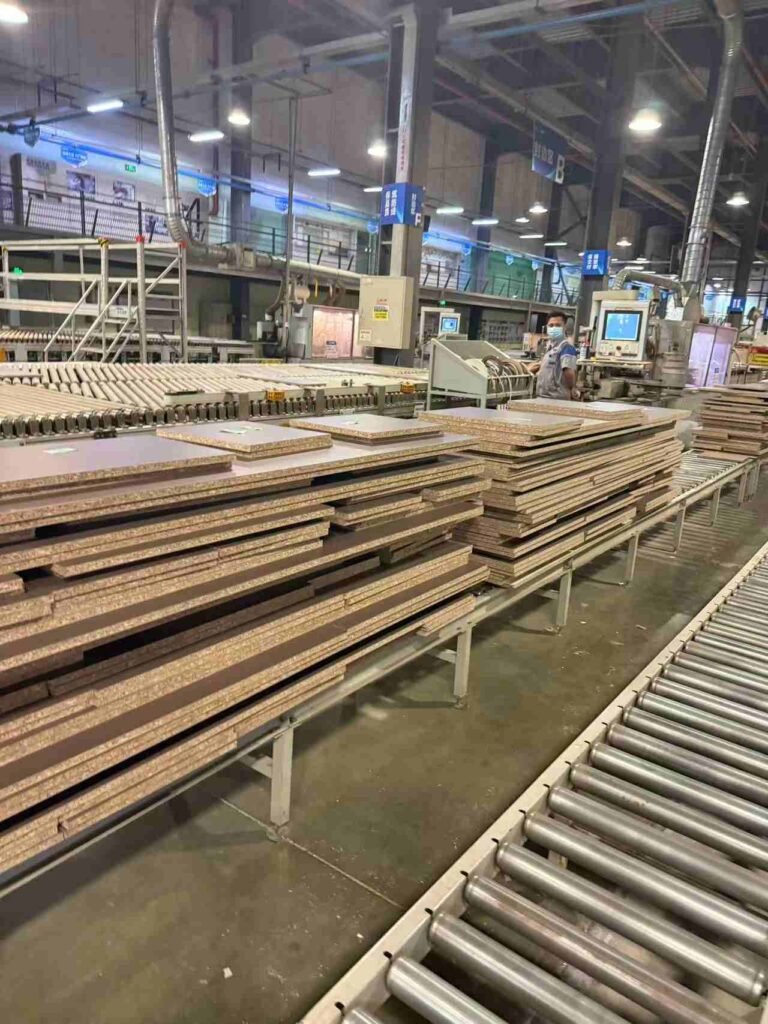
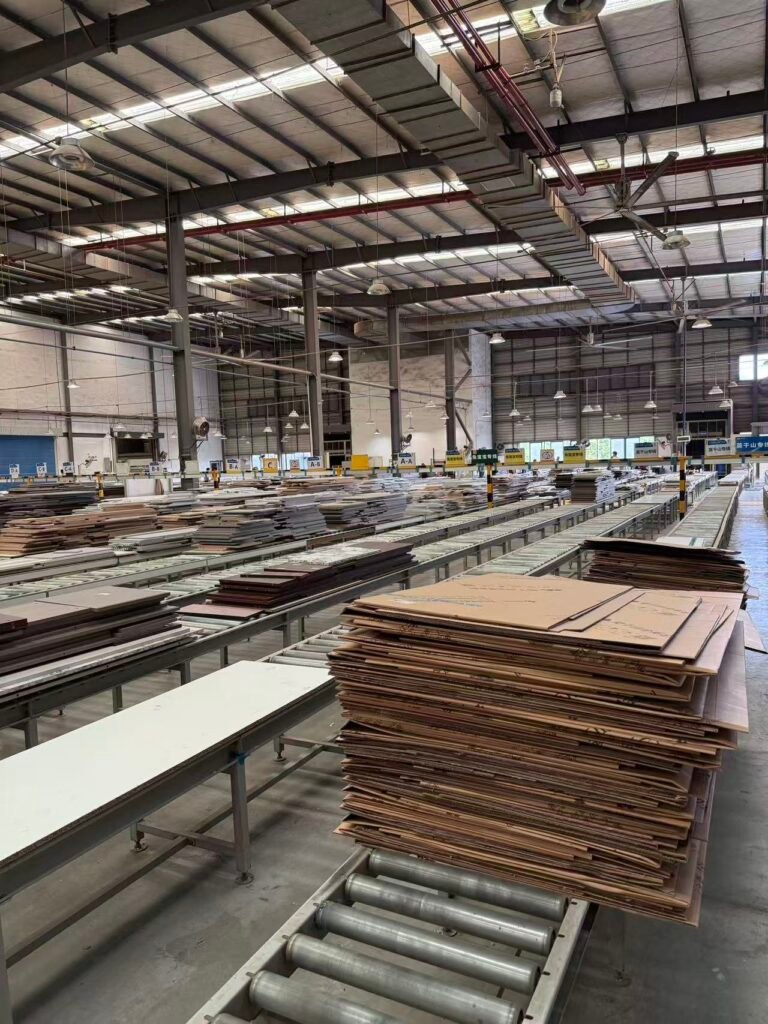
07
08
09
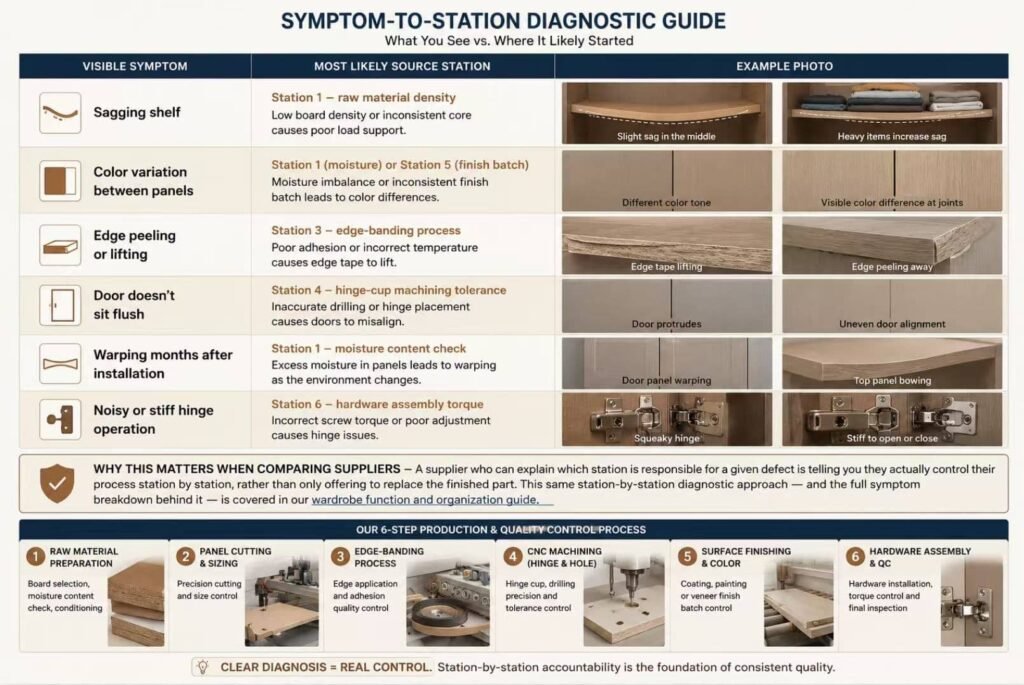
10
Part Three
11
12
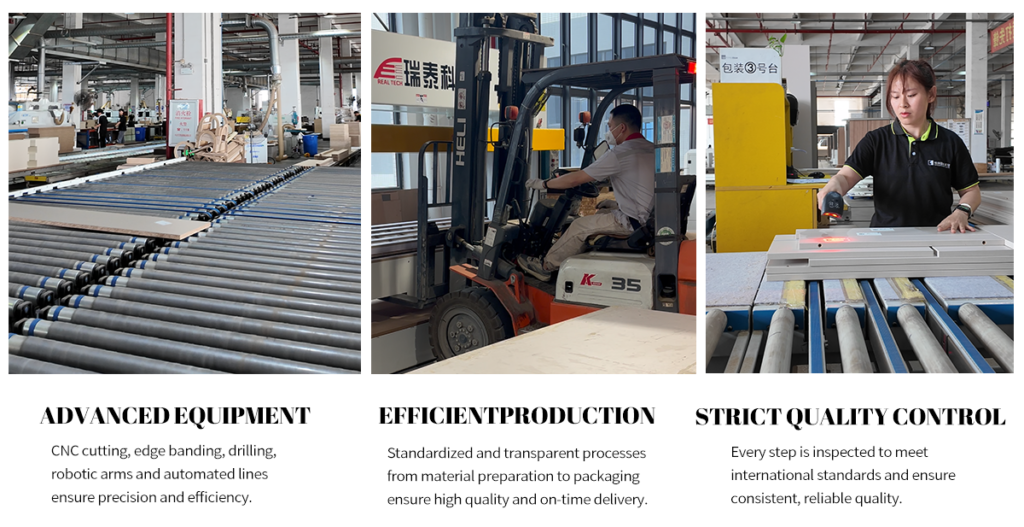
13
14
FAQS
Related reading:
Wardrobe Function and Organization: A Planning & Quality Guide →
L-Shaped Cupboard Design: Corner Storage That Actually Works →
Modern Bedroom Wardrobe Color Combinations: A Project Guide →
Kitchen Cabinet Materials in Singapore: Density, Moisture Resistance & What the Test Reports Actually Say →