Search "white oak kitchen cabinets" and you'll get twenty near-identical listicles of countertop pairings and backsplash ideas. What none of them answer is the question a project buyer actually has: is this the right material for a space that gets used harder than a private home ever will?
White oak has become the default recommendation for warm, contemporary kitchens — and for good reason. But "popular" and "correctly specified" aren't the same thing. This guide skips the mood-board content and focuses on what a developer, designer, or procurement lead needs to decide before white oak goes on a project's material schedule: how it actually performs, what drives its cost, and where it can go wrong at scale.
What "White Oak Cabinets" Actually Means
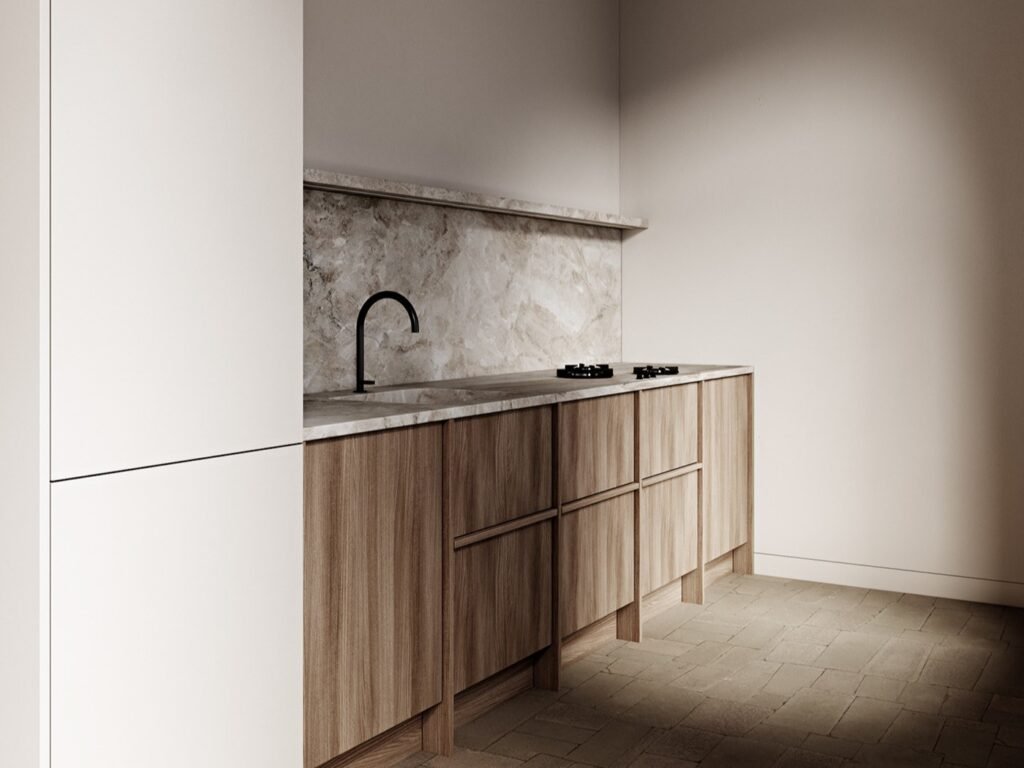
White oak is a hardwood species — not a color, despite the name. Its "white" refers to the pale, straw-to-honey tone of the wood itself, not a painted or lacquered finish. This distinction matters for procurement, because three very different products all get marketed under the same term:
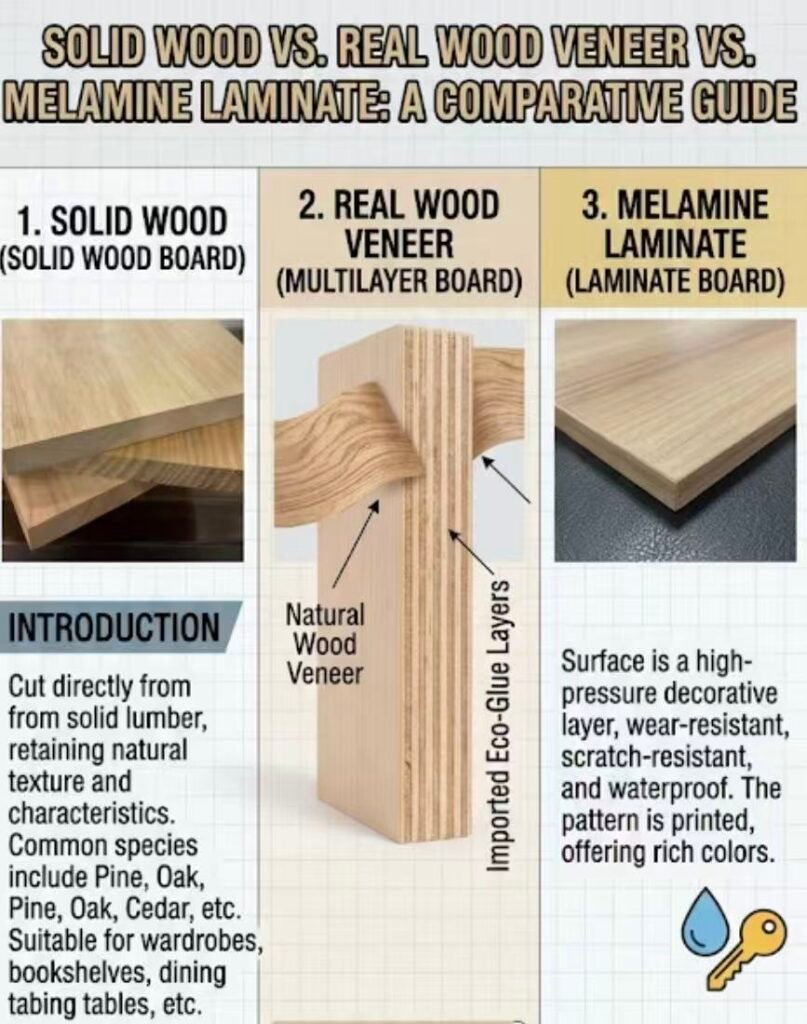
- Solid white oak — cabinet doors and frames milled from solid boards. Highest cost, highest durability, most repairable over time.
- White oak veneer — a thin layer of real white oak bonded to an engineered wood core (plywood or MDF). Looks and grains identically to solid wood at a lower cost and with better dimensional stability.
- “White oak” laminate or foil — a printed wood-grain finish over MDF or particleboard, no real oak content. Lowest cost, lowest durability, and the one that causes disputes when a project spec simply says “white oak” without qualifying which of the three is intended.
White Oak vs. Other Popular Cabinet Materials
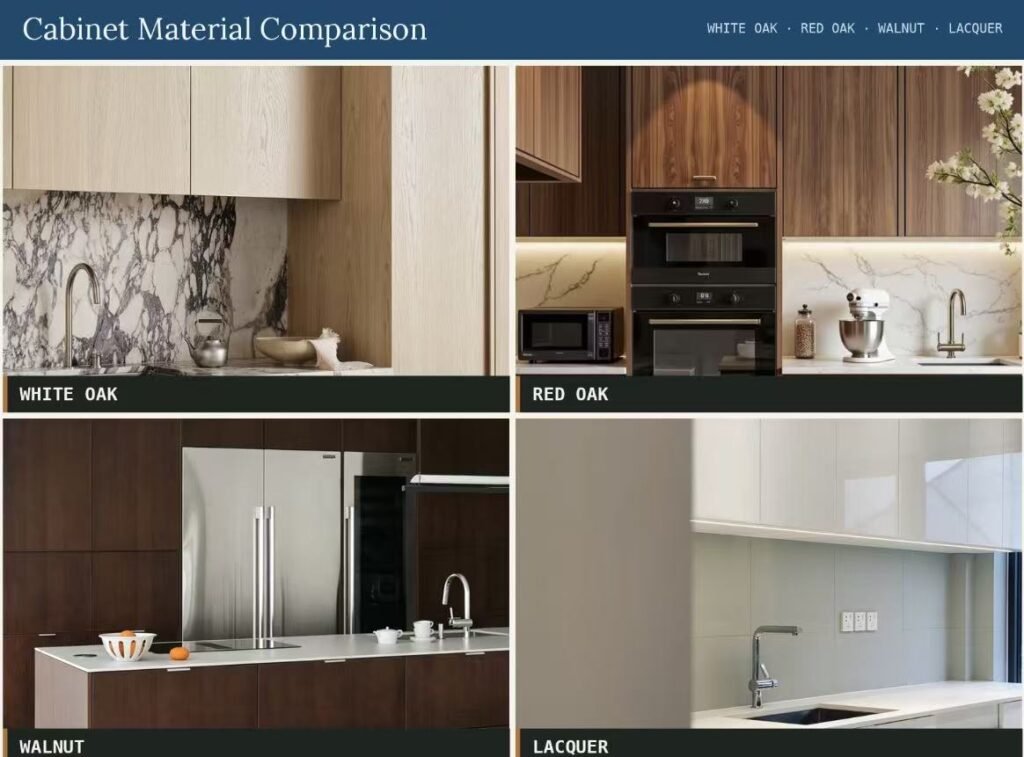
For a project team deciding between finishes, the real comparison isn’t “white oak or not” — it’s how white oak trades off against the other materials already on the shortlist.
Cabinet material comparison for project specification| Material | Durability | Relative cost | Best fit |
|---|
| White oak (solid/veneer) | High — resists dents, ages well | High | Villas, boutique hotels, long design life |
| Red oak | High, more pronounced grain | Medium–High | Traditional or transitional interiors |
| Walnut | High, softer surface than oak | Highest | Premium, dark-toned specifications |
| High-gloss lacquer | Medium — shows scratches/fingerprints | Medium | Modern hotel kitchens, easy-clean priority |
| Melamine / laminate | Lower — chips at edges over time | Low | Budget-driven, high-volume rollouts |
White oak’s advantage over red oak is a tighter, calmer grain that reads as more contemporary; its advantage over lacquer and laminate is that surface wear shows up as character rather than damage — a scuff on a lacquer finish looks like a defect, while the same mark on white oak often just looks like the wood.
How White Oak Holds Up in Hospitality-Grade Use
A villa kitchen and a hotel back-of-house or in-room kitchenette see very different volumes of daily use, and this is where material choice actually gets tested:
- Moisture exposure — white oak’s tight grain structure gives it better natural moisture resistance than softer woods, but any wood cabinet in a high-humidity or steam-heavy kitchen still needs a properly sealed finish, particularly around sinks and dishwashers.
- Impact resistance — white oak’s hardness rating outperforms most cabinet-grade woods, making it a reasonable choice for high-traffic corridors of hotel pantry and kitchenette units where trolleys and equipment regularly bump cabinet edges.
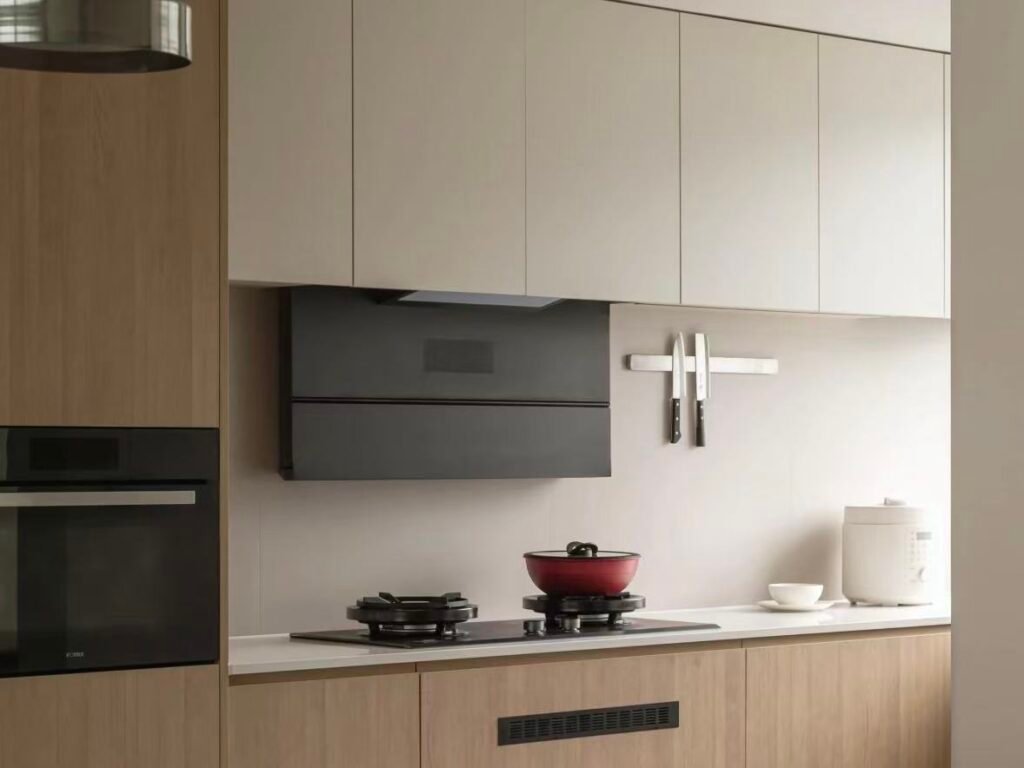
- Finish maintenance — a matte or satin sealed finish hides daily wear far better than a high-gloss finish, which is worth flagging early since hospitality operators often default to requesting gloss finishes for a “premium” look without considering long-term maintenance load.
What Actually Drives the Cost of White Oak Cabinets
Three factors move the price far more than most buyers expect, and none of them are “white oak” itself:
- Solid vs. veneer construction — veneer over an engineered core often costs 20-40% less than equivalent solid-wood construction while offering comparable visual quality and better resistance to warping in variable climates.
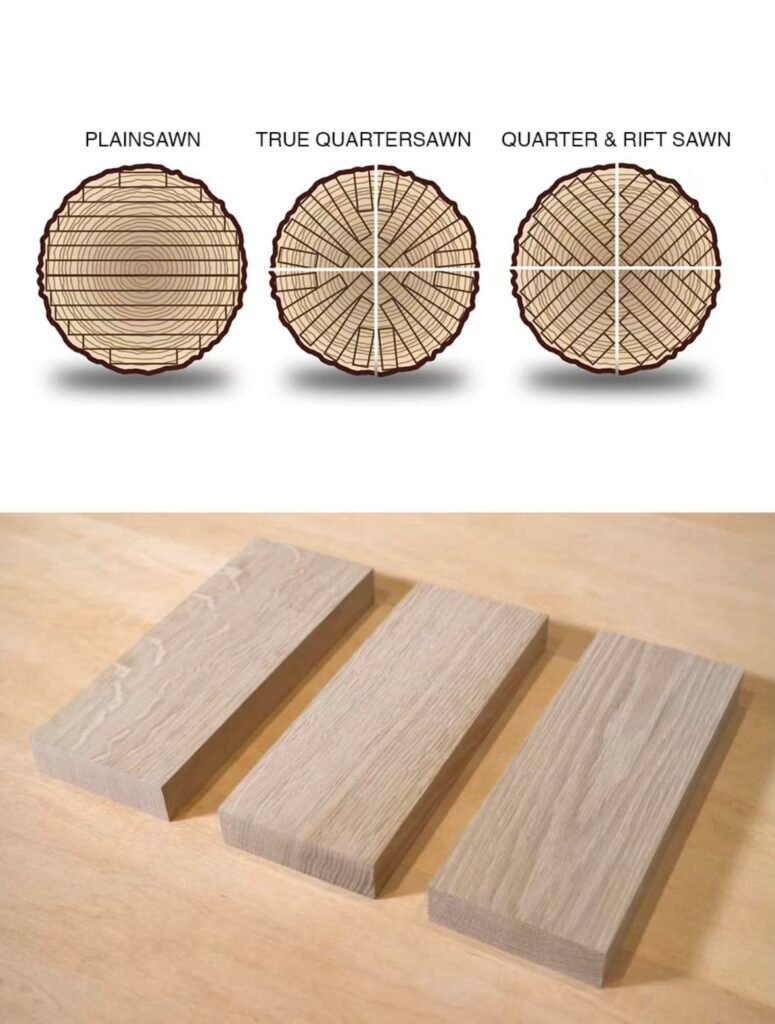
- Cut of the wood — quarter-sawn and rift-sawn white oak (prized for their straight, even grain and unique fleck patterns) cost more than plain-sawn boards and are more stable over time.
- Door style complexity — flat-panel (slab) doors are the least labor-intensive to produce; shaker and raised-panel styles add machining time and cost regardless of the wood species underneath.
For multi-unit projects, veneer construction on a plywood core is frequently the more sensible specification: it delivers the same visual result as solid wood at project scale, with better consistency across dozens or hundreds of identical units — a meaningful advantage when a hotel’s guest rooms need to match exactly.
Sourcing White Oak Cabinets for Project-Scale Orders
The complication for developers and designers isn’t finding a supplier who can make one beautiful white oak kitchen — it’s finding one who can reproduce that same kitchen consistently across 40 villas or 200 hotel rooms, on schedule, without grain, tone, or hardware variation between units becoming visible at handover.
This is where a factory-direct model earns its keep. At BoyceCasa, our kitchen cabinets are produced to a fixed material and finish specification confirmed at the start of a project — solid, veneer, or laminate, clearly defined rather than left ambiguous — so unit 1 and unit 200 come off the line matching, with the grain, tone, and hardware locked to the approved sample before production begins.
For teams managing a full fit-out, the same specification discipline extends across our wardrobe, interior door, and window lines, keeping material language consistent across a project rather than reconciled piecemeal between multiple suppliers.
FAQS
Explore our Kitchen Cabinets and Wardrobe collections to see factory-direct cabinetry for villa and hotel projects, or contact our team for a project-specific consultation and quote.
Related reading:
— White Lacquer Glass Texture Kitchen Cabinets: Design Guide for Villa & Hotel Projects
— Which Material Is Best for Kitchen Cabinets? Complete Guide for Villa & Hotel Projects
— Cabinetry Factory: How to Choose the Right Custom Cabinet Manufacturer for Villa and Hotel Projects
— Woodwork Wardrobe: Design Styles, Materials & Custom Guide for Villa and Hotel Projects
— Turnkey Interior Solutions: The Complete Guide for Property Projects
— What Is a Flush Door? Complete Guide to Types, Materials & Project Applications
— Hotel Fit-out Projects: Case Studies and Delivery
— Villa Fit-out Projects: Full-House Interior Solutions