Why Add a Window in Your Shower?
A shower window earns its place in a bathroom for three practical reasons.
Natural light and a sense of space. Daylight makes a shower feel larger and less enclosed — especially valuable in small or windowless bathrooms that otherwise rely entirely on artificial light.
Ventilation and mold prevention. Showers generate more steam and moisture than any other part of the house. An openable window clears that humid air faster than most exhaust fans, which directly reduces the conditions mold and mildew need to take hold.
A better-looking bathroom. A window can frame a view, bring in sky, or simply add an architectural detail that connects the shower to the outdoors rather than sealing it off.
Best Window Styles for a Shower
Not every window style belongs in a wet room. The best options share two traits: they manage water well, and they give you some control over airflow.
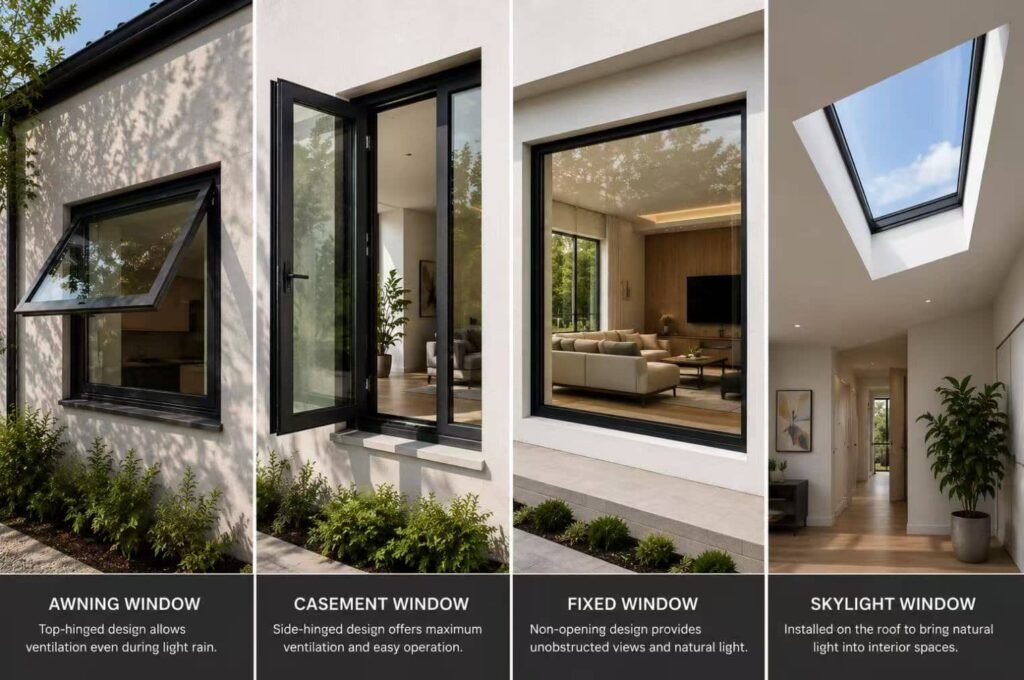
Awning windows are the most commonly recommended style for showers. Hinged at the top and opening outward, they can stay cracked open for ventilation even during rain, since the glass tilts like a small roof and sheds water away from the opening.
Casement windows hinge on the side and swing open like a door. They open wider than an awning window, which makes them effective at clearing steam quickly after a hot shower — though they need to be placed where the open sash won’t catch water directly.
Fixed (picture) windows don’t open at all, which makes them the simplest option to waterproof and the best choice for a view. Because they can’t ventilate on their own, pair a fixed window with a working exhaust fan.
Skylights bring light in from above rather than through a wall, which is useful when wall space is limited or when privacy from neighboring windows is a concern.
Where Should the Window Be Placed?
Placement is where most of a shower window’s privacy and performance is decided — often more than the glass type itself.
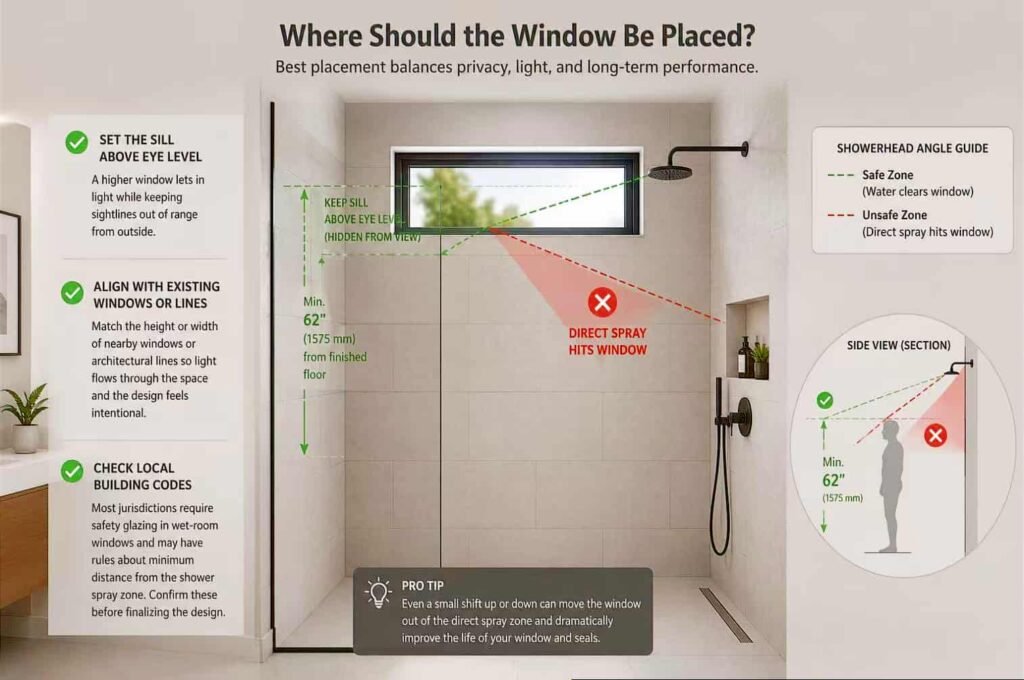
- Set the sill above eye level. A window placed higher on the wall lets in light while keeping sightlines out of range from outside.
- Keep it away from direct spray. Position the window so the showerhead doesn’t aim water directly at the frame or sash — this alone prevents a large share of long-term sealant and frame problems.
- Align it with existing windows or architectural lines. Matching a shower window to a neighboring window’s height or width helps light flow through the space and keeps the design intentional rather than accidental.
- Check local building codes first. Most jurisdictions require safety glazing in wet-room windows and may have rules about minimum distance from the shower spray zone — confirm this before finalizing the design.
How to Keep Privacy Without Losing Light
You don’t have to choose between a bright shower and a private one. In order of how commonly they’re used:
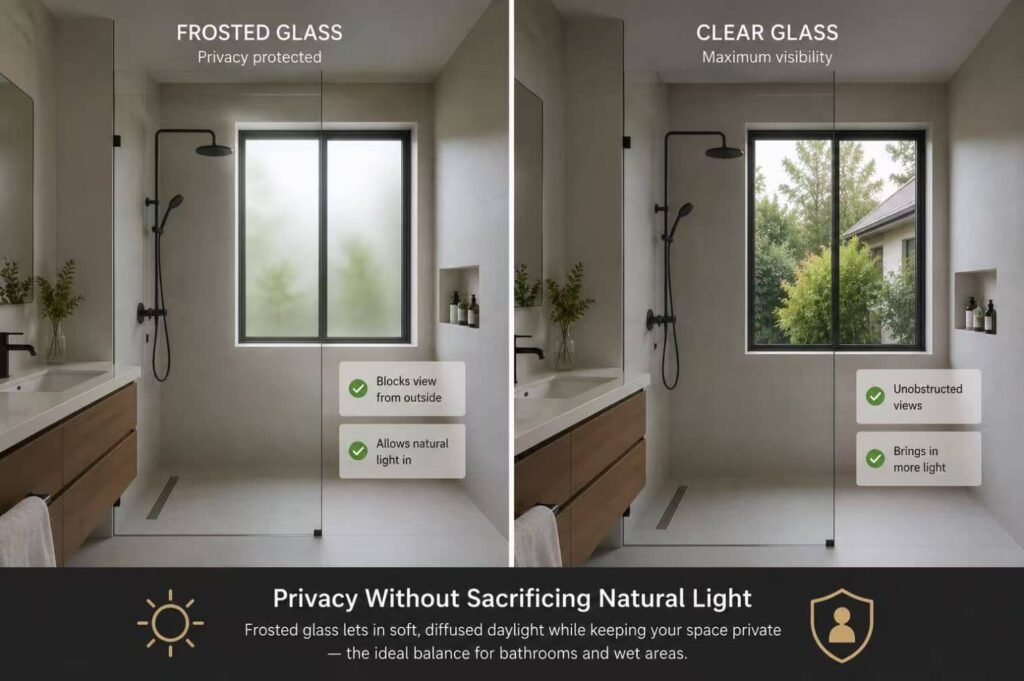
- Frosted or textured glass diffuses the view completely while still passing daylight through.
- Privacy film can be applied to an existing clear window, making it a lower-cost retrofit option if you don’t want to replace the glass.
- Height placement — as above, putting the window above eye level is often enough privacy on its own, particularly in upper-floor bathrooms.
- Interior press-fit storm windows are a less common but effective option for tiled surrounds, since they install without drilling into tile and add a layer of both privacy and moisture protection.
The Real Risk Isn't the Window — It's the Frame Material
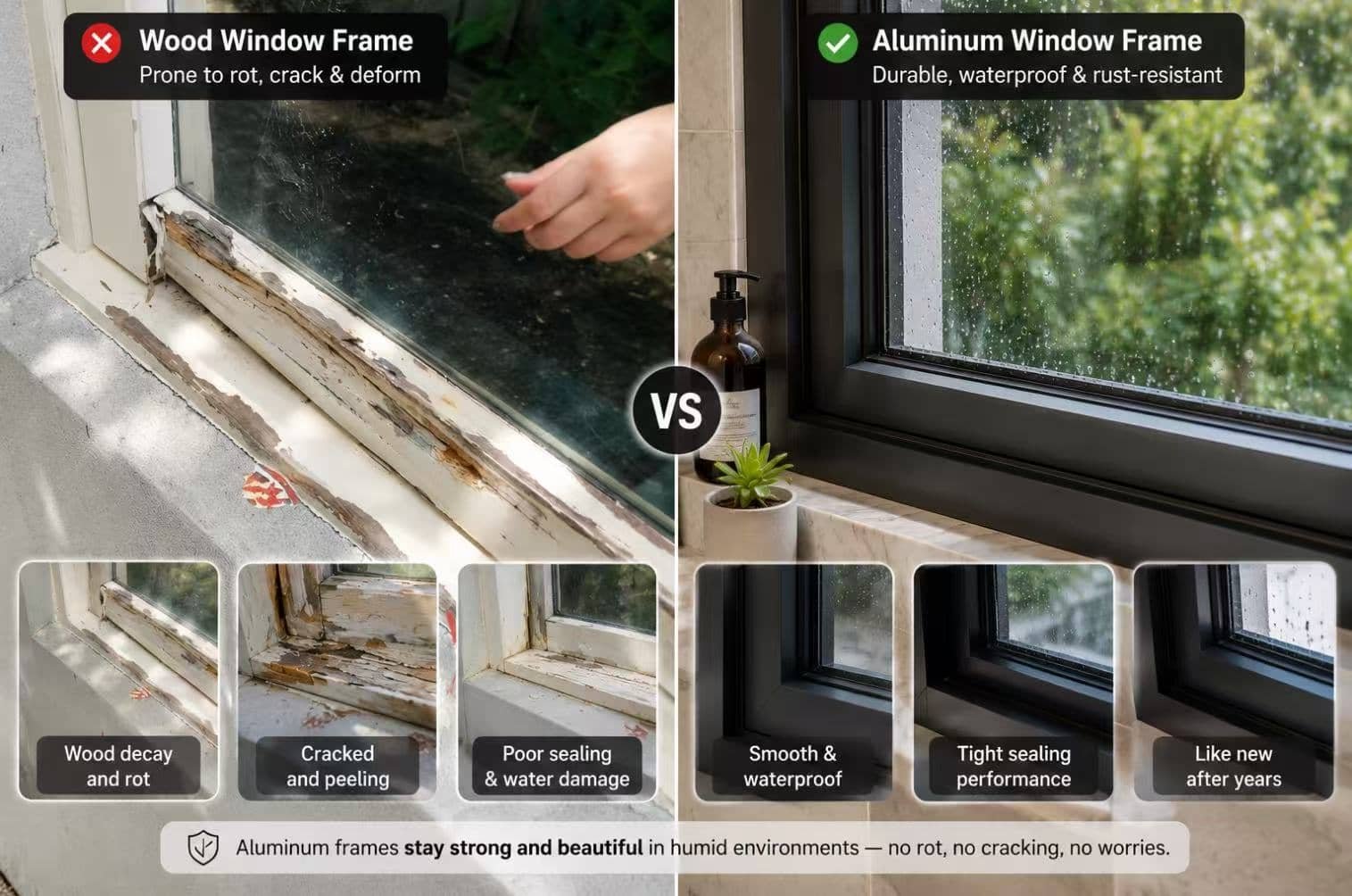
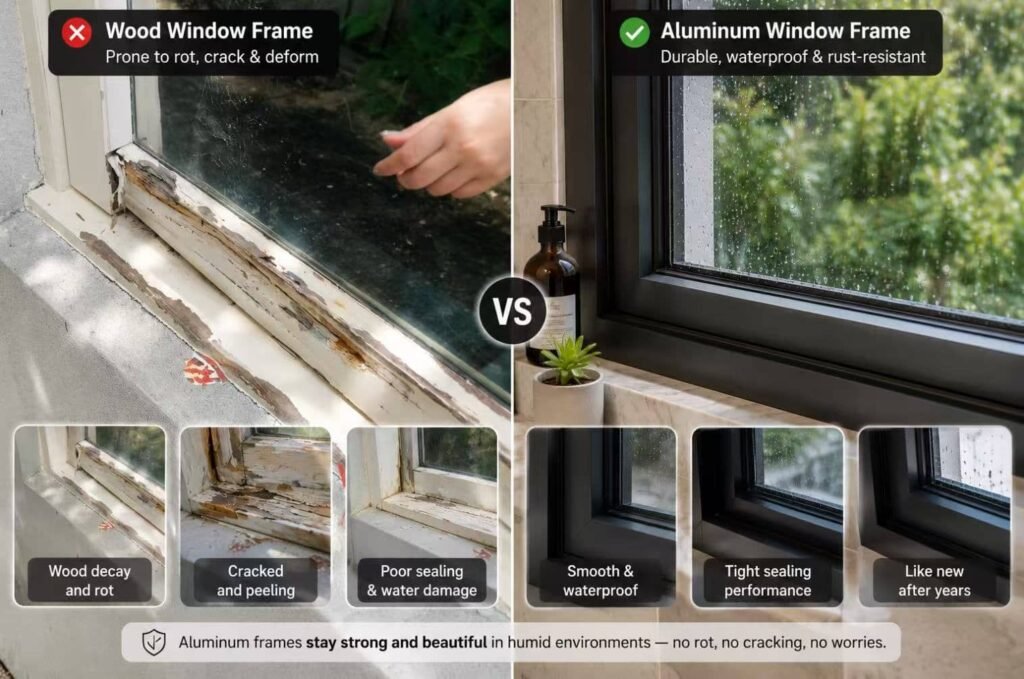
Most shower window failures aren’t glass problems. They’re frame problems. Wood — even painted, sealed wood — absorbs moisture over years of repeated exposure to steam and splash, and it will eventually swell, crack, or rot regardless of how well it was installed.
This is why aluminum and uPVC are the standard frame materials for any window inside a shower enclosure. Both are fully water-resistant and require no repainting or resealing cycle the way timber does.
Between the two, a well-built aluminum frame — specifically a marine-grade alloy like 6063-T6 with a fluorocarbon (PVDF) coating — holds up especially well in high-salinity or high-UV coastal home environments, resisting the pitting and surface breakdown that lower-grade aluminum or vinyl can show after years of exposure. If your shower window is in a coastal home, a tropical climate, or a commercial project like a hotel bathroom, this detail is worth specifying explicitly rather than leaving to a generic window quote.
Whatever frame material you choose, the glass itself should always be tempered or laminated safety glass — required by most building codes for wet, slip-prone areas, since it breaks into small, dull fragments rather than sharp shards.
Waterproofing Details That Actually Matter
Waterproofing is the part of a shower window project that’s easiest to underspend on, and the most expensive to fix after the fact.
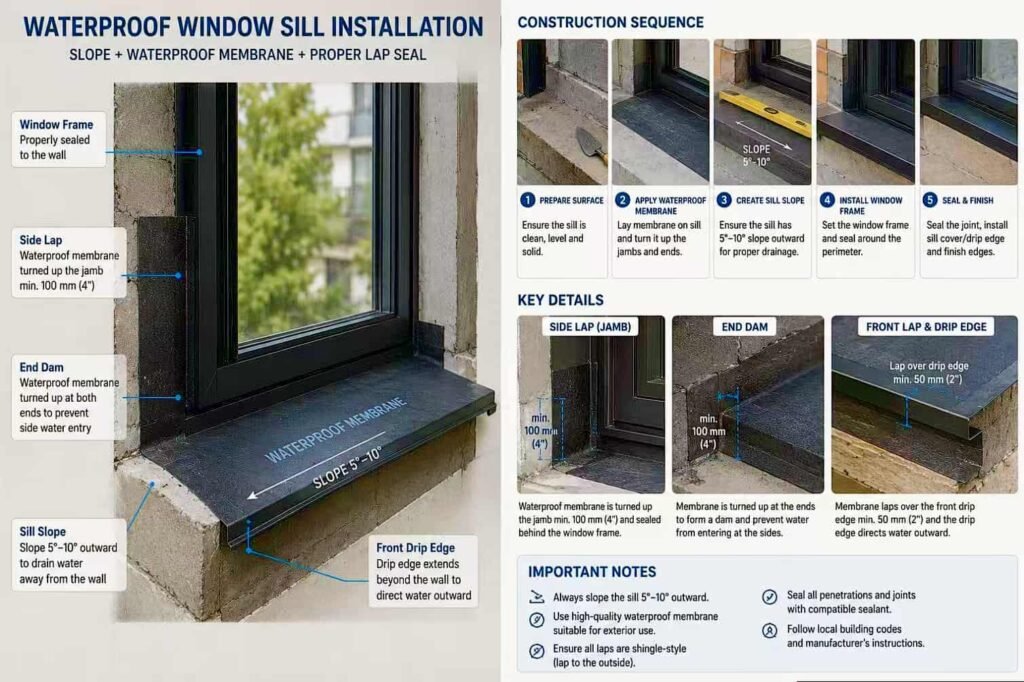
- Sill slope. The sill should be a solid, waterproof material — stone or engineered quartz rather than tile alone — sloped away from the window at a minimum of about 5 degrees, so water drains back into the shower instead of pooling against the frame.
- Membrane continuity. The wall’s waterproofing membrane needs to tie in seamlessly with the window’s flashing at every edge. A gap here is the single most common cause of hidden water damage inside the wall cavity, since it won’t show up until the drywall or framing behind it is already compromised.
- Sealant quality and maintenance. All joints between frame, sill, and tile need a mold-resistant silicone sealant rated for wet areas — and it needs periodic inspection, since even good sealant has a service life.
- Hardware and hidden drainage. On operable windows (awning or casement), look for hardware with a hidden drainage path built into the frame profile, which channels any water that does reach the sash back outside rather than into the wall.
This is also where hiring an experienced installer matters more than almost anywhere else in a bathroom renovation — the window itself might be excellent, but a poor seal at the wall junction will undermine it regardless.
What If You Already Have an Old Wood Window in Your Shower?
Plenty of older homes have a wood window sitting inside what is now a shower, even though the room was originally built around a bathtub. Bathing habits changed over the 20th century; the windows didn’t move with them.
If you’re not ready to replace it, a few things slow the damage:
- Reduce direct water contact — adjust the showerhead angle and avoid storing bottles on the sill.
- Wipe the window down after each use so water doesn’t sit on the wood.
- Consider a borate wood treatment, which prevents the fungal growth that causes rot, applied to bare wood before repainting.
These measures buy time, but they don’t solve the underlying problem. Wood in a shower is fighting a losing battle against constant moisture cycling. The long-term fix is replacing it with a frame material built for the environment — which is where aluminum or uPVC come back into the conversation.
How Much Does It Cost to Add a Window in a Shower?
Costs vary significantly by region, window size, and whether you’re modifying an existing opening or cutting a new one.
- Replacing an existing window with a new waterproof unit during a renovation typically falls in a moderate cost range, largely driven by the window itself and specialist installation labor.
- Creating a new opening costs substantially more, since it involves structural work (a lintel), masonry, and full waterproofing integration with the existing wall — this is a different scope of project than a like-for-like replacement.
Always get a detailed quote from a licensed installer rather than budgeting off a rough online estimate — regional labor rates and code requirements shift the number more than the window itself does.
For commercial and hospitality projects — a hotel bathroom renovation program multiplies every one of these decisions across dozens or hundreds of identical wet rooms, which makes frame material consistency and waterproofing detailing even more critical than in a single home.
Get a Window Built for Wet, High-Humidity Spaces
If you’re planning a shower window as part of a renovation or a new build, the frame material matters more than the style you pick. A well-designed awning or casement window still fails early if the frame can’t handle sustained moisture — which is exactly the gap that marine-grade aluminum window systems are built to close.
BoyceCasa manufactures aluminum window systems engineered specifically for high-heat, high-humidity, and coastal conditions, with the material specification fixed in writing before production — no surprises between the quote and what arrives on site.
Planning a shower window for a renovation or new build? Specify the frame alloy and coating grade in writing before production — not just the window style.
FAQS
Explore our Kitchen Cabinets and Wardrobe collections to see factory-direct cabinetry for villa and hotel projects, or contact our team for a project-specific consultation and quote.
Related reading:
Standard Door Sizes in mm: Width, Height & Dimensions Guide
Door Rough Opening Size: The Complete Chart & Sourcing Guide
Windows and Doors: A Complete Buying & Sourcing Guide
Doors and Windows Purchasing Guide
Aluminium Doors &Windows for Hot Climate Projects