Blog

Doors and Windows Purchasing Guide

Vinyl wood fiberglass aluminium window frames compared

In the pursuit of personalized spaces and premium living, mass-produced furniture often falls short of capturing the true essence of a home.

As modern minimalism and light luxury styles continue to dominate global design trends, high-end custom furniture has become the absolute core of creating an ideal living space.However, the custom furniture market can be highly complex.

Bridging the gap between a stunning design blueprint and the final product involves navigating materials, hardware, and craftsmanship. Here is how to choose bespoke luxury furniture like a professional designer.

Vinyl, wood, fiberglass, aluminium — every material claims to be the "best" choice, and every claim depends entirely on which climate and which budget it's being measured against. This guide compares them on the numbers that actually matter, not the marketing language.

"Which window material is best" is the wrong question — it's really "which material is best for this climate, this budget, and this building." Vinyl, wood, fiberglass, and aluminium all genuinely excel somewhere and genuinely underperform somewhere else. This guide walks through each, then covers the glass technology decision that often matters more than the frame material itself.

Part ofWindows and Doors: A Complete Buying & Sourcing Guide
Frame Material Comparison

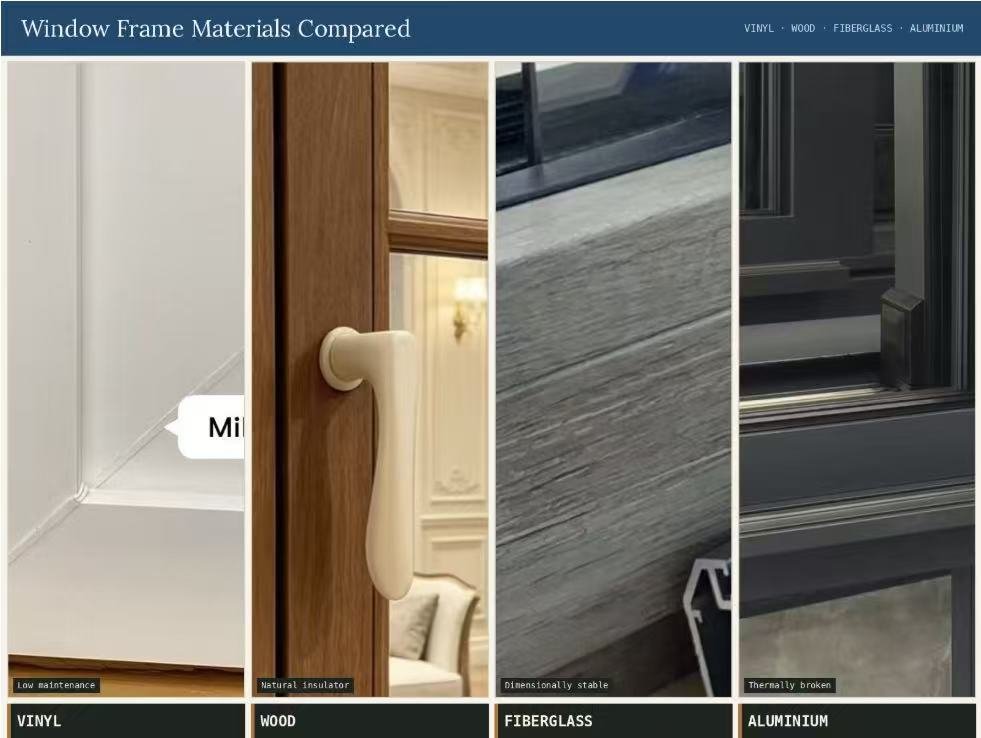
Window and door frame materials compared
MaterialThermal performanceMaintenanceBest fit
VinylGood, hollow chambers trap airVery low — no painting neededBudget-driven, moderate climates
WoodExcellent natural insulatorHigh — needs periodic sealing/paintingTraditional aesthetics, dry-to-moderate climates
FiberglassVery good, dimensionally stable across temperature swingsLowExtreme temperature ranges, long-term durability priority
AluminiumPoor without thermal break; good with oneLow, corrosion-resistant with proper coatingLarge spans, hot/humid climates, contemporary design
Aluminium-clad woodCombines wood’s insulation with low-maintenance exteriorLow exterior, some interior upkeepPremium builds wanting wood interior aesthetics
Vinyl wood fiberglass aluminium window frames compared

Fiberglass composites (sometimes marketed under proprietary names combining wood-fiber and thermoplastic polymer) are worth calling out specifically: they expand and contract at a rate close to glass itself, which reduces seal stress across large temperature swings — a genuine engineering advantage over vinyl, which expands roughly seven times more than glass under the same temperature change.

Steel vs. Fiberglass for Entry Doors

For entry doors specifically, the choice usually narrows to steel or fiberglass rather than the full frame-material list above:
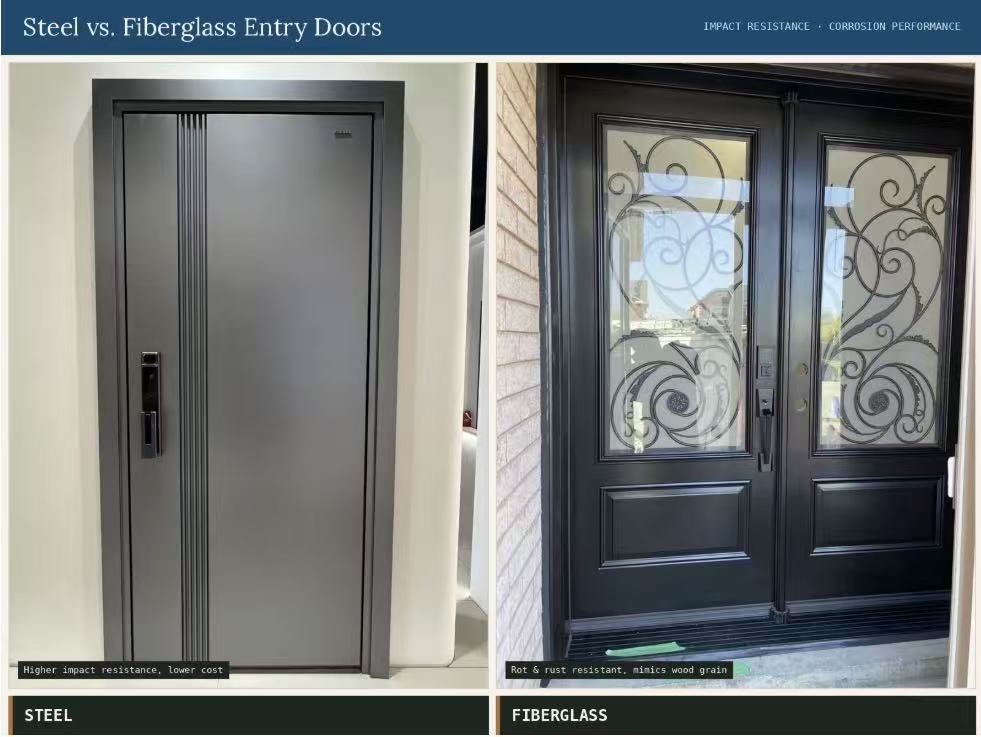
Steel versus fiberglass entry door comparison
  • Steel — highest security and impact resistance, lower cost, but prone to denting and, in coastal or humid climates, rust at scratches or impact points if the coating is compromised.
  • Fiberglass — resists denting and won’t rust, can convincingly mimic wood grain, and handles humidity and temperature swings without warping — generally the stronger choice for coastal or tropical entrance applications.

Low-E Coatings: What They Actually Do

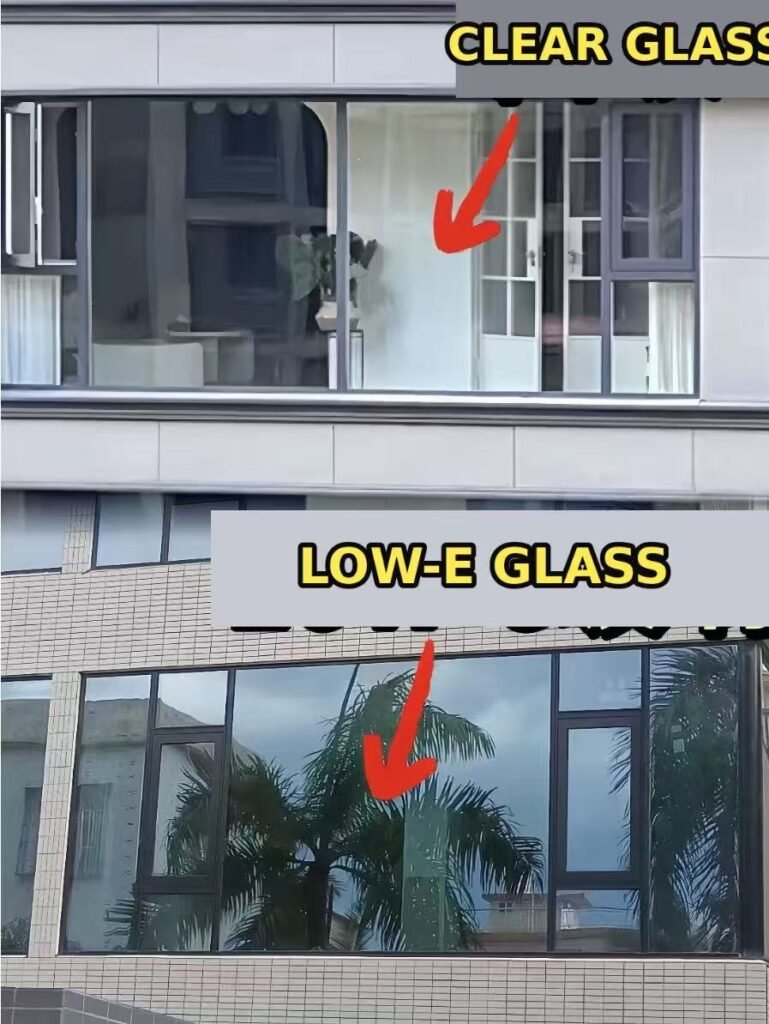
Low-emissivity (Low-E) coating is a microscopically thin metallic layer applied to glass that reflects infrared heat while still allowing visible light through. In practice, this means a Low-E coated window keeps interior heat in during cooler weather and reflects exterior heat out during hot weather — reducing the cooling load in a hot climate significantly more than uncoated glass of the same thickness.

Low-E glass coating reflecting heat diagram

Not all Low-E is the same — coatings are tuned differently depending on whether a project prioritizes blocking solar heat gain (hot climates) or retaining interior heat (cold climates). Specifying “Low-E glass” without confirming which tuning is used can mean getting a coating optimized for the wrong climate entirely.

Double-Pane vs. Triple-Pane Glass

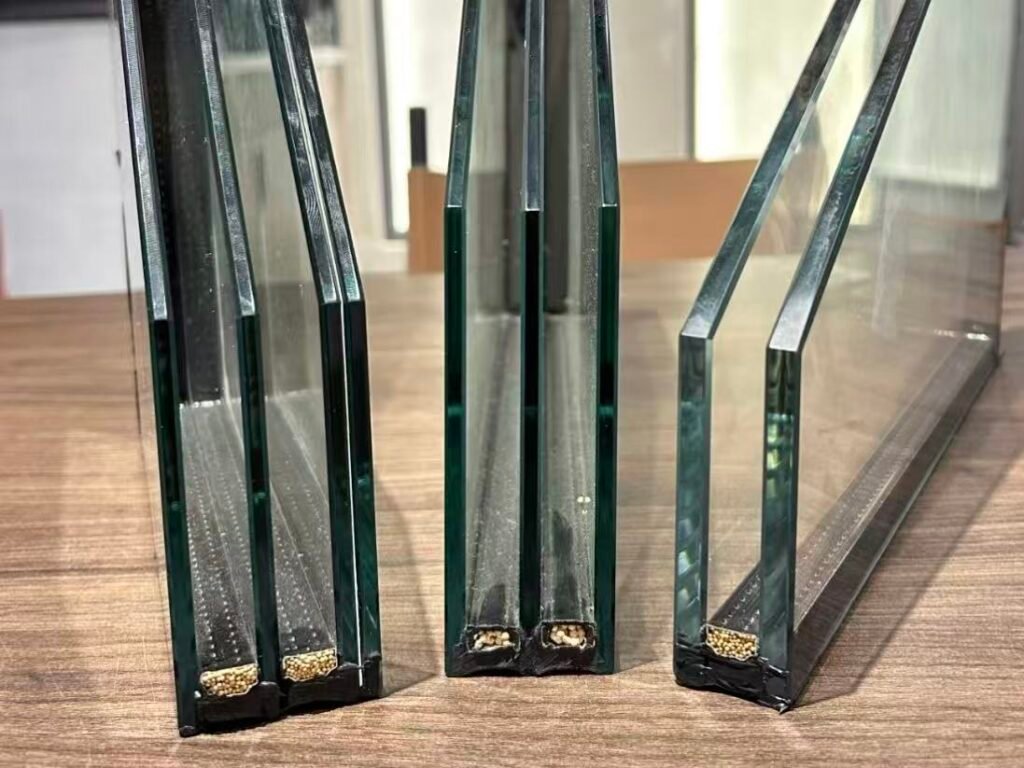
Glazing configuration comparison
ConfigurationThermal performanceWeight & costBest fit
Double-paneGood, standard baseline for most modern constructionLighter, lower costMost residential and hospitality applications in moderate-to-hot climates
Triple-paneExcellent, meaningfully lower U-factorHeavier — frame and hardware must be rated accordingly; higher costExtreme cold climates, high noise-reduction priority
Double pane versus triple pane glass cross section

For most Southeast Asian and Middle Eastern projects, double-pane with an appropriately tuned Low-E coating delivers the bulk of the thermal benefit at meaningfully lower cost and weight than triple-pane — triple-pane’s extra performance is most valuable in cold-climate heat retention, a problem most projects in these regions don’t actually have.

Impact-Resistant and Laminated Glass

For coastal or storm-exposed sites, laminated glass — two glass layers bonded to an interlayer that holds fragments together on impact — provides both security and storm resistance benefits, without necessarily requiring a fully specialized impact-rated system. This is worth specifying regardless of frame material, since the glass itself carries the impact performance.

Sourcing Materials Matched to Your Climate

At BoyceCasa, frame material and glazing package are specified against the actual project climate — thermally broken aluminium and appropriately tuned Low-E coatings for Southeast Asian and Middle Eastern conditions specifically — rather than a single generic specification applied everywhere. This is covered in more depth in our aluminium doors and windows for hot climate projects guide.

Specifying window and door materials for a hot-climate project? Confirm which way your Low-E coating is tuned before locking the glazing spec — it changes the entire thermal performance outcome.


FAQS

What is the difference between double-pane and triple-pane windows?

Double-pane uses two glass layers with an insulating gap, offering good thermal performance at lower weight and cost. Triple-pane adds a third layer for meaningfully better insulation, at the cost of extra weight and price — most valuable in extreme cold climates rather than hot ones.

It's a thin reflective layer on the glass that reflects infrared heat while letting visible light through, reducing cooling load in hot climates and heat loss in cold ones — but the coating must be tuned for the specific climate to work as intended.

Not universally. Vinyl offers low maintenance and good thermal performance at a lower cost, but expands and contracts more than glass under temperature swings, which can stress seals over time compared to fiberglass in climates with large temperature ranges.

Steel offers higher impact resistance at a lower cost but can rust at damaged coating points in humid climates. Fiberglass resists denting and rust, making it generally the stronger choice for coastal or tropical entrances.

Laminated glass, which bonds two glass layers to an interlayer that holds fragments together on impact, provides meaningful storm and security benefits and can often be specified without a fully specialized impact-rated system.

Yes. Thicker glass, laminated interlayers, and wider gaps between panes all reduce sound transmission, with triple-pane and laminated glazing offering the most noticeable noise reduction where that is a priority.

Explore our Kitchen Cabinets and Wardrobe collections to see factory-direct cabinetry for villa and hotel projects, or contact our team for a project-specific consultation and quote.
Related reading:
Windows and Doors: A Complete Buying & Sourcing Guide
Aluminium Doors & Windows for Hot Climate Projects
Energy Efficiency & Performance
Kitchen Cabinets Singapore: A Sourcing Guide for Developers & Interior Designers
Kitchen Cabinet Materials in Singapore: Density, Moisture Resistance & What the Test Reports Actually Say
HDB & Condo Kitchen Layouts: What Actually Goes Wrong at Installation

Let’s Discuss, Your Project.

Tell us about your project requirements and we’ll connect you with the right team. We typically respond within 24 hours on business days.

Call / WhatsApp
Offices
Located on Central Avenue, Nanhai District, Foshan City, Guangdong Province

Start a Conversation

Fill in your details and we’ll be in touch shortly.


Scroll to Top