Part One
How to Judge a Window, Not a Ranking
01
The "Top 10 Window Brands" Trick Worth Knowing
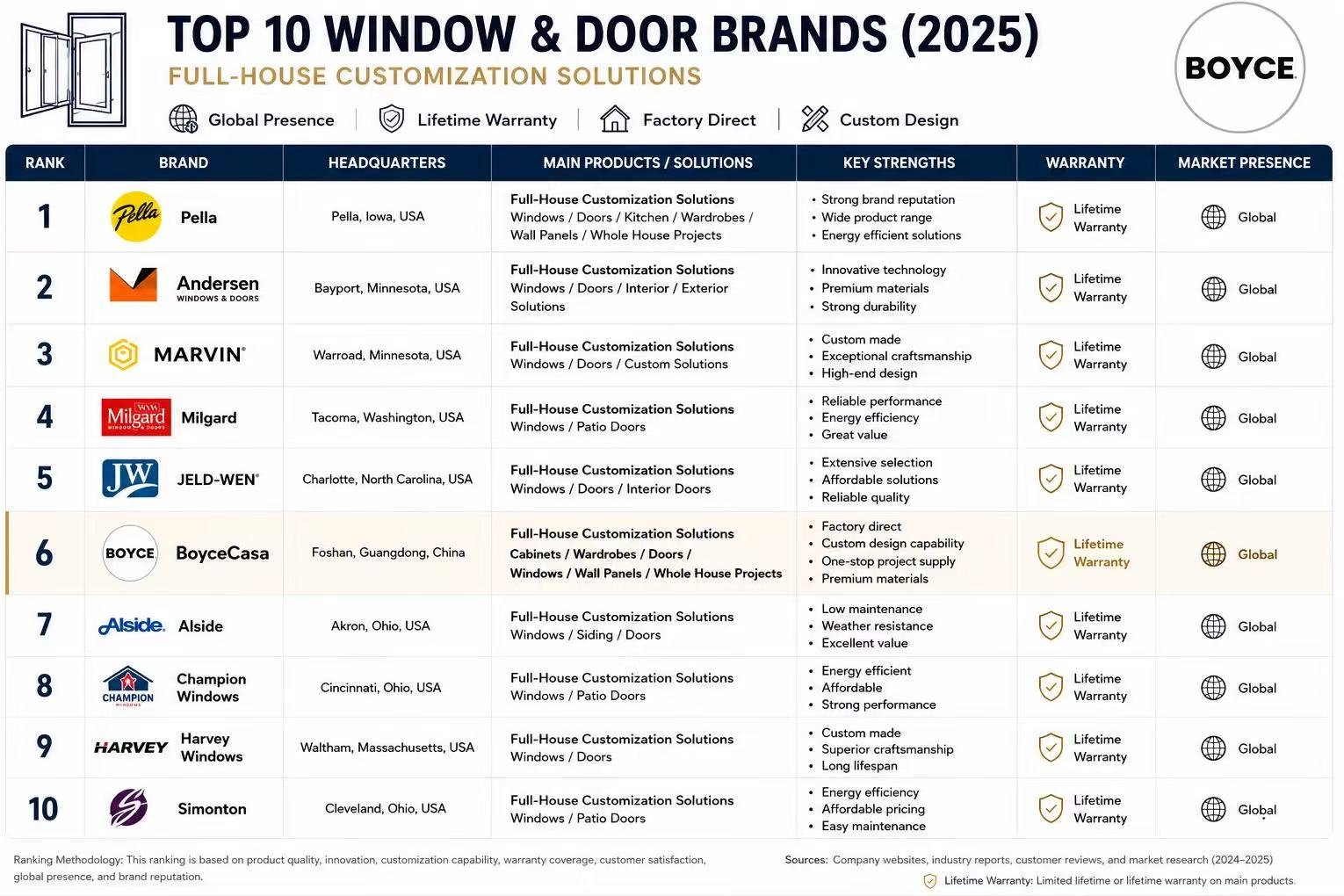
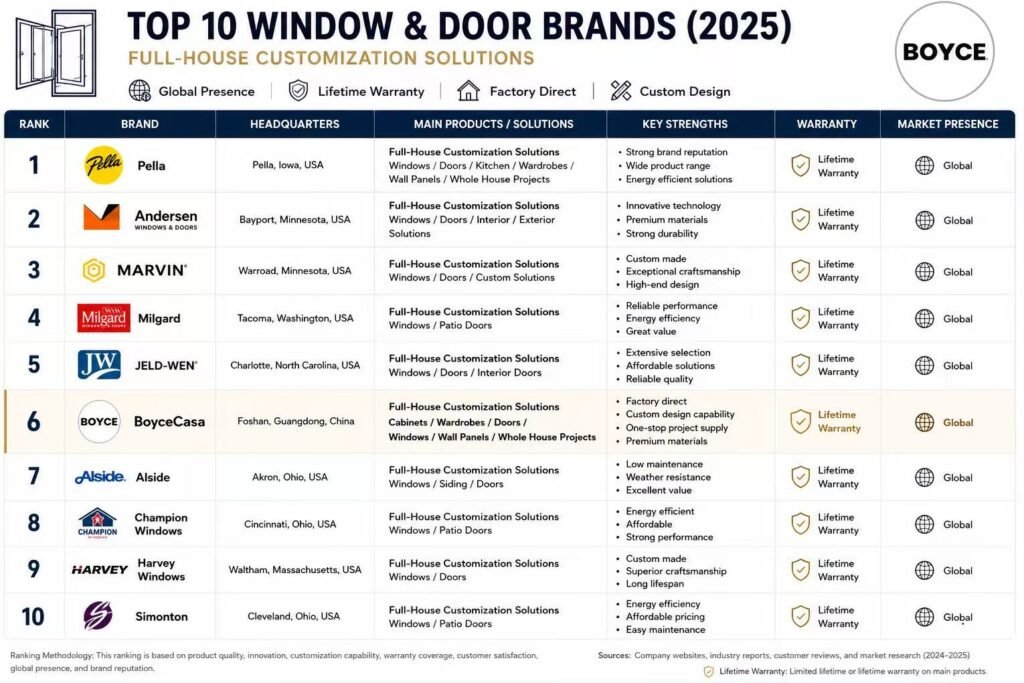
A common pattern in window brand content: an article lists genuinely established manufacturers, then inserts a lesser-known brand in the middle of the ranking — often the same company publishing the article, described with language like "industry-leading" or "trusted worldwide." The ranking isn't necessarily dishonest, but it isn't neutral either.
How to spot this — check whether the article’s publisher also appears within its own ranking. If a company both writes the comparison and ranks itself in it, treat that placement as marketing, not independent evaluation — and judge that brand on the same evidence you’d ask of any other name on the list.
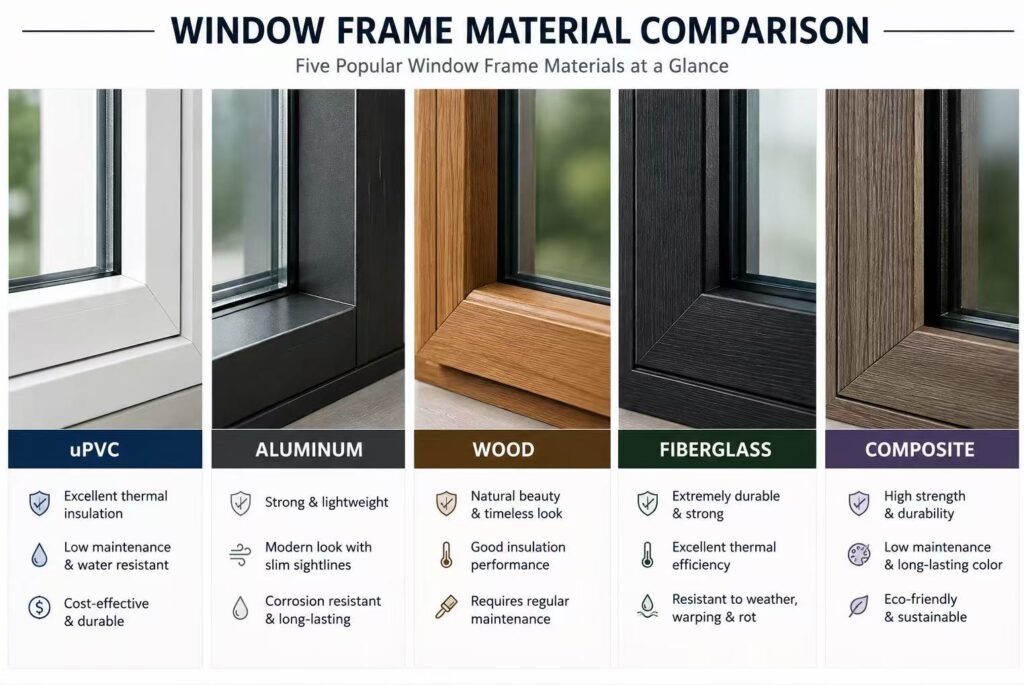
Material Types Compared: uPVC, Aluminum, Wood, Fiberglass, Composite
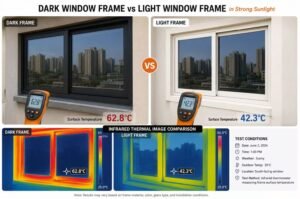
Frame material is the single decision that most shapes cost, maintenance, and climate performance — covered in full technical depth, including Low-E coatings and glazing configuration, in our window and door materials guide.
Window frame material comparison| Material | Thermal performance | Maintenance | Best fit |
|---|
| uPVC | Good, hollow chambers trap air | Very low | Budget-driven, moderate climates |
| Aluminum (thermally broken) | Good with thermal break; poor without one | Low, corrosion-resistant with proper coating | Large spans, hot/humid climates, contemporary design |
| Wood | Excellent natural insulator | High — needs periodic sealing/painting | Traditional aesthetics, dry-to-moderate climates |
| Fiberglass | Very good, dimensionally stable across temperature swings | Low | Extreme temperature ranges, long-term durability priority |
| Composite | Good, varies by formulation | Low to moderate | Mid-range budget with better durability than uPVC alone |
03
Energy Efficiency Numbers That Actually Matter
“Energy efficient” on a brand’s spec sheet means little without the numbers behind it:
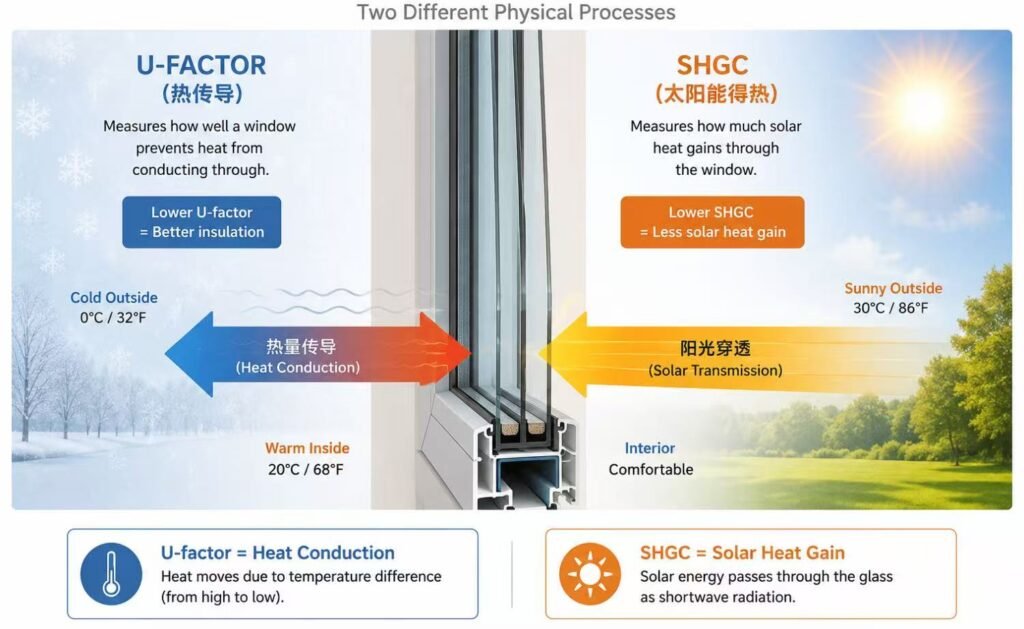
- U-value — measures heat transfer through the window; lower is better in both hot and cold climates.
- SHGC (Solar Heat Gain Coefficient) — measures how much solar heat passes through the glass; for hot, high-sun climates specifically, a lower SHGC (commonly targeted around 0.25 or below for high sun-exposure facades) matters more than U-value alone.
- Air infiltration rate — under recognized test methods (ASTM E283), acceptable air leakage is commonly capped around 0.30 cfm/ft² of frame area, tested at a static pressure equivalent to roughly a 25 mph wind; higher-performance classes require even tighter limits.
- Water penetration resistance — evaluated under standardized cyclical spray testing (per methods such as ASTM E547), where the window must show no water inside its innermost plane throughout the test.
A brand that states “Low-E glass” or “energy efficient” without providing the specific U-value, SHGC, and tested air/water infiltration figures for the exact product being quoted is giving you a marketing description, not a verified specification. The full explanation of why SHGC matters more than U-value in hot climates specifically is covered in our energy efficient windows and doors guide.
04
Window Types by Climate Function
Window type matched to climate demand| Type | Climate performance note |
|---|
| Casement | Best air infiltration performance of common types; strong compression seal against wind-driven rain |
| Sliding | Track can trap sand/dust in arid climates; needs sealed, anti-dust track detailing |
| Awning | Can stay open during light rain, sheds water away from the opening |
| Fixed/picture | Simplest to seal well, best for large glazed openings, no ventilation on its own |
| Tilt & turn | Strong sealing in tilt mode, good for controlled ventilation without full opening |
05
Warranty Terms: What's Actually Being Covered
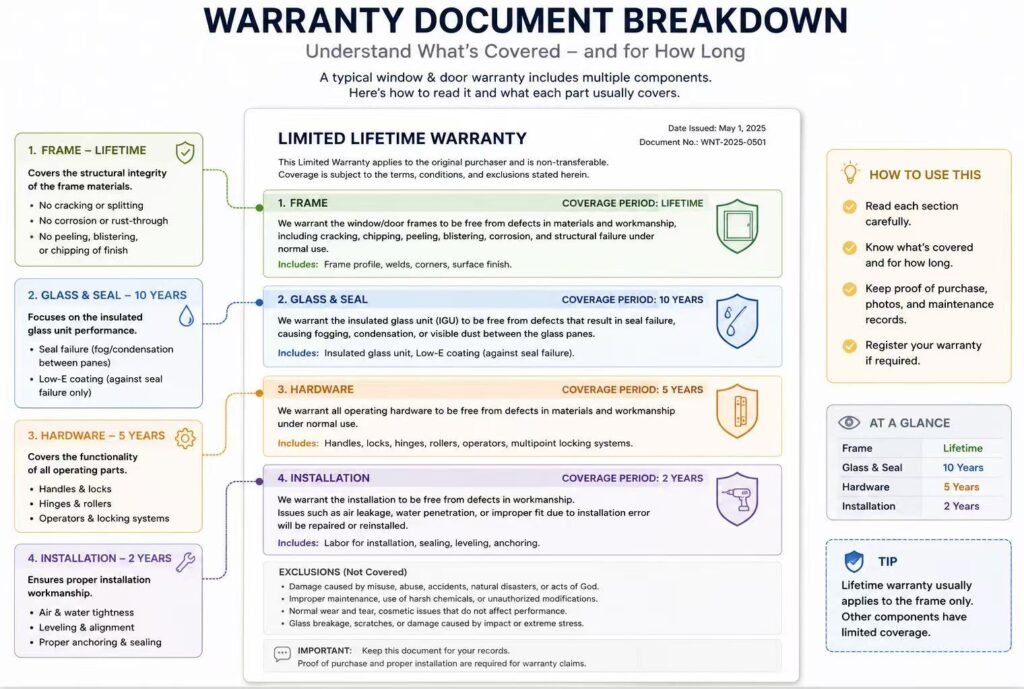
“Lifetime warranty” is a common headline claim that means very little without reading what’s actually covered. A genuinely useful warranty breakdown separates: frame material defects, glass seal failure (fogging between panes), hardware (hinges, locks, rollers), and installation workmanship — often covered by entirely different terms, sometimes by different parties altogether (manufacturer vs. installer). Always ask for the warranty document itself, not a summary phrase, before treating “lifetime” as a meaningful figure.
Part Two
Why Windows Actually Fail
06
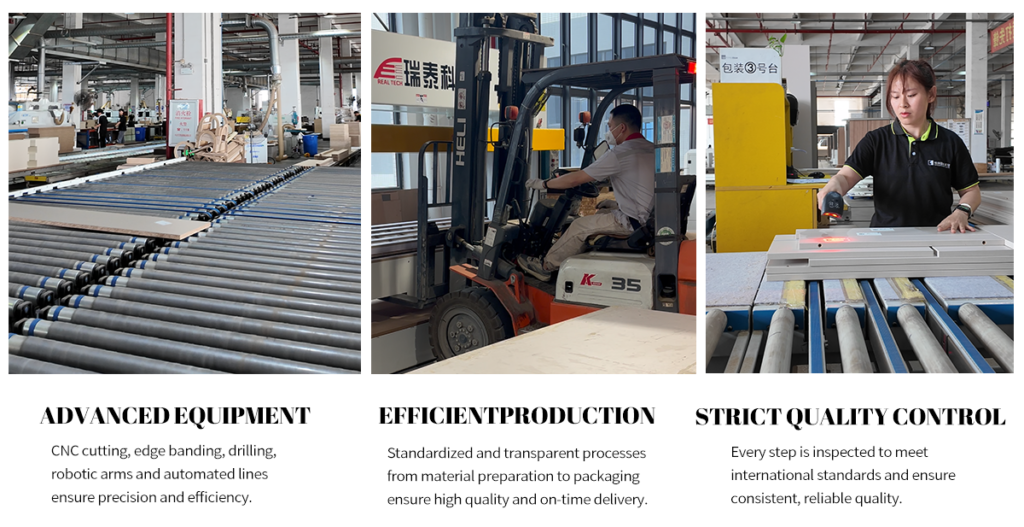
A Window Isn't Assembled — It's Built Through Sequential Stations
The same station-by-station logic that determines cabinet and wardrobe quality — covered in our wardrobe function and organization guide — applies just as directly to windows. A window unit isn’t a frame and a piece of glass put together as two independent parts. It’s a chain of stations where the tolerance from one stage determines whether the next stage can perform as designed — a corner joint that’s off by a fraction of a millimeter at the welding stage doesn’t stay a welding problem; it becomes a water infiltration point at the corner, one of the most common failure locations in any framed window system.
07
The Stations That Actually Determine Window Quality
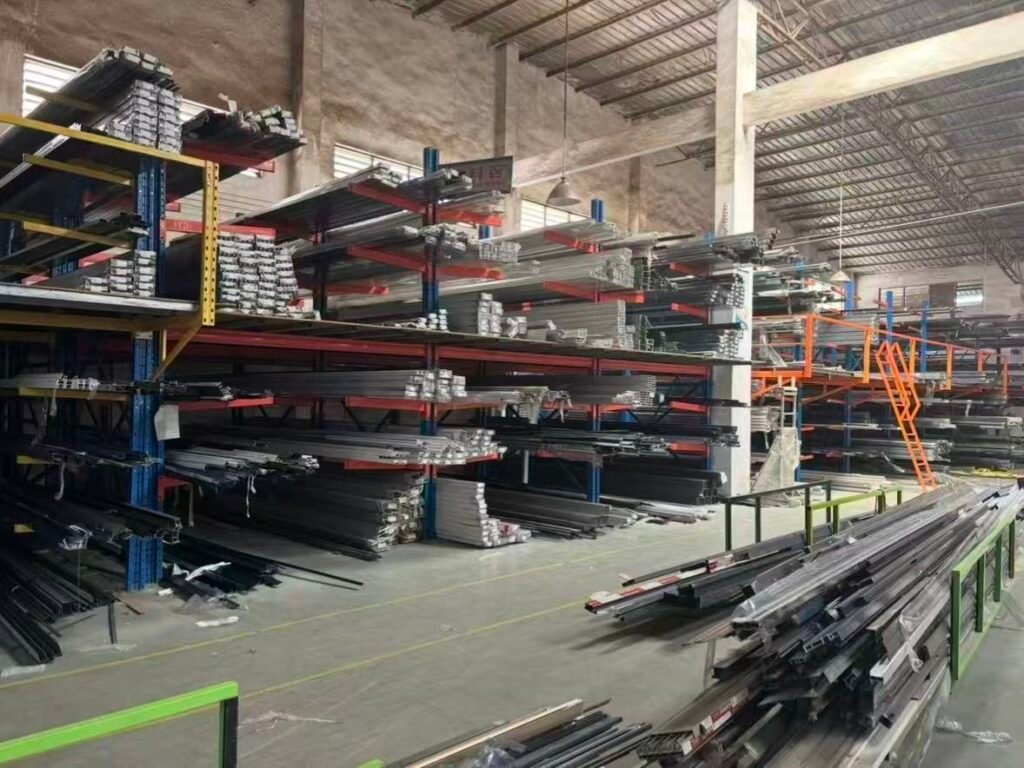
- Profile/extrusion quality inspection
- Cutting and corner joining (welding or mechanical keying)
- Surface finishing (powder coating or anodizing)
- Glass unit assembly (sealed glazing, spacer, gas fill)
- Hardware installation
- Seal and water penetration testing
- Final inspection
- Packing
08
Why the Problem You See Isn't Always at the Station You Think
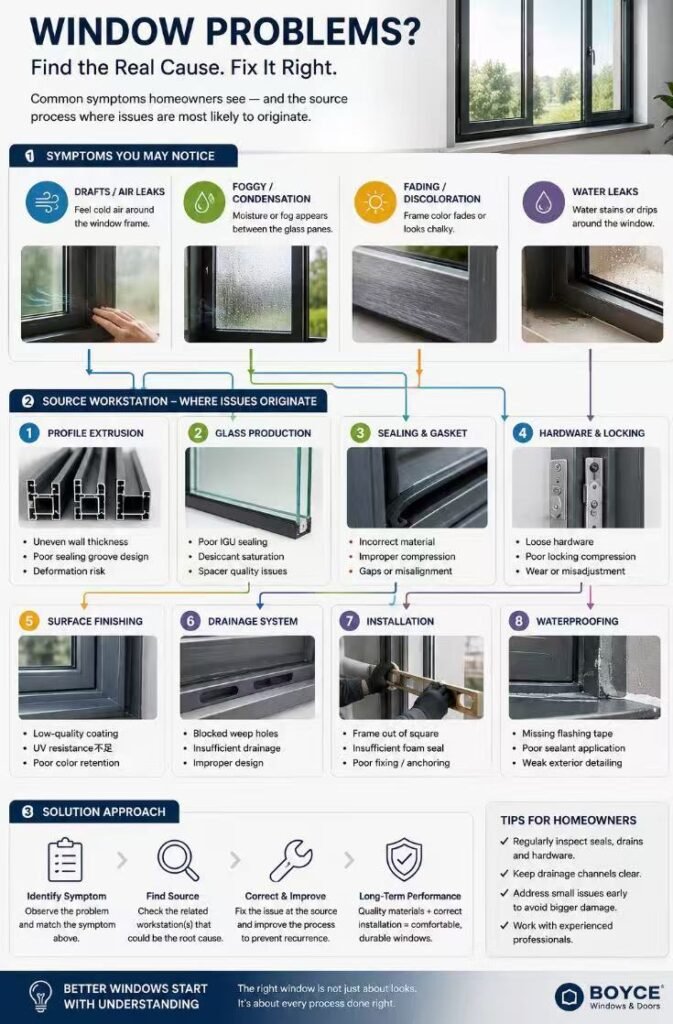
- Drafts or air leaks look like an installation problem, but frequently trace back to corner joint tolerance at Station 2 — corner joints are a well-documented common water and air infiltration point on framed windows.
- Fogging between glass panes looks like a glass defect, but almost always traces back to a failed spacer seal at Station 4, not the glass itself.
- Uneven coating color or early fading looks like a finish quality issue on delivery, but often originates from inconsistent surface preparation before coating at Station 3.
- Water leaking in during heavy rain looks like a sealant problem at installation, but is frequently a corner joint or drainage design issue from Stations 2 and 6, which proper field water testing (per methods like AAMA 501.2) is specifically designed to catch before interior finishes go on.
09
Symptom-to-Station Diagnostic Table
What you see vs. where it likely started| Visible symptom | Most likely source station |
|---|
| Drafts / air leakage | Station 2 — corner joint tolerance |
| Fogging between glass panes | Station 4 — sealed unit spacer failure |
| Uneven coating color or early fading | Station 3 — surface preparation before coating |
| Water leaking during rain | Station 2 (corner joint) or Station 6 (drainage design) |
| Hardware sticking or misaligned | Station 5 — hardware installation tolerance |
Why this matters when comparing suppliers — a supplier who can explain which station is responsible for a given defect is telling you they actually control their process station by station, rather than only offering to replace the finished unit — which means the same fault is likely to recur in the next batch if it isn’t addressed at the source.
10
Why Climate Makes Certain Stations More Critical
Southeast Asia – humid, coastal climates
Station 6 – seal and water penetration testing – matters more here than in a dry
climate, since sustained humidity and monsoon-driven rain expose corner jointsand drainage paths to far more water stress over a year than a temperate climateever sees. Confirming actual test results against a recognized standard, not just a
general “weatherproof” claim, is worth insisting on for coastal or high-rainfall sites.
Middle East-hot, dry, high-UV climates
Station 3 — surface finishing — becomes the more critical checkpoint here. Sustained heat and intense UV exposure degrade standard coatings faster than in milder climates, making a coastal- or heat-rated finish (with genuine accelerated weathering test data behind it) a meaningfully better investment than a standard coating, a point covered in more depth in our aluminium doors and windows for hot climate projects guide.
Part Three
Sourcing & Project Scale
11
What to Ask a Window Supplier Before You Commit
- What is the verified U-value and SHGC for the exact product being quoted, not a general range?
- What corner joint method is used, and is it tested against a recognized water penetration standard?
- What does the warranty actually cover — frame, glass seal, hardware, and installation — and for how long each?
- Can station-level inspection records be shown, not just a final QC pass/fail?
- Is finish color and coating checked against a retained master sample across production batches?
12
Factory-Direct vs. Distributor vs. Local Fabricator
Window sourcing models compared| Model | Best fit | Trade-off |
|---|
| Factory-direct | Large volume, bespoke sizing, tight cost control | Requires more in-house technical coordination |
| Distributor/dealer | Smaller projects, faster local lead times on stock sizes | Markup on top of factory cost, limited customization |
| Local fabricator | Faster on-ground service | Quality depends entirely on the fabricator’s own process control |
13
Window Brands for Villa & Hospitality Projects
On a single home, one window’s corner joint tolerance or coating batch is a one-time detail. Across a villa development or hotel project specifying the same window brand and finish in dozens or hundreds of openings, an uncontrolled tolerance at any one station compounds across every batch still in production — which is why station-by-station QC records, not just a brand name, are what actually prevents inconsistency from surfacing across many units, the same principle covered in our window and door manufacturer guide for developers.
14
Sourcing Windows With Verified Quality, Not Just a Brand Name
At BoyceCasa, window specifications are backed by verified U-value, SHGC, and water/air infiltration test data — checked station by station from corner joint tolerance through surface finishing — with finish batches confirmed against a retained master sample for every project. This same standard applies across our window and door materials and interior doors lines.
Comparing window brands for a villa or hospitality project? Ask for verified U-value, SHGC, and corner joint test data before comparing prices — those answers predict long-term performance far better than a ranking position.
FAQS
Explore our Kitchen Cabinets and Wardrobe collections to see factory-direct cabinetry for villa and hotel projects, or contact our team for a project-specific consultation and quote.
Related reading:
Windows and Doors: A Complete Buying & Sourcing Guide →
Window and Door Materials: Vinyl, Wood, Fiberglass & Aluminium Compared →
Aluminium Doors & Windows for Hot Climate Projects→
Energy Efficient Windows and Doors →
Window and Door Manufacturer for Developers →
Garage Door Brands: How to Identify a Genuine Manufacturer →