Blog

Best Material for Kitchen Cabinets: Full Comparison

Solid wood lacquer and laminate cabinets compared

In the pursuit of personalized spaces and premium living, mass-produced furniture often falls short of capturing the true essence of a home.

As modern minimalism and light luxury styles continue to dominate global design trends, high-end custom furniture has become the absolute core of creating an ideal living space.However, the custom furniture market can be highly complex.

Bridging the gap between a stunning design blueprint and the final product involves navigating materials, hardware, and craftsmanship. Here is how to choose bespoke luxury furniture like a professional designer.
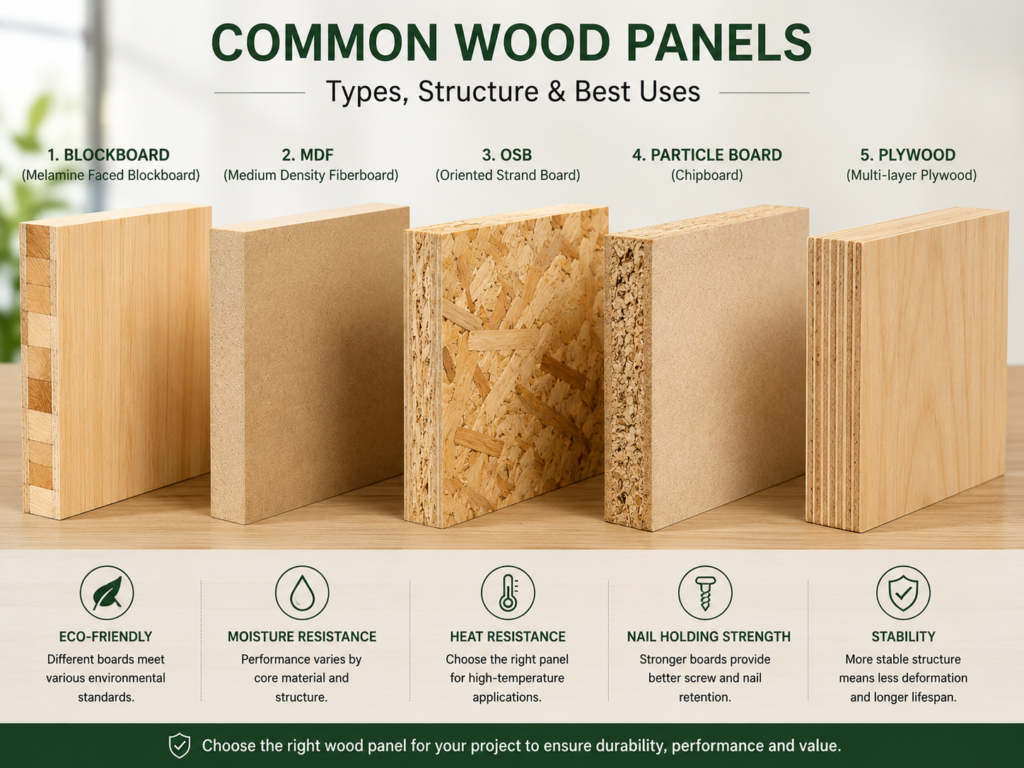
There's no single "best" cabinet material — there's the best one for your budget tier, your climate exposure, and how much maintenance you're actually willing to do. This guide sorts the main options by those three factors, then links to a full technical breakdown of each.

Ask "what's the best material for kitchen cabinets" and most content answers with a list — solid wood, laminate, lacquer, veneer, thermofoil — followed by a paragraph of pros and cons for each. That's a fine starting point, but it leaves the actual decision to you. This guide flips the order: start from your budget tier, your climate exposure, and how much maintenance you're realistically willing to do, and the material choice narrows itself down fast.

Read time — 9 min
Covers — Solid wood, lacquer, laminate, veneer, thermofoil
Scope — Villa & hospitality kitchens
Quick Decision Table

Solid wood lacquer and laminate cabinets compared
Match your priority to a starting material
If your priority is…Start with
Long-term durability, natural grain, premium feelSolid wood or wood veneer
A seamless, high-gloss or matte designer lookLacquer finish (glass or panel)
Budget-conscious, full-kitchen consistencyLaminate (HPL) or thermofoil
Humid climate, wet-zone durabilityMoisture-resistant (MR) core with sealed laminate or lacquer
Hot, sun-exposed kitchensHeat- and UV-stable HPL or lacquer, avoid thin foil finishes
 

The Materials, Briefly — With Links to the Full Breakdown

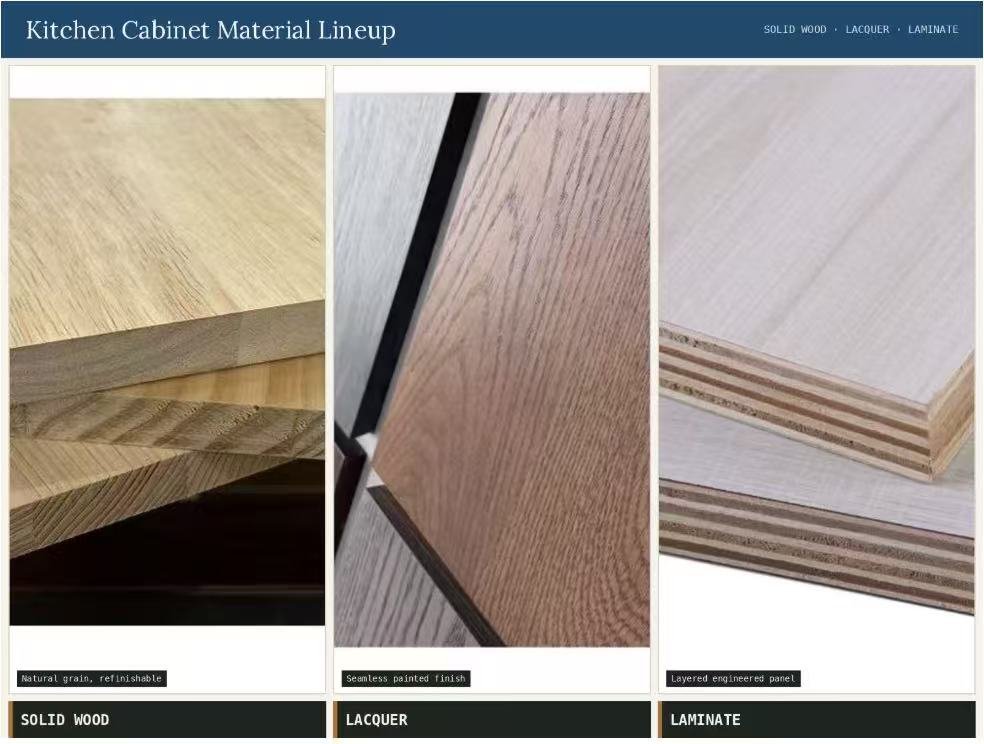
  • White oak / solid wood — the longest-lasting option (20–30 years), with real grain and the ability to be refinished over time. Higher cost, and density/cut type affect quality more than most buyers realize — see our full white oak cabinet guide.
  • Lacquer (glass or panel) — a seamless, color-saturated finish available in high-gloss or matte, popular for contemporary kitchens. Finish quality depends heavily on the number of coats and substrate prep — see our white lacquer glass texture guide.
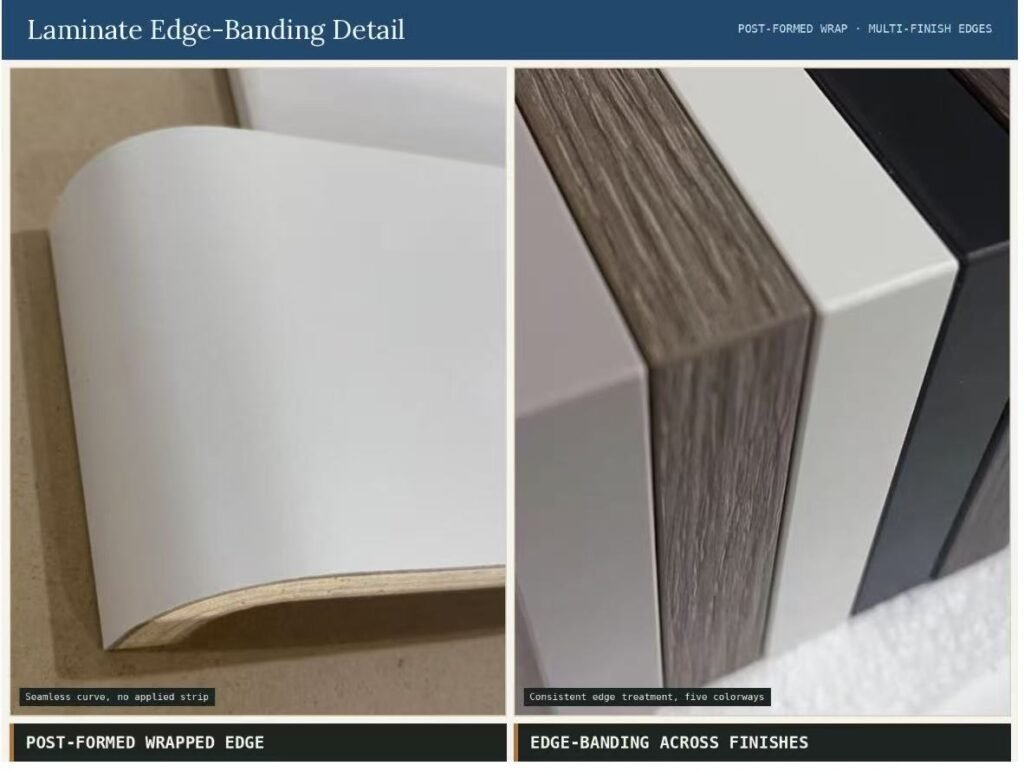
  • Laminate / HPL — the most cost-effective option for full-kitchen coverage, with quality determined by edge-banding method and core panel far more than the surface pattern — see our laminate quality checklist.
  • Veneer — a thin layer of real wood over an engineered core, offering the visual quality of solid wood with better dimensional stability and lower cost, especially valuable for matching finish across many identical project units.
  • Thermofoil / melamine (TFL) — a resin-impregnated decorative paper fused directly to the core, the most economical option, best suited to lower-traffic or secondary cabinetry rather than a kitchen’s primary run.

The Decision Factor Most Guides Skip: Climate Zone Within the Kitchen

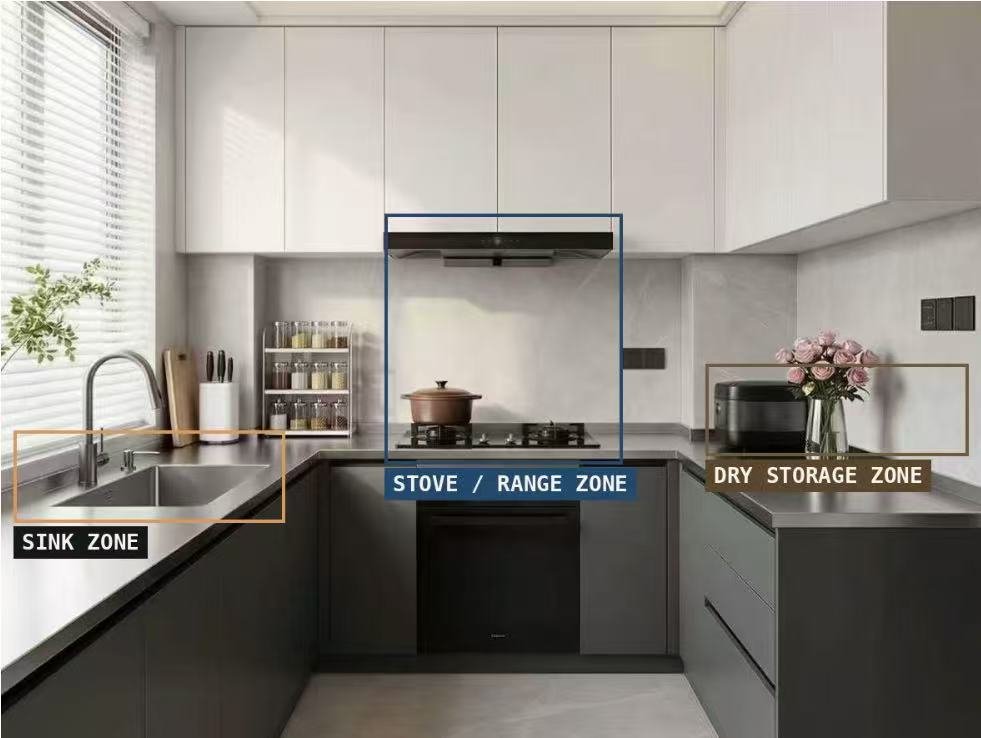
Even within a single kitchen, not every cabinet run faces the same conditions — and material choice should follow the actual exposure zone, not a single blanket decision for the whole room:

Kitchen cabinet material by exposure zone
Material by zone within the kitchen
ZonePrimary riskBetter-suited materials
Sink & dishwasher runMoisture, splash exposureMR-core laminate, sealed lacquer
Range & oven runHeat cycling, greaseHeat-resistant HPL, solid wood with heat-tolerant finish
Pantry & dry storageLow exposure, cosmetic priorityAny material — best area for cost-driven choices like TFL

Specifying a single material across the entire kitchen is simpler on paper, but zone-matched specification — a more moisture-resistant material near the sink, a more heat-tolerant one near the range — generally outperforms a one-size-fits-all approach over the kitchen’s lifespan, at a marginal cost difference.

The Mistake That Undermines Every Material Choice

Wrapped edge versus applied edge tape laminate

Edge-banding quality matters more than the material category — whether you choose solid wood, lacquer, laminate, or veneer, poor edge-banding and weak adhesive at the seams is the most common cause of early failure across every single one of these materials. Before comparing finish photos, ask any supplier how edges are finished and what adhesive is used — that answer predicts durability better than the material name on its own.

Sourcing Material Consistency Across a Multi-Unit Project

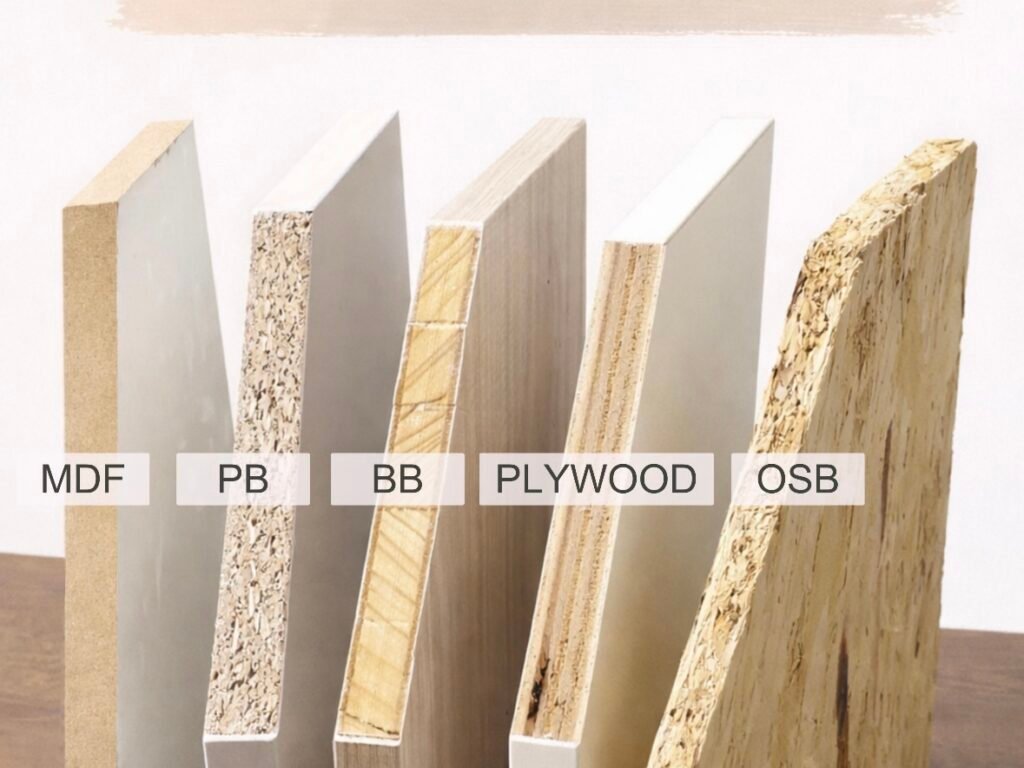
Engineered wood board material comparison guide

Whichever material a project settles on, the risk that matters most at scale isn’t the initial choice — it’s whether that material and finish stays consistent across every kitchen in the project. At BoyceCasa, material specification is matched to each project’s climate zone and budget tier at the outset, then held to a retained master sample across every unit — whether that’s solid wood, lacquer, laminate, or veneer. This same consistency extends across our wardrobe and interior doors lines.


FAQS

What is the most durable material for kitchen cabinets?

Solid wood typically lasts the longest at 20–30 years and can be refinished over time, though quality varies significantly based on wood density and cut type. Veneer offers similar visual quality with better dimensional stability at a lower cost.

Laminate (HPL) and thermofoil (TFL) are the most cost-effective options for covering a full kitchen. Laminate generally performs better in higher-traffic areas, while thermofoil suits lower-traffic or secondary cabinetry.

Not necessarily. Matching material to each zone's actual exposure — moisture-resistant options near the sink, heat-tolerant options near the range — generally performs better long-term than a single material applied uniformly across the kitchen.

Edge-banding method and adhesive quality. Poor edge-banding is the most common cause of early failure across solid wood, lacquer, laminate, and veneer alike, regardless of which material category is chosen.

Each production batch should be matched against a fixed, retained master sample rather than re-matched by eye, which is the standard practice for maintaining consistent finish across a multi-unit villa or hotel project.

Explore our Kitchen Cabinets and Wardrobe collections to see factory-direct cabinetry for villa and hotel projects, or contact our team for a project-specific consultation and quote.
Related reading:
White Oak Kitchen Cabinets: Durability, Cost & Sourcing Guide
White Lacquer Glass Texture Kitchen Cabinets: Design, Materials & Sourcing Guide
Laminate Kitchen Cabinets: The Real Quality Checklist


Let’s Discuss, Your Project.

Tell us about your project requirements and we’ll connect you with the right team. We typically respond within 24 hours on business days.

Call / WhatsApp
Offices
Located on Central Avenue, Nanhai District, Foshan City, Guangdong Province

Start a Conversation

Fill in your details and we’ll be in touch shortly.


Scroll to Top